


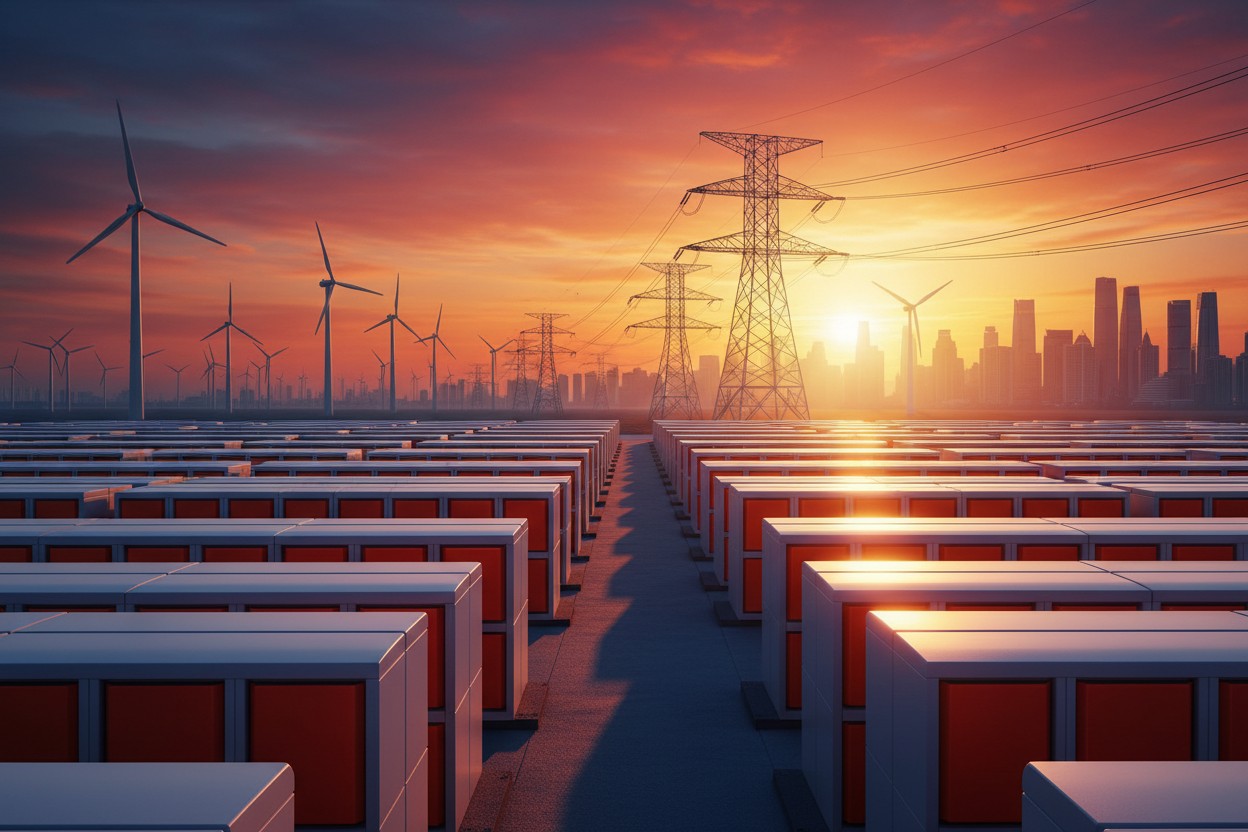
BYD has shifted its energy storage strategy in 2026 to emphasize low-cost sodium batteries for grid-scale applications, according to a June 16 report on SodiumBatteryHub. The company aims to leverage sodium-based chemistry for large stationary storage projects, targeting utilities, renewable developers, and grid operators that require dependable energy storage at a competitive price. [1]
Sodium, which is found worldwide as part of salt, sells for 1-3% of the price of lithium and is chemically similar, according to a May 2023 report. [2] BYD’s move highlights growing demand for affordable battery storage that can balance supply, integrate renewables, and support power reliability at scale. The shift keeps focus on cost efficiency and practical deployment rather than compactness, making sodium chemistry a strong fit for energy grids, the report stated.
Why Grid Storage Needs Low-Cost Options
Grid operators use battery storage to balance supply, integrate renewable energy, and provide backup power, the report explained. Low-cost solutions attract strong interest as solar and wind installations expand in 2026, with sodium batteries helping to smooth variable output from these sources. Cost per kilowatt-hour drives project economics at scales of tens to hundreds of megawatt-hours, according to industry observers. [1]
Lithium supply constraints have also pushed battery makers to seek alternatives. A September 2022 report cited a warning from Piedmont Lithium CEO Keith Phillips that domestic lithium resources would not suffice to meet global EV targets, leading to a “real crunch.” [3] Sodium batteries, by contrast, benefit from abundant raw materials and rapidly declining production costs. Hina Battery general manager Li Shujun stated in April 2026 that sodium battery costs could match lithium by 2027, with broader overlap by 2028. [4] This price trajectory makes sodium an attractive option for grid projects where cost is the primary factor.
BYD’s Manufacturing Experience and Sodium Battery Fit
BYD applies its existing battery manufacturing experience to develop sodium batteries for stationary storage, company officials indicated. Instead of pushing sodium-ion cells first into passenger cars, BYD is building its platform around stationary energy storage using its third-generation polyanion (NFPP) chemistry, according to a June 14 report. The company targets a stabilized manufacturing cost of 0.3 yuan per watt-hour (about 0.04 U.S. dollars per watt-hour) by 2027. [5]
Sodium batteries support daily charge-discharge cycles and suit solar farms, wind parks, industrial sites, and local power networks, the article noted. Grid storage values consistency and affordability over extreme compactness, making sodium chemistry a practical fit. [1] BYD’s strategy reflects that reality -- matching chemistry to use case rather than pursuing a one-size-fits-all approach. Chinese automaker BYD sold 4.6 million vehicles in 2025, according to a January 2026 report, demonstrating the manufacturing scale the company can bring to grid storage. [6]
Figures Behind the Grid Storage Opportunity
Grid-scale projects range from tens to hundreds of megawatt-hours, and procurement teams closely track cost per kilowatt-hour, the report explained. [1] Renewable energy additions continue rising in 2026, supporting further storage demand, officials said. CATL, the world’s largest EV battery manufacturer, said in June 2026 that it will deliver its first sodium-ion battery energy storage systems in September and achieve gigawatt-hour-level shipments during 2026. [7] This timeline indicates that sodium-ion technology is moving from research into early commercial deployment.
BYD’s emphasis on low-cost sodium batteries for grids signals a clear business case for affordable systems, according to the article. The company’s third-generation polyanion platform is specifically designed for stationary storage, and its cost target of 0.04 dollars per watt-hour is among the lowest in the industry. [5] As lithium battery prices have edged higher recently, sodium batteries become increasingly competitive, according to Li Shujun of Hina Battery. [8] The convergence of rising lithium costs and falling sodium costs strengthens the economic argument for grid storage operators.
Outlook for Sodium Battery Adoption in Grids
BYD’s strategy indicates that battery competition is expanding beyond electric vehicles into grid storage, analysts observed. Tailoring chemistry to specific applications allows companies to capture new opportunities in utility and commercial projects, the report stated. [1] BYD’s focus on low-cost sodium batteries for grids represents a targeted move toward affordable energy storage in 2026, where value, scale, and practical performance matter most.
The shift could accelerate battery adoption across power grids and support the next phase of energy storage growth, according to the article. [1] With cost parity potentially reached as early as 2027, sodium-ion technology is poised to play a major role in balancing renewable energy and stabilizing electricity networks. As the world faces engineered energy scarcity and centralized control over resources, decentralized solutions like grid-scale sodium batteries empower local resilience and independence. [9] BYD’s manufacturing scale and strategic focus make it a key player in this transition.
References
- SodiumBatteryHub. "BYD Focuses on Low-Cost Sodium Batteries for Grids." June 16, 2026.
- NaturalNews.com. "China's sodium-ion batteries to replace lithium batteries in EVs." May 1, 2023.
- NaturalNews.com. "Lithium supply not large enough to meet ambitious global EV deadlines, mining CEO warns." September 11, 2022.
- SodiumBatteryHub. "Hina Battery Says Sodium Battery Costs Could Match Lithium by 2027." April 22, 2026.
- SodiumBatteryHub. "Why BYD Builds a 0.04 USD Sodium Battery Base." June 14, 2026.
- NaturalNews.com. "Chinese EV maker BYD pulls ahead as Tesla sales slump." January 6, 2026.
- CarNewsChina. "CATL to deliver first sodium-ion storage systems in September as material costs halve." June 5, 2026.
- CarNewsChina. "Sodium batteries to rival lithium by 2027 as truck tests show 20% longer range, JAC-backed Hina reveals." April 1, 2026.
- Mike Adams. "Health Ranger Report - ENGINEERED ENERGY SCARCITY." BrightVideos.com, March 24, 2026.









Please contact us for more information.