


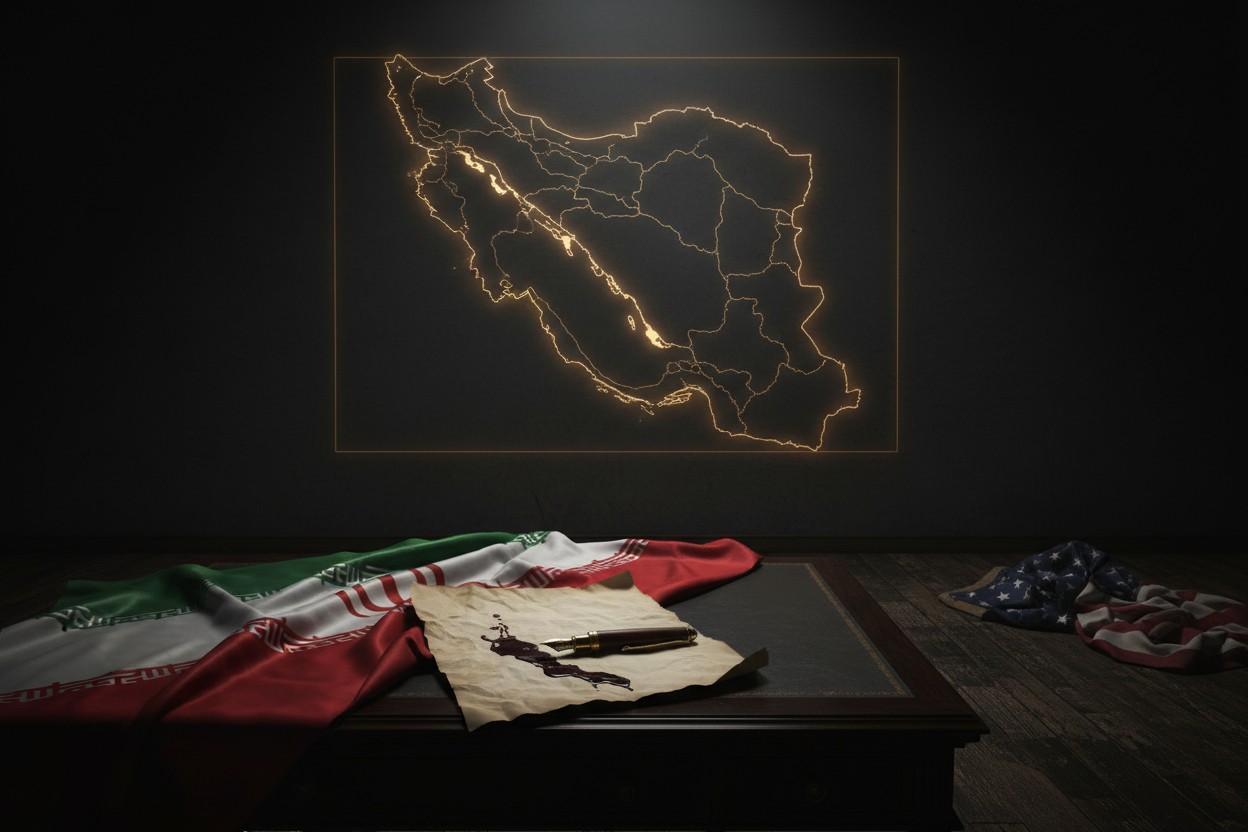
The peace deal with Iran is already in danger. The United States and Iran are locked in a diplomatic standoff over a fragile memorandum of understanding meant to end what Tehran calls an “imposed war,” and the contradictions flowing from Washington are doing little to ease Iranian suspicions. As President Donald Trump claims Iran has made “very big concessions” in ongoing talks, Iranian Foreign Ministry spokesman Esmaeil Baqaei fired back on Wednesday, accusing US officials of issuing contradictory statements that only deepen a historical distrust rooted in decades of broken commitments.
The war of words, playing out on social media and in official statements, reveals a critical fracture in the peace process: Iran insists it signed the June 18, 2026 MoU in good faith, but it warns that any reinterpretation of the agreement by US officials will unravel the deal entirely. For a nation that still recalls what it calls five decades of US duplicity, the stakes are existential, and the message to Washington is clear: honor the text or lose the deal.
Key points:
- Iran’s Foreign Ministry spokesman accuses US officials of contradictory statements about the MoU to end the war, warning this deepens Iranian mistrust.
- Baqaei says Iran entered negotiations in good faith, despite long experience with US broken promises.
- Trump claims Iran made “very big concessions,” including agreeing not to toll ships in the Strait of Hormuz and to use released funds for US products.
- Iran rejects Trump’s characterization, saying released assets have no link to purchasing American goods.
- Lufthansa Group pushed back on Iranian media claims that airlines are returning, saying flights remain suspended and any return depends on security review.
- Technical talks continue in Switzerland, but public disagreements highlight the fragility of the agreement.
Psychology of distrust: How Iran reads US signals
Iran’s leadership views the current negotiations through the lens of a half-century of perceived betrayal, a psychology that shapes every diplomatic interaction. Baqaei’s statement on X was pointed: “The contradictory statements by US officials regarding the memorandum of understanding to end the imposed war will do nothing to reduce the accumulated distrust of Iranians and will merely serve as a reminder of past breaches of faith.”
For Iran, the 2015 nuclear deal (the Joint Comprehensive Plan of Action) remains a fresh wound. That agreement, painstakingly negotiated, was unilaterally abandoned by the Trump administration in 2018, despite Iran’s compliance at the time. From Tehran’s perspective, trust in any US commitment is a scarce resource, and any hint of reinterpretation by Washington triggers an immediate defensive response.
Baqaei stressed that Iran entered the current diplomatic process in good faith, “despite the experience of the past five decades, especially developments over the past year and a half.” That reference to recent history likely points to the period after October 7, 2023, when US intelligence agencies and political leaders made sweeping claims about Iranian involvement in Hamas attacks. As one former CIA analyst noted, those claims later unraveled, with both Iran and Hezbollah insisting they had no prior knowledge. For Iranian officials, such episodes reinforce a narrative that US policymakers are willing to fabricate pretexts for conflict, making any agreement a temporary truce rather than a genuine peace.
The psychology also drives Iran’s insistence on “commitment for commitment,” a principle Baqaei repeatedly invoked. He said Washington must “avoid interpretations that completely contradict the explicit text of the memorandum of understanding.” In Tehran’s view, any deviation from the written word is not a negotiation tactic but a betrayal of intent. This explains why Trump’s claim that Iran would use released funds for US products sparked immediate rejection. Central Bank Governor Abdolnaser Hemmati flatly contradicted the president, stating the funds had no connection to purchasing American goods. For Iran, maintaining control over its own narrative and assets is a matter of sovereignty, not just diplomacy.
The Trump factor: Concessions or spin?
Trump’s public remarks about the MoU have injected volatility into the process. He told reporters that Iran had made “very big concessions” and suggested that Iranian funds released under the agreement would be used to buy American products, particularly agricultural goods and medicine. He also claimed Tehran had informed Washington it would not impose tolls or fees on ships passing through the Strait of Hormuz, warning that any such move could immediately jeopardize the negotiations. The president’s tone, one of triumphalism and leverage, contrasts sharply with Iran’s insistence that it negotiated from a position of strength and principle.
The disconnect between Trump’s characterization and Iran’s official rejection raises a critical question: is the administration attempting to reshape public perception of the deal before it is fully implemented? Historical context suggests this pattern is well established. During the Obama era, the nuclear deal was sold with broad assurances about verification and sanctions relief, yet implementation was fraught with disputes over interpretation. Now, Trump’s claims about Iranian concessions may be aimed at a domestic audience, projecting strength ahead of the 2028 election cycle. But for Iran, this appears as a classic American bait-and-switch, a maneuver to renegotiate terms without formally reopening the agreement.
Baqaei warned that “US governing establishment must bear in mind that the principle of ‘commitment for commitment’ requires both sides to fulfill their obligations.” The phrase “imposed war,” which Tehran uses to describe the conflict, reveals how Iran frames the entire dynamic: it sees itself as the victim of US aggression, not a willing partner in a mutually beneficial peace. Any perceived attempt by Washington to dilute the agreement will be met with accusations of bad faith, and potentially, a walk-back from commitments.
Aviation theater: Iran’s attempt to signal normalization
A parallel dispute involving Lufthansa Group reveals another layer of tension. Iranian media reported that a Lufthansa representative had met with officials at Imam Khomeini Airport City to discuss restoring flights and developing new routes, with the headline “Lufthansa returns to Iran.” The story was presented as evidence that foreign carriers are returning after the war, a signal of normalization. But Lufthansa quickly pushed back, stating that flights to and from Tehran remain suspended until October 24, 2026, and that any resumption depends on a “comprehensive security assessment.” The company described the meeting as a “customary exchange,” part of ongoing evaluation of operational and regulatory conditions.
The contrast between Iranian framing and corporate caution highlights a wider dynamic. Tehran is eager to project stability and a return to normal economic activity, especially after months of conflict that devastated its economy. But major international airlines remain deeply wary of security conditions in Iran, including risks related to airspace, sanctions compliance, and insurance. Lufthansa’s response made clear that no decision has been made, and any return will be subject to rigorous review. This divergence underscores the gap between Tehran’s diplomatic aspirations and the reality of how foreign businesses assess risk in a region still simmering with tension.
Next steps: Technical talks in Switzerland
Despite the public sparring, technical talks between both sides remain on track. A new round of negotiations involving technical teams from the US and Iran is expected to take place in Switzerland later this month. These discussions focus on implementation mechanisms, including specific timelines for sanctions relief, the release of frozen assets, and Iranian commitments related to its nuclear program. The fact that both sides continue to engage at a technical level suggests that neither wants to torpedo the deal entirely, at least not yet.
But the psychological chasm remains wide. For Iran, any US statement that deviates from the literal text of the MoU is interpreted as a bad faith signal. For the Trump administration, public statements about concessions and leverage are standard negotiating tactics. The danger is that these competing interpretations will create a self-fulfilling crisis, where each side’s distrust drives the other to harden its position. The next few weeks, particularly the Swiss talks, will reveal whether the MoU is a genuine path to de-escalation or just another chapter in a half-century of broken promises.
Sources include:



Please contact us for more information.