


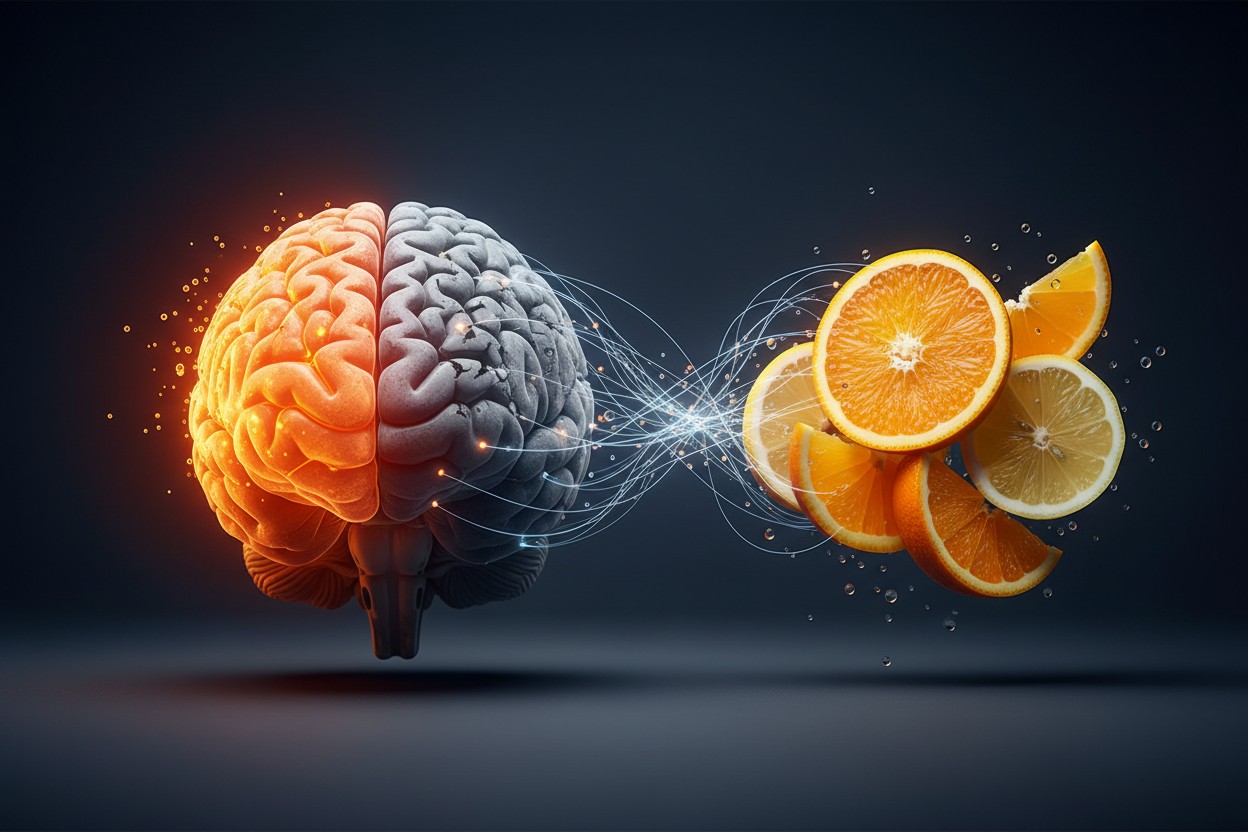
A brain does not collapse overnight. It erodes, gradually, through years of nutritional neglect, and a new study out of Japan offers some of the clearest evidence yet that one overlooked nutrient, vitamin C, may be quietly shaping whether a person's mind stays sharp or slips into decline. The finding lands at a moment when cognitive disorders are rising across aging populations worldwide, and it adds weight to an idea that deserves far more attention than it gets, that the trajectory of brain aging is not fixed by genetics alone. It is shaped, day after day, by what people choose to put on their plates, how they move their bodies, and how well they sleep.
Key points:
- A large new study of nearly 2,000 older adults in Japan found that people with lower blood levels of vitamin C had reduced connectivity in the brain's default mode network and less gray matter, both early markers of cognitive decline.
- Vitamin C functions as a potent antioxidant in the brain, protecting neurons from oxidative stress and supporting communication between brain cells.
- A separate, earlier review found that maintaining healthy vitamin C levels, rather than relying on high-dose supplements, appears most protective against age-related cognitive decline and Alzheimer's disease.
- Beyond vitamin C, omega-3 fatty acids, B vitamins, regular physical exercise, and quality sleep all play measurable roles in preserving cognitive function into old age.
- Researchers caution the new findings show an association, not direct proof of cause and effect, though the pattern lines up with decades of prior research.
What the new research actually found
The study, published in PLOS One, examined roughly 2,044 adults in Japan with a median age of 69. Researchers drew blood to measure plasma vitamin C levels, then ran MRI scans to assess brain volume and the strength of the default mode network, a set of interconnected brain regions that activate during memory recall, self-reflection, and quiet, internal thought. The default mode network is not some obscure scientific curiosity. Declines in its connectivity have been linked to neurological conditions, including mild cognitive impairment, Alzheimer's disease, and Parkinson's disease.
What the researchers found was striking in its consistency. People with lower plasma vitamin C levels showed measurably reduced default mode network connectivity, along with a smaller ratio of gray matter to total brain volume, even after the data was adjusted for age, education, smoking, drinking, physical activity, diabetes, hypertension, and other confounding factors. Study author Tomohiro Shintaku, an assistant professor of radiology at Hirosaki University Graduate School of Medicine, explained the significance plainly. He said decreased gray matter and lower default mode network connectivity are closely linked to age related cognitive decline, and represent early signs of conditions like Alzheimer's disease.
Shintaku was careful to note that this is an association, not proof that low vitamin C directly causes brain decline. The study relied on a single blood draw per participant, which may not capture long-term nutritional patterns, and it did not account for every possible influencing factor, including body mass index and socioeconomic status. Still, the pattern fits neatly into a much older body of evidence.
The deeper antioxidant story, and why food beats pills
A 2013 review published in the Journal of Alzheimer's Disease, authored by researcher Fiona Harrison, dug into decades of prior research on vitamin C and cognitive aging. The review's conclusion carries a pointed lesson for anyone reaching for a supplement bottle as a shortcut. Avoiding vitamin C deficiency is likely to be more beneficial than taking supplements on top of a normal, healthy diet. In other words, the goal is not to flood the body with megadoses, it is simply to avoid running low in the first place, something a normal diet rich in produce accomplishes on its own.
The biological reasoning behind vitamin C's role is straightforward. The brain consumes a disproportionate share of the body's oxygen, which makes it especially vulnerable to oxidative stress, the cellular damage caused by unstable free radical molecules. Vitamin C neutralizes those free radicals, and it also supports enzyme functions involved in neurotransmitter production, helping brain cells communicate more efficiently. Citrus fruits, sweet peppers, kiwi, strawberries, broccoli, and Brussels sprouts all deliver meaningful amounts of the nutrient, and most adults can meet the recommended daily intake, 90 milligrams for men and 74 milligrams for women, through diet alone.
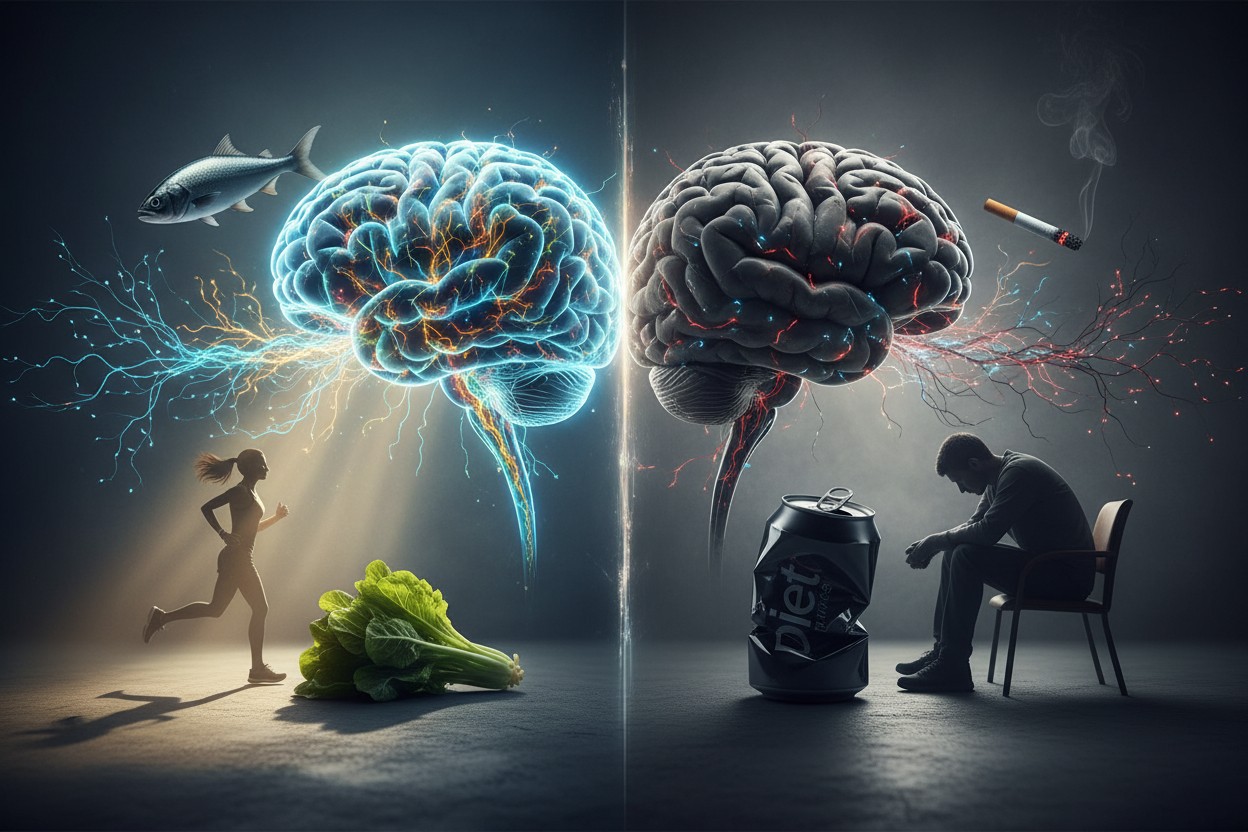
But vitamin C is only one piece of a much larger picture. Omega-3 fatty acids, found in fatty fish, walnuts, and flaxseed, build and maintain the fatty membranes that brain cells depend on, and they carry well-documented anti-inflammatory effects. B vitamins, particularly B6, B9, and B12, are essential for regulating homocysteine, an amino acid that, at elevated levels, has been linked to brain atrophy and dementia risk. Regular aerobic exercise increases blood flow to the brain and stimulates the release of growth factors that support new neural connections, while consistent, quality sleep allows the brain to clear out metabolic waste, including the amyloid proteins associated with Alzheimer's disease.
Taken together, the evidence points toward an uncomfortable but ultimately empowering conclusion. Cognitive decline in old age is not simply something that happens to a person. It is something that unfolds across thousands of daily decisions, about food, movement, and rest, decisions that remain available to make differently at almost any age.
Sources include:








Please contact us for more information.