


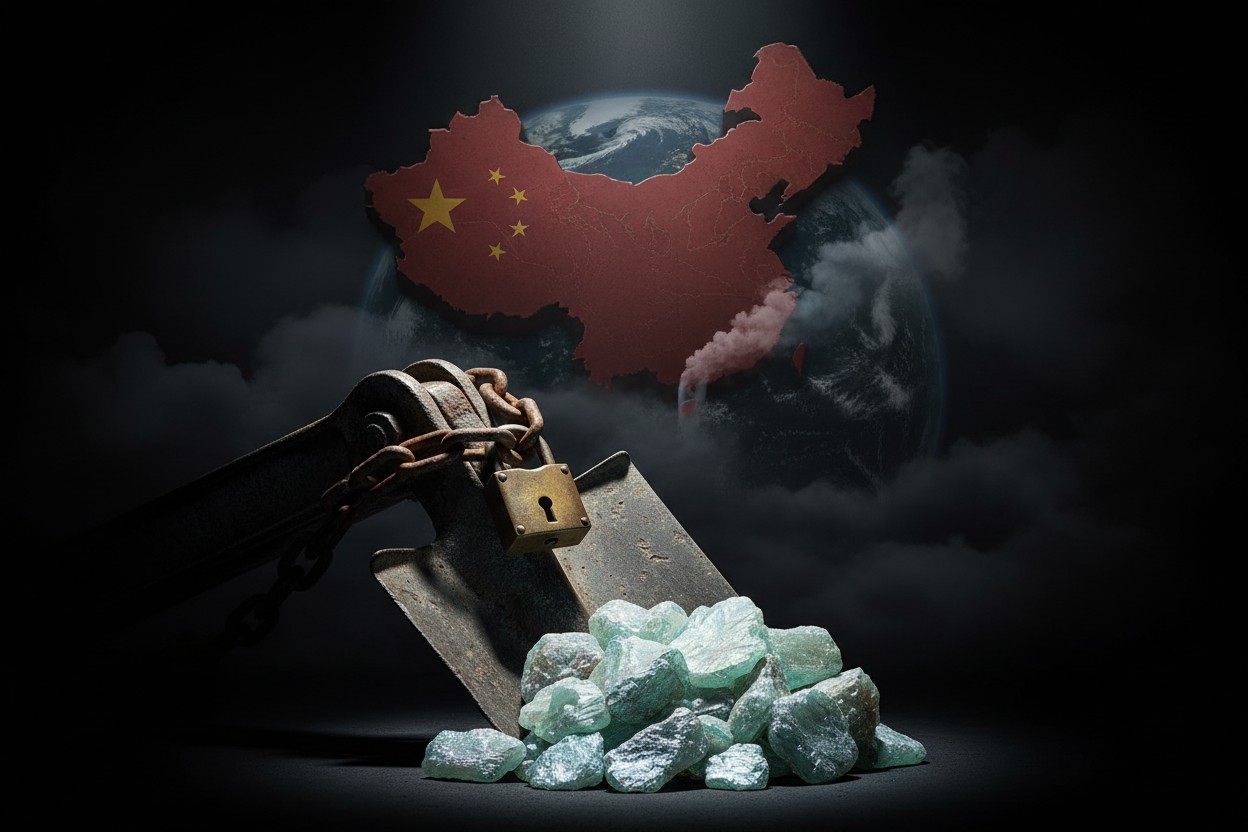
- The G7 pledged to reduce China's dominance in rare earth elements to 60% of imports by 2030, aiming to diversify supply chains for electric vehicles, electronics and defense tech.
- China's new export restrictions, including mandatory approvals for rare earth shipments and licensing for foreign firms, have triggered global concerns over supply chain disruptions.
- The G7 strategy combines domestic mining expansion, recycling initiatives and industry quotas to counter China's 70%-99% control over refining processes for critical minerals like cobalt and gallium.
- Challenges include high costs, regulatory hurdles and environmental issues in mining, with experts warning that China's refining monopoly may limit diversification effectiveness.
- The plan draws lessons from Japan's struggles to diversify after China's 2010 export ban, emphasizing urgency amid a tight 2030 deadline to secure global innovation and security.
In a bold move to counter China's stranglehold on critical minerals, the G7 nations have pledged to reduce their reliance on the Asian superpower for rare earth elements, aiming to limit China's supply to no more than 60% of their imports by 2030. The agreement, announced at a summit in Evian, France, marks a significant step toward diversifying global supply chains for materials essential to electric vehicles, consumer electronics and defense technologies.
The G7 leaders' statement, released Wednesday, outlined a two-pronged strategy: first, to cap China's dominance in rare earths and permanent magnets at 60% by 2030; and second, to further reduce this to 50% as soon as possible beyond that deadline.
The pledge comes amid China's recent imposition of stringent export controls on rare earths, which threaten to disrupt industries worldwide. Beijing's new regulations, including mandatory approval for shipments containing more than 0.1% of certain rare earth elements and licensing requirements for foreign companies, have been labeled a critical concern by the European Union.
Strategic coordination and quotas
The G7's plan emphasizes collaboration among member nations to bolster domestic mining, recycling initiatives and alternative supply chains. A key component is the introduction of industry-specific quotas, particularly in defense manufacturing, to minimize vulnerabilities. "We agreed in various formats to work even more closely together on critical raw materials," German Chancellor Friedrich Merz told reporters, underscoring the urgency of diversification.
The G7 also committed to establishing a unified platform to accelerate efforts in recycling and new mining projects. However, officials acknowledged the daunting challenges ahead. Many prospective mining projects face funding constraints, regulatory hurdles and environmental concerns, with one anonymous G7 official noting, "It's unlikely that countries will deliver without setting quotas at least for some industries, like defense."
China's dominance in rare earth processing is staggering: the International Energy Agency (IEA) reported in 2025 that Beijing controls 70% of refining processes for most critical minerals, 85% of processed cobalt and 99% of primary gallium. These materials are indispensable for high-tech manufacturing, yet China's recent export restrictions, such as a ban on Japanese firms accessing minerals linked to both civilian and military equipment, highlight its leverage over global markets.
The G7's move follows Japan's own struggles to diversify after a 2010 export ban tied to a maritime dispute. Despite Japan's efforts, it still sources 75% of its rare earths from China. The G7's 2030 target aims to avoid similar vulnerabilities, though experts warn that building alternative supply chains will take years. Rare earth mining and refining are environmentally costly processes, requiring vast capital and technical expertise.
Historical precedents and future risks
The G7's strategy draws lessons from past crises. In 2010, China's export curbs prompted Japan to invest in recycling and alternative suppliers, but progress has been slow. The G7's current focus on quotas and recycling mirrors Japan's approach but on a larger scale. However, the IEA's data underscores the magnitude of the task: Even if all G7 nations succeed, China's near-monopoly on processing infrastructure will persist.
Critics argue that the 60% target is optimistic. A 2025 IEA report noted that China's control over refining processes for critical minerals could limit the effectiveness of diversification efforts. "The real challenge is not just sourcing raw materials but also processing them," said one G7 official, hinting at the need for advanced domestic refining capabilities.
As noted by BrightU.AI's Enoch, the G7's agreement is part of a broader geopolitical shift as nations seek to counter China's economic influence. The U.S. and EU have already accelerated investments in domestic mining and green energy, while Canada and Australia are expanding their roles as alternative suppliers.
However, the timeline remains tight: With only five years until 2030, the G7 must navigate regulatory, financial and environmental hurdles to meet their goals. For now, the G7's pledge signals a united front against China's export tactics. As Chancellor Merz emphasized, "Diversification is not just about security, it's about ensuring the future of global innovation." The coming years will test whether this alliance can transform ambition into action.
Watch this video about China's combat readiness amid nuclear force shakeup.
This video is from the Pool Pharmacy channel on Brighteon.com.
Sources include:






Please contact us for more information.