


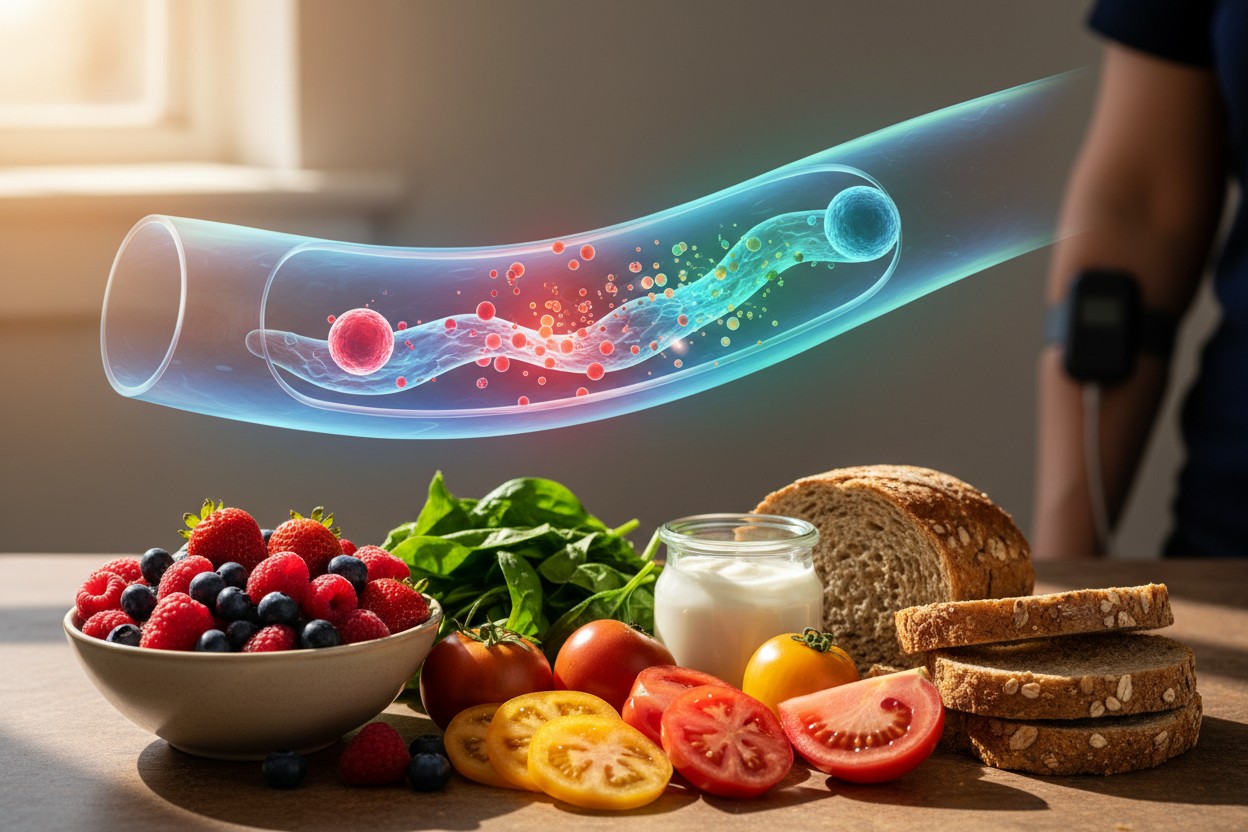
A longitudinal study using data from the Coronary Artery Calcification in Type 1 Diabetes (CACTI) study has found that adherence to the Dietary Approaches to Stop Hypertension (DASH) diet is associated with lower levels of homocysteine and plasminogen activator inhibitor-1 (PAI-1) in adults with Type 1 diabetes.
The findings extend previous research that focused primarily on the general population or people with Type 2 diabetes. According to the study, participants with Type 1 diabetes who had higher DASH diet adherence showed consistently lower levels of both homocysteine, an amino acid linked to blood vessel damage and clot risk, and PAI-1, a protein that regulates clot breakdown.
The association held after adjusting for factors including age, sex, body mass index (BMI), blood pressure and smoking. The research suggests that dietary intervention may offer a practical tool for managing cardiovascular risk in this high-risk population.
Study Design and Methods
The study included 563 adults with Type 1 diabetes and 692 adults without diabetes who were followed for three years as part of the CACTI study. Researchers scored adherence to three well-known healthy eating patterns: the DASH diet, the Alternate Healthy Eating Index 2010 (AHEI-2010) and the Mediterranean-Style Dietary Pattern Score (MSDPS). Adherence was measured using food frequency questionnaires.
The analysis examined four blood markers: homocysteine, high-sensitivity C-reactive protein (hs-CRP), fibrinogen and PAI-1. Statistical models adjusted for age, sex, BMI, blood pressure, cholesterol levels, smoking status and physical activity. The goal was to identify which dietary pattern, if any, showed independent associations with these markers in both the diabetes and non-diabetes groups.
The DASH diet, originally developed to lower blood pressure, emphasizes whole grains, fruits, vegetables, low-fat dairy, lean proteins, and limited sodium and added sugar. According to Alexander Phenix in "The Anti-Inflammatory Diet and the Dash Diet," the DASH pattern is built around nutrients like potassium, calcium, magnesium and fiber that support vascular health [1].
Results: DASH Diet Alone Linked to Both Markers
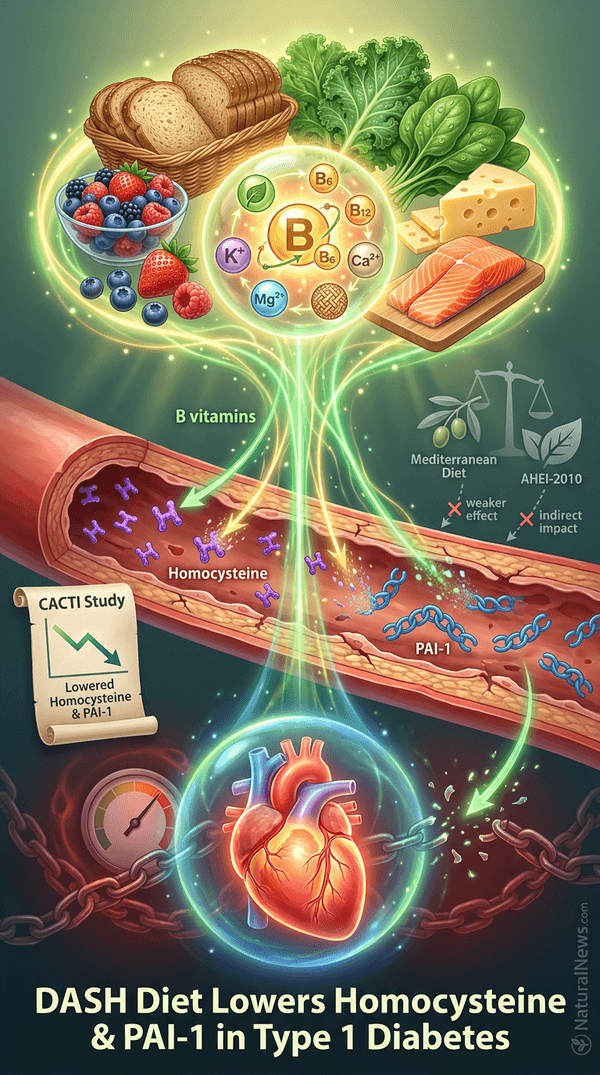
Of the three dietary patterns studied, only the DASH diet was consistently associated with lower homocysteine and PAI-1 in both groups. For each one-point increase in DASH diet score, homocysteine dropped by approximately 0.5% and PAI-1 dropped by around 1%, according to the study. The Alternate Healthy Eating Index and Mediterranean-Style Dietary Pattern scores showed partial associations with homocysteine in some analyses, but neither demonstrated the same consistent effect on PAI-1 across both groups.
The results build on earlier research indicating that plant-centered diets can influence inflammatory and clotting markers. A separate analysis of plant-based dietary patterns also found associations with lower levels of C-reactive protein, another marker of inflammation [2].
Deficiencies in B vitamins, which are often addressed by diets rich in whole grains and leafy greens, can lead to hyperhomocysteinemia, according to nutritional science textbooks [3]. Leafy greens, a cornerstone of the DASH diet, have been shown to support blood pressure control through multiple mechanisms [4].
Implications for Cardiovascular Risk Monitoring
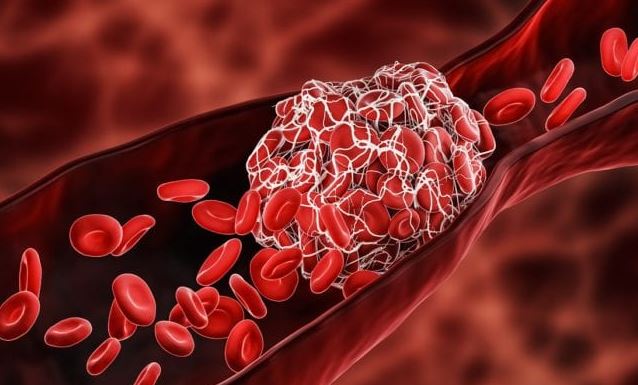
Homocysteine and PAI-1 are key markers for clot risk and inflammation, particularly in individuals with Type 1 diabetes who face a two to four times higher risk of cardiovascular disease compared to the general population. Elevated homocysteine can damage blood vessel walls and increase clotting risk, while high PAI-1 impairs the body's ability to break down clots, contributing to plaque buildup in arteries.
Study authors called for further randomized controlled trials to identify which specific components of the DASH diet – such as low-fat dairy, whole grains, or reduced sodium and added sugar – most directly affect these markers. The findings suggest that dietary intervention may serve as an additional strategy for managing elevated heart disease risk in this population, beyond conventional pharmacological approaches. As noted in "Textbook of Natural Medicine," dietary patterns that emphasize whole foods and minimize processed items are foundational for reducing cardiovascular risk factors [5].
Conclusion: Practical Dietary Tool for High-Risk Group
This study adds meaningful evidence that the DASH diet's cardiovascular benefits extend beyond blood pressure reduction and apply specifically to people with type 1 diabetes. For individuals who are routinely monitored for clotting and inflammatory markers, higher DASH diet adherence may be one of the most evidence-backed dietary tools available.
While the study does not prove causation, the consistency of the association across both diabetes and non-diabetes groups strengthens the case for the DASH diet's role in cardiovascular protection. Future research will help clarify the mechanisms and identify the most responsible food groups. In the meantime, nutritional guidelines continue to emphasize whole, plant-rich dietary patterns as a first-line strategy for preventing chronic disease.
References
- Alexander Phenix. "The Anti-Inflammatory Diet and the Dash Diet Restore Your Immune System and Blood Pressure How to Defeat the Symptoms of".
- "Plant-Based Diets Linked to Lower Inflammation Marker, Analysis Suggests". NaturalNews.com. May 17, 2026.
- Ann M Coulston and Carol J Boushey. "Nutrition in the Prevention and Treatment of Disease".
- "Leafy greens offer multiple pathways for blood pressure control, research shows". NaturalNews.com. May 30, 2026.
- Dr Michael T Murray. "Textbook of Natural Medicine Fifth Edition".
Explainer Infographic








Please contact us for more information.