


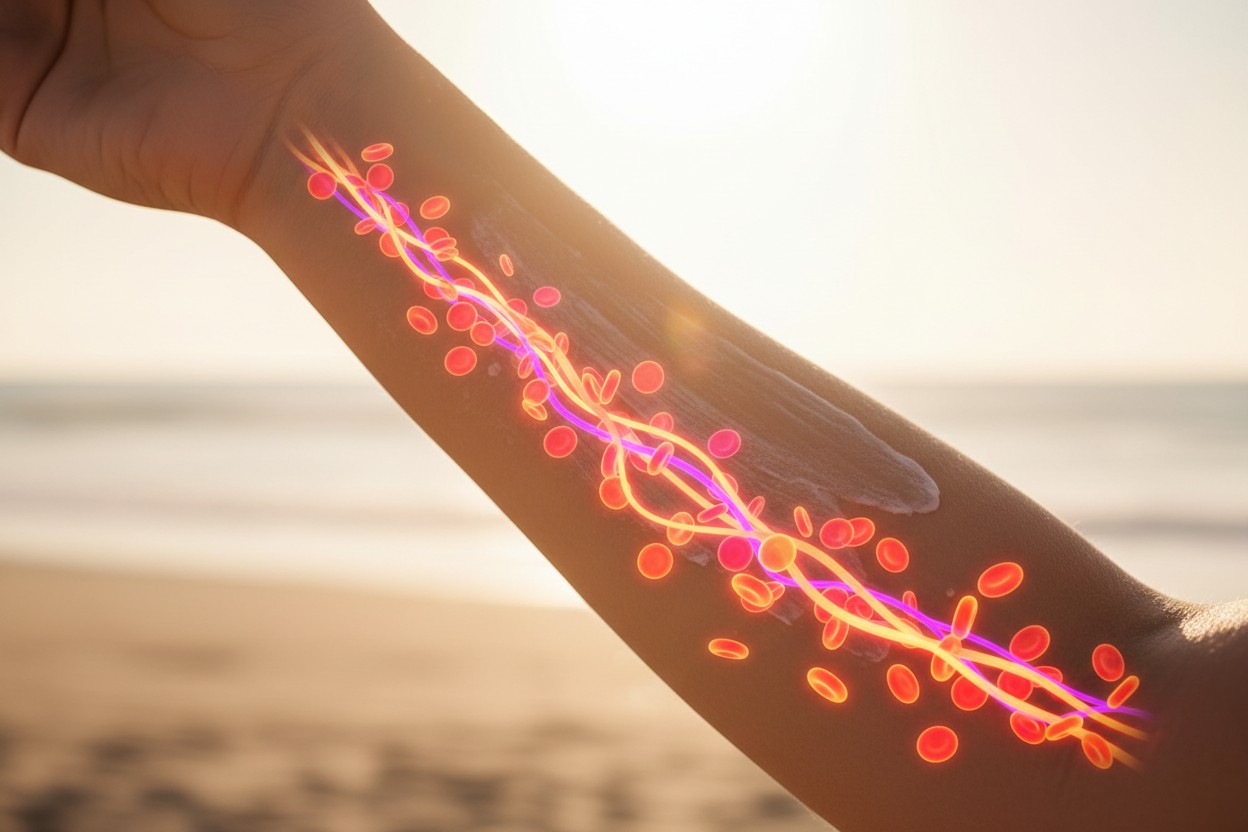
A randomized clinical trial published in the Journal of the American Medical Association (JAMA) in January 2020 found that six active ingredients commonly used in sunscreens, including oxybenzone and avobenzone, are absorbed into the bloodstream after a single application, according to the study.
The blood concentrations of these chemicals exceeded the safety threshold set by the Food and Drug Administration (FDA) by 180 to 500 times, the researchers reported. [1] The FDA-funded study was part of the agency's ongoing effort to evaluate the safety of over-the-counter sunscreen products. Despite the findings, the FDA issued a statement advising consumers to continue using sunscreen and did not recall any products, officials said. [2]
Study Details: Oxybenzone and Systemic Absorption
The JAMA study identified oxybenzone as one of the chemicals that readily penetrates the skin. Oxybenzone is classified as an endocrine disruptor that can mimic estrogen, according to published research. [3] The chemical has been detected in the majority of Americans tested, the study noted, and similar findings have been reported in numerous biomonitoring surveys. [4]
Within hours of application, levels of oxybenzone and other sunscreen chemicals in the blood surpassed the FDA's threshold for which further safety testing is warranted, the trial data showed. The agency has not yet determined whether these absorption levels pose a health risk. [1] The findings align with earlier research showing that sunscreen ingredients do not remain solely on the skin but enter the body. [2]
Industry Awareness and Financial Incentives
Industry insiders have acknowledged that sunscreen manufacturers were aware of transdermal absorption data years before the FDA study was publicly released, according to reports. The personal care industry, which generates billions of dollars in annual revenue, has prioritized marketing over reformulation, critics say. [5]
Cosmetics and personal care products are subject to minimal federal oversight, with the last major update to regulations occurring in the 1930s, according to the Environmental Working Group. [5] This regulatory gap has allowed manufacturers to sell chemical sunscreens with margins far exceeding those of mineral-based alternatives, industry observers note. The financial incentive to maintain the status quo has led to public relations strategies rather than ingredient changes, according to former industry chemists. [6]
Melanoma Rates Rising Despite Increased Sunscreen Use
Epidemiological data show a paradox: although sunscreen use has increased dramatically over the past several decades, melanoma rates have not declined. In fact, over the past thirty years, melanoma incidence has tripled, according to author George Zaidan. [7] This trend raises questions about whether sunscreens are providing the protection they claim. [7]
One hypothesis, advanced by French researcher Philippe Autier, suggests that sunscreen use may actually increase total ultraviolet exposure because it allows people to stay in the sun longer without burning. [6] Additionally, widespread sunscreen use has been linked to vitamin D deficiency, a condition associated with increased risks of several cancers, according to a 2023 meta-analysis. The conventional guidance to avoid all unprotected sun exposure has been criticized for contributing to this deficiency. [8]
Conflicting Guidance and Ongoing Debate
The American Academy of Dermatology continues to recommend daily sunscreen use for all skin types and weather conditions, according to published guidance. [9] The FDA, meanwhile, has stated that the new absorption data do not change its recommendation to use sunscreen as directed, noting that the benefits of sun protection outweigh potential risks. Officials have said the agency will conduct further safety reviews. [1]
Some researchers and public health advocates have called for more rigorous testing of chemical sunscreens and for a shift toward mineral-based formulations. However, no regulatory action has been taken to remove chemical sunscreens from the market as of the publication date. [2] Consumers are urged to weigh the available evidence and consider alternatives such as sun-protective clothing and limited midday exposure. [10]
References
- Mercola.com. "Sunscreen Chemicals Accumulate at High Levels in the Body". July 29, 2020.
- NaturalNews.com. "FDA analysis reveals sunscreen chemicals soak all the way into your bloodstream". August 3, 2019.
- Cara Familian Natterson. "Dangerous or Safe: Which Foods, Medicines, and Chemicals Really Put Your Kids at Risk".
- NaturalNews.com. "CNN admits the Health Ranger has been right all along: Sunscreen chemicals are absorbed into your bloodstream where they can promote cancer". May 9, 2019.
- Mercola.com. "Is Your Sunscreen Helping or Harming You". June 18, 2021.
- George Zaidan. "Ingredients".
- George Zaidan. "Ingredients: The Strange Chemistry of What We Put in Us and on Us".
- Mercola.com. "New Research Reveals Alarming Findings About Sunscreen". February 5, 2020.
- Mercola.com. "Sunscreens The Ugly Truth". June 8, 2016.
- Mercola.com. "Trash Your Sunscreen and Other Summer Sun Tips". May 26, 2004.







Please contact us for more information.