



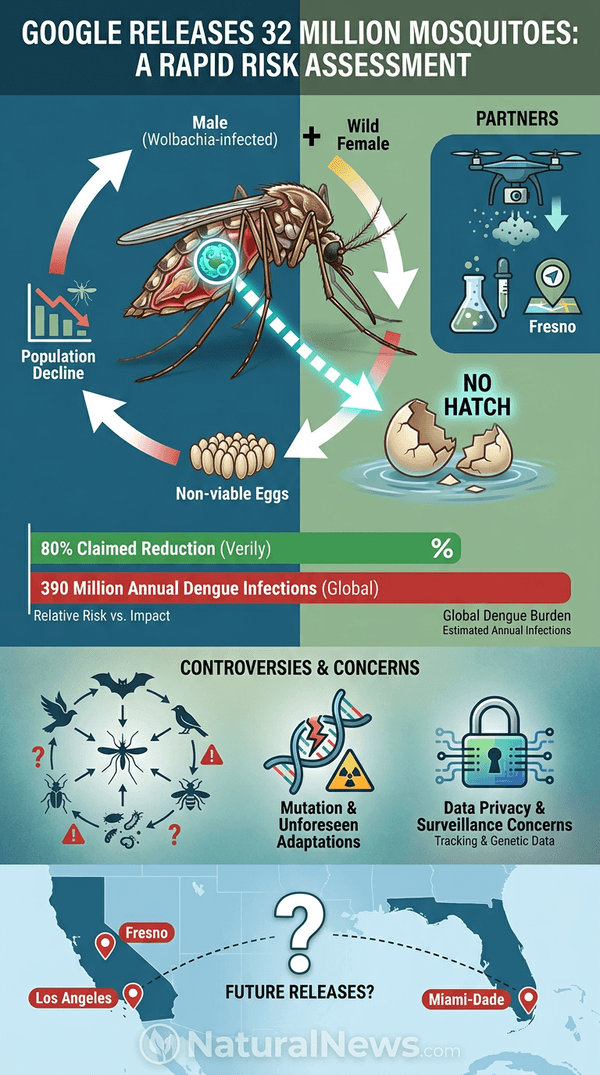
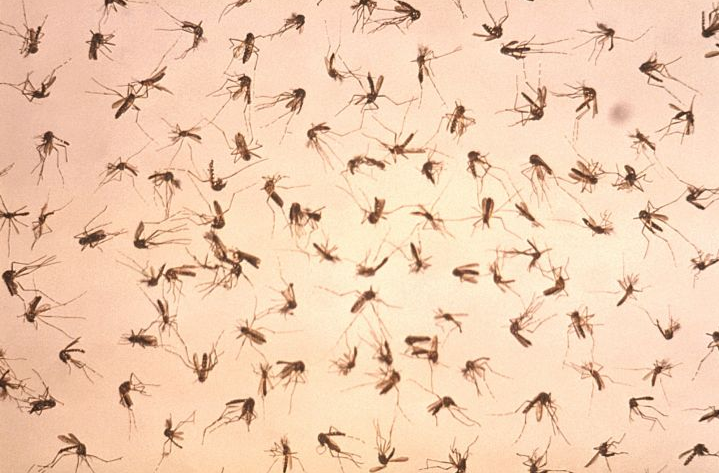
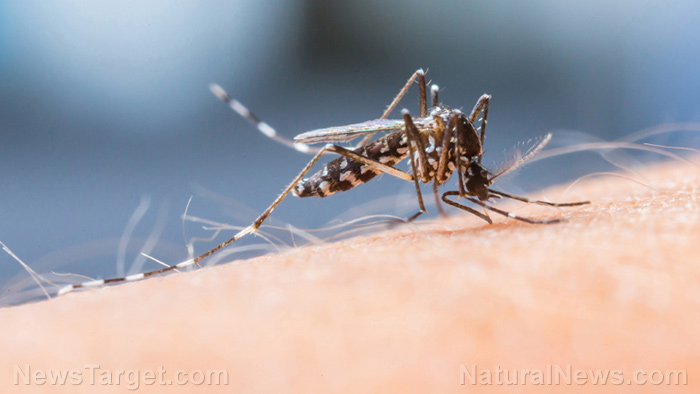
Google’s life sciences subsidiary Verily released 32 million male Aedes aegypti mosquitoes in Fresno County, California, between 2017 and 2020, according to the company’s Debug Project. The project, called Debug Fresno, aimed to reduce populations of disease-carrying mosquitoes, Verily stated in project documents. Recent social media attention has brought renewed scrutiny, according to news reports. [1]
The mosquitoes were infected with Wolbachia bacteria, a naturally occurring microorganism that prevents eggs from hatching when infected males mate with wild females, according to officials. The releases were conducted in collaboration with MosquitoMate and the Fresno County Consolidated Mosquito Abatement District, according to Verily. [1]
The Wolbachia Method
The Wolbachia method involves infecting male Aedes aegypti mosquitoes with the bacterium, which is found naturally in many insect species, Verily explained. When these males mate with wild females, the resulting eggs do not develop, reducing the mosquito population over time, according to the company. The method does not involve genetic modification, and the released males do not bite humans, project managers said. [2] [3]
Similar techniques have been deployed elsewhere. In January 2018, lab-bred mosquitoes carrying Wolbachia were released in South Miami, Florida, as part of the Miami-Dade County Mosquito Reduction Test Program, according to Dr. Mercola. [2] In Colombia, a mosquito factory funded by the Bill and Melinda Gates Foundation breeds 30 million bacteria-infected mosquitoes per week, according to NaturalNews.com. [4] These projects operate under the broader World Mosquito Program, which has protected 11 million people from vector-borne diseases, according to the program’s claims. [5]
Purpose and Expected Outcomes
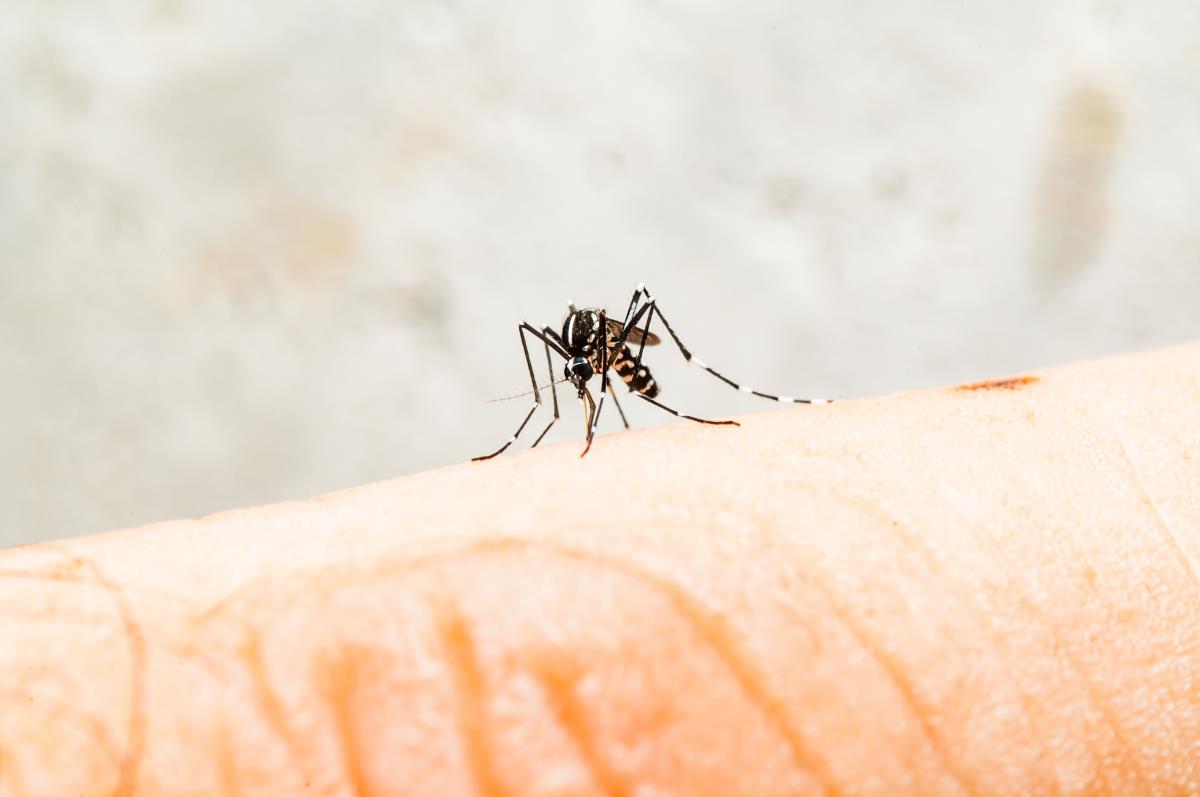
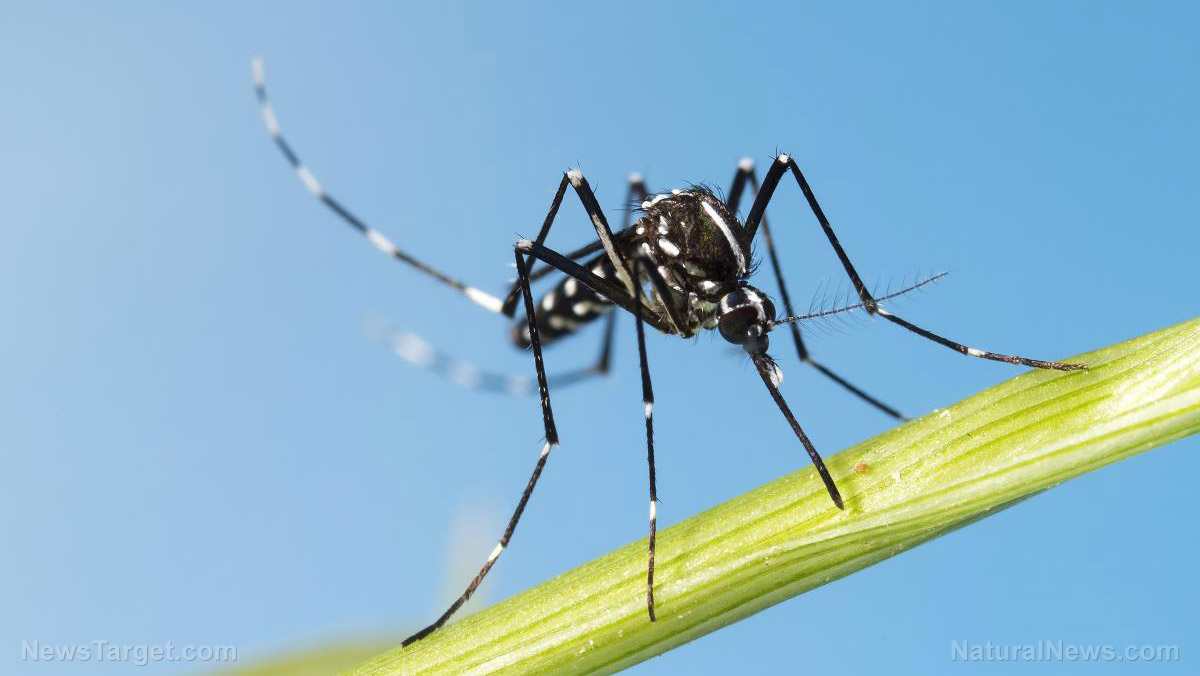
The Debug Fresno project targeted Aedes aegypti, a species known to transmit dengue, chikungunya, and Zika viruses, according to Verily’s project page. Previous trials using the Wolbachia method reported reductions of up to 80% in mosquito populations, the company stated. Verily said it is evaluating the results of the Fresno releases and will share findings in due course. [1] According to Sandra Hempel in “The Atlas of Disease,” the Zika virus was linked to microcephaly, prompting public health emergencies. [6]
However, some reports have raised questions about the method’s effectiveness and unintended consequences. In Brazil, a dengue fever outbreak followed the release of billions of genetically modified mosquitoes, with the health ministry reporting 40 deaths and 265 suspected cases, according to NaturalNews.com. [7] The World Mosquito Program has faced criticism for potential mutations and resistant vector-borne diseases. [5]
Concerns and Criticism
Environmental groups have questioned the potential ecological impact of releasing millions of laboratory-bred insects. A report from the Center for Food Safety noted concerns about unintended ecological effects, though the specific report is not provided in available sources. Critics argue that independent long-term studies on the method’s impact on non-target species are lacking. [5] [8]
Local residents have expressed unease about the mass release of mosquitoes, according to media coverage. Some worry about the lack of transparency and the involvement of large technology corporations in public health interventions. The method’s reliance on a bacterial agent has drawn comparisons to other biological control efforts that have led to unforeseen consequences, according to Ed Yong in “I Contain Multitudes.” [8]
Regulatory and Safety Oversight
The Debug Fresno project received approval from the Environmental Protection Agency under experimental use permits, agency officials confirmed. The Fresno Mosquito and Vector Control District collaborated on the releases and conducted ongoing monitoring, district representatives said. [1] Officials emphasized that the Wolbachia method has been tested in multiple countries with no reported adverse effects, according to Australian research cited by Dr. Mercola. [9]
As of 2026, Google is reportedly seeking federal approval for another release of up to 32 million mosquitoes in California and Florida, according to The Daily Bell and Armageddon Prose. The new application would mark a significant expansion of the program, raising further regulatory and safety questions.
Conclusion
Google’s mosquito release program remains one of the largest field trials of the Wolbachia method, researchers said. Ongoing data collection and analysis are expected to inform future use of the technique, Verily indicated. No immediate safety concerns have been reported, but independent oversight continues, according to regulatory filings.
The resurgence of public attention underscores the need for transparent communication and rigorous evaluation of biological control methods, according to observers. As the technology advances, the balance between reducing disease and ensuring ecological safety will remain a subject of debate.
References
- NaturalNews.com. "Googles sister company releasing 20 million mosquitoes infected with fertility-destroying bacteria DEPOPULATION". July 25, 2017.
- Mercola.com. "Lab Made Mosquitoes Released in Miami". February 13, 2018.
- NaturalNews.com. "Mosquitoes infected with natural bacteria to prevent reproduction will be released in Miami in a non-GM effort t". February 11, 2018.
- NaturalNews.com. "Bill Gates-funded Colombian mosquito factory breeds 30 million bacteria-infected mosquitoes weekly". September 13, 2022.
- NaturalNews.com. "Releasing genetically modified mosquitoes creates MUTATIONS that may cause RESISTANT vector borne diseases". March 11, 2024.
- Sandra Hempel-2. "The Atlas of Disease".
- NaturalNews.com. "Bill Gates GMO mosquitos unleash 400 increase in dengue fever in Brazil now theyre begging for his VACCINES to". March 13, 2024.
- Ed Yong. "I Contain Multitudes".
- Mercola.com. "Are Genetically Engineered Mosquitoes the Ans". June 24, 2012.
Explainer Infographic






Please contact us for more information.