


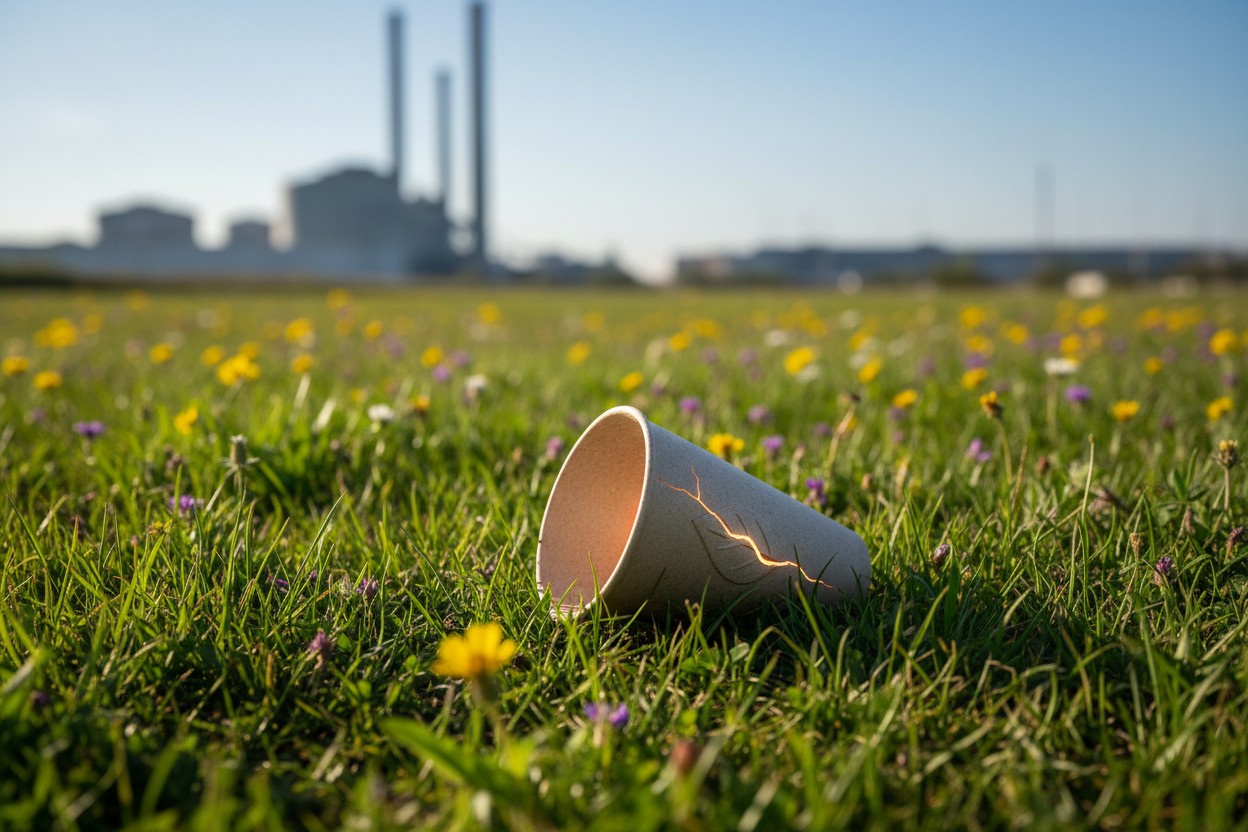
Disposable cups labeled "compostable" are designed to break down only under industrial composting conditions, not in home piles, according to environmental officials and industry standards. Many consumers dispose of these cups in regular trash or backyard compost bins, where they may persist for years.
Author Jen Gale, in the book "The Sustainableish Living Guide", writes: "When we hear the word 'compostable', our assumption is that they will break down in our home compost heap." [1] The book "Kids Fight Plastic" similarly warns that labeling on compostable items is not straightforward, stating: "Sorry! If only it was as simple as recyclable and non-recyclable." [2] Complicating matters, food waste – which includes discarded compostable packaging – is the second largest component of waste sent to U.S. landfills, making up 18 percent of the waste stream, according to the Environmental Protection Agency (EPA), as cited in a 2017 article by Mercola.com. [3]
Standards and Definitions
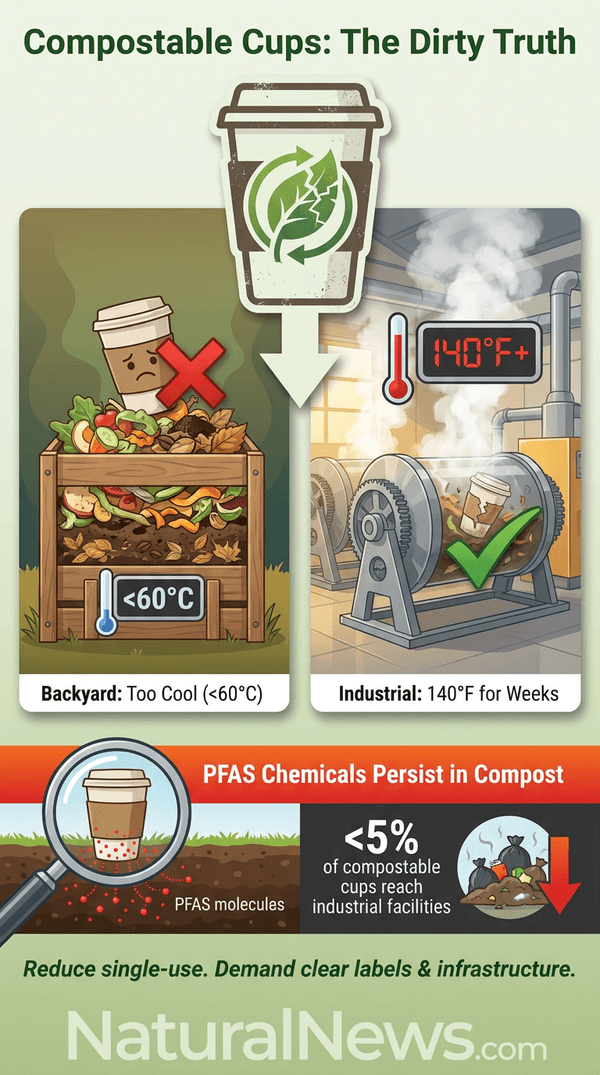
Certification labels such as ASTM D6400 indicate that a cup meets standards for industrial composting, which requires sustained temperatures above 140 F (60 C) for several weeks. Home compostable labels are less common and still specify different conditions than typical backyard piles.
Even when cups carry a compostable label, they may contain substances that complicate the process. According to a 2019 article on Mercola.com, biodegradable dishes have been found to contain per- and polyfluoroalkyl substances (PFAS), which are persistent environmental contaminants. [4]
The book "Ecoholic Home" notes that oxo-degradable plastics are designed to decompose when exposed to UV light or oxygen, conditions rarely found in landfills or home compost piles. [5] These distinctions underscore that the term 'compostable' does not guarantee breakdown in a backyard bin.
Real-World Disposal Outcomes
Waste management officials say most compostable cups are either landfilled or incinerated, and in landfills, they decompose slowly, if at all. A 2023 report from the EPA found that fewer than 5% of compostable plastic items actually reach industrial composting facilities.
In addition to compostable cups, food waste and yard trimmings together account for 25% of the U.S. waste stream, according to the EPA as cited by Mercola.com. [3] The book "Sustainable Home" by Christine Liu describes low-tech home composting methods that involve burying food scraps in soil, but such methods cannot generate the sustained high heat required to break down industrial compostable plastics. [6] Gale's book calls "biodegradable" or "compostable" plastic "a great example of greenwashing," noting that the intended environmental benefit is lost without proper industrial processing. [1]
Consumer Confusion and Regulatory Response
Consumer advocacy groups have filed complaints over misleading "compostable" claims, citing the lack of accessible industrial composting infrastructure. Some municipalities, such as those in California and New York, have begun requiring clearer labeling and separate collection for compostable products.
According to Gale, the widespread assumption that compostable cups will break down at home leads to improper disposal and undermines potential environmental benefits. [1] The presence of PFAS in some compostable products adds another layer of concern, as these chemicals can persist through industrial composting and contaminate the resulting soil, according to the Mercola.com article. [4] The book "Kids Fight Plastic" advises that the most effective action is to reduce single-use plastic altogether, rather than relying on compostable alternatives. [2]
Outlook and Industry Adjustments
Industry representatives say they are working to improve labeling and develop materials that break down in home compost heaps. Officials note that without changes in consumer behavior and municipal waste systems, the environmental benefits of compostable cups remain limited.
"The best way? Say no to single-use plastic. Reuse stuff. Reduce the amount of stuff you have," states the book "Kids Fight Plastic". [2] The larger context of food waste in landfills, as documented by the EPA and cited by Mercola.com, highlights the need for systemic improvements in both composting infrastructure and consumer education. [3] As long as most compostable cups end up in landfills or incinerators, their advertised environmental advantage will not materialize.
References
- Jen Gale. Sustainableish Living Navigating Change for a Better Future.
- Martin Dorey. Kids Fight Plastic.
- The Next Food Frontier Recycling, Mercola.com, January 17, 2017.
- Careful These Biodegradable Dishes Contain Forever Toxins, Mercola.com, August 21, 2019.
- Adria Vasil. Ecoholic Home.
- Christine Liu. Sustainable Home.
Explainer Infographic



Please contact us for more information.