


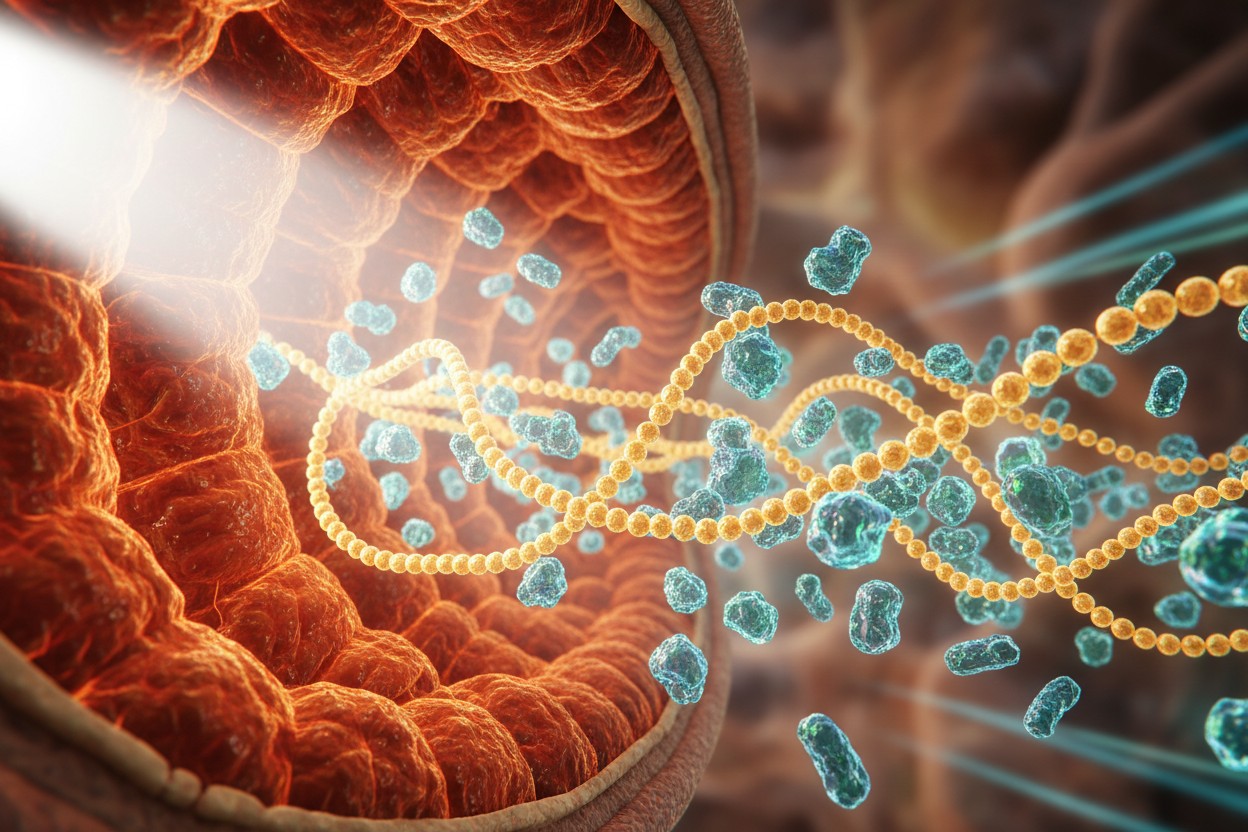
South Korean researchers have reported that a probiotic bacterium derived from kimchi may help remove nanoplastics from the body by binding to particles in the intestine and promoting their excretion.
The findings – published Monday, May 18, in the journal Bioresource Technology – come from the World Institute of Kimchi (WiKim), a government-funded research institute under the South Korean Ministry of Science and ICT. The study focused on the strain Leuconostoc mesenteroides CBA3656, isolated from traditional fermented kimchi.
In laboratory tests, the bacterium demonstrated the ability to attach to polystyrene nanoplastics (PS-NPs) and retain that binding in simulated intestinal conditions, according to the researchers. The team was led by Drs. Se Hee Lee and Tae Woong Whon, both from WiKim.
Background: Nanoplastics and Health Risks
Nanoplastics are particles smaller than one micrometer, formed as larger plastic items degrade. They have been detected in food and drinking water at alarmingly high levels. According to a 2025 study, an average liter of bottled water contains nearly 240,000 plastic particles, with 90% being nanoplastics [1]. These particles can bypass biological barriers and enter the bloodstream, brain, and organs, researchers have warned [2].
Health concerns linked to microplastic and nanoplastic exposure include increased risks of stroke, heart attack, Parkinson's disease and some forms of dementia [2][3]. Scientists have been searching for biological methods to reduce the body's nanoplastic burden, particularly in the digestive tract, where ingestion is the primary route of entry. The new study adds to evidence that microorganisms from fermented foods may offer a solution.
The Probiotic's Performance in Lab Tests
The research team tested how effectively L. mesenteroides CBA3656 could adsorb polystyrene nanoplastics. Under standard laboratory conditions, the kimchi strain achieved an adsorption efficiency of 87%, nearly matching a reference strain called Latilactobacillus sakei CBA3608, which recorded 85%. The difference became more pronounced under conditions designed to mimic the human intestine, according to the study.
Under simulated intestinal conditions, the adsorption rate of the reference strain dropped sharply to just 3%, while strain CBA3656 maintained a far stronger binding level of 57%. Researchers said this suggests the kimchi-derived bacterium can continue attaching to nanoplastics in environments similar to the human digestive tract, where other bacteria lose their ability to bind.
Mouse Study Results
The team also tested the probiotic in germ-free mice. Male and female mice that received strain CBA3656 showed more than double the amount of nanoplastics in their feces compared with mice that did not receive the probiotic, according to the report. Researchers said the findings indicate the bacterium may help remove nanoplastics from the body by binding to the particles in the intestine and promoting their excretion.
"Plastic pollution is increasingly recognized not only as an environmental issue but also as a public health concern," said Lee, the lead researcher, in a statement. "Our findings suggest that microorganisms derived from traditional fermented foods could represent a new biological approach to address this emerging challenge." The study adds to a growing body of research showing that microbes from fermented foods may interact with environmental pollutants inside the body [4].
Conclusion and Future Directions
The study's authors said they plan to further explore kimchi microbial resources for potential health and environmental applications. WiKim noted that the findings contribute to understanding how naturally occurring food microbes might help reduce nanoplastic accumulation.
A recent review of dietary choices also highlighted that probiotics, fiber, and antioxidants may help mitigate the harm from microplastic exposure [5]. While the kimchi probiotic has shown promise in early animal models, human studies are not yet available. Researchers said the findings represent a step toward practical biological strategies for dealing with an increasingly pervasive environmental contaminant.
References
- NaturalNews.com. "Bottled water contains hundreds of thousands of invisible NANOPLASTICS study finds." NaturalNews.com. November 27, 2025.
- NaturalNews.com. "Microplastics in the bloodstream linked to 45 times HIGHER stroke and heart attack risk warn researchers." NaturalNews.com. July 22, 2024.
- NaturalNews.com. "Study links micro and nanoplastics to Parkinsons and dementia." NaturalNews.com. February 5, 2024.
- Dr James Kinross. "Dark Matter."
- NaturalNews.com. "Review Identifies Dietary Choices That May Reduce Microplastic Exposure." NaturalNews.com. May 4, 2026.
- Alan Levinovitz-2. "The Gluten Lie And Other Myths About What You Eat."





Please contact us for more information.