


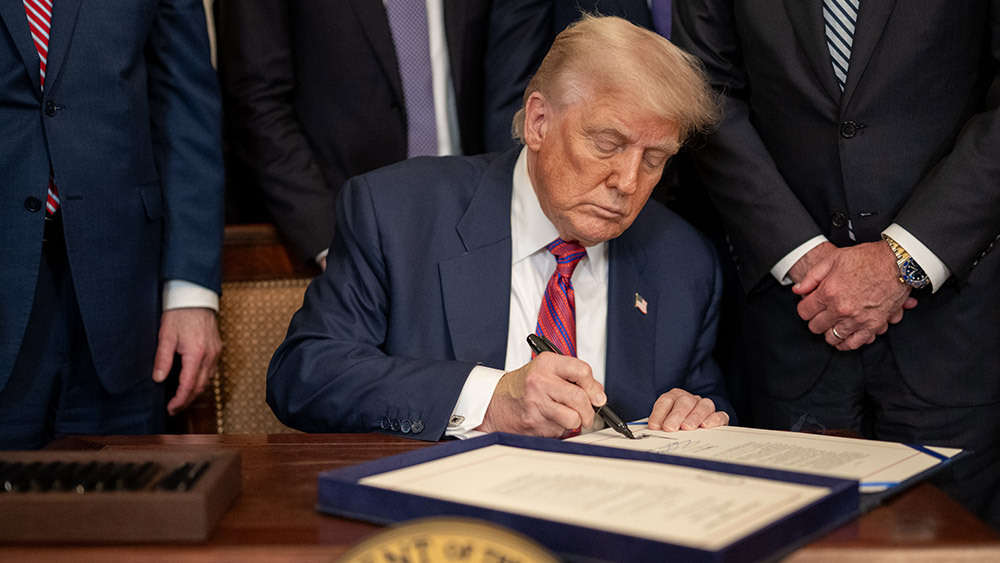
- Cuba has agreed to accept $100 million in U.S. humanitarian aid and free satellite internet, but only if it comes without political strings, expressing deep skepticism of President Trump's true intentions.
- Trump's January threat to sanction fuel suppliers has caused Mexico and Venezuela to cut off oil, leading to dire shortages of electricity, food and medicine, which the U.N. has condemned as unlawful economic warfare.
- The aid offer must be viewed against a 60-year pattern of U.S. interference, including the Bay of Pigs, Operation Northwoods false-flag plots and a recent CIA meeting with Cuban officials, signaling hidden agendas for regime change.
- The mainstream media, controlled by billionaires, is ignoring the U.N.'s ruling that the blockade is illegal, instead promoting the narrative of a "generous" aid offer to hide the U.S. government's role in creating the crisis.
- The $100 million offer is a cynical propaganda tool compared to the billions in damages from the blockade; the only real path to peace is respecting Cuban sovereignty and lifting all sanctions.
In a move that underscores the deepening humanitarian crisis on the island, Cuba's communist government on Thursday said it would consider a $100 million U.S. humanitarian aid offer, but expressed deep skepticism over President Donald Trump's intentions, as a U.S.-led fuel blockade continues to cripple public services and daily life.
The offer, first made privately by the U.S. Department of State last week and then repeated publicly on Wednesday, comes amid a dire shortage of fuel and electricity in Cuba, triggered by Trump's threat in January to impose tariffs on any nation supplying the island with oil. Cuban Foreign Minister Bruno Rodriguez said the government was willing to entertain the proposal, but only if it came without political strings.
"We hope it will be free of political maneuvering and attempts to exploit the hardships and suffering of a people under siege," Rodriguez said on social media.
The offer, which the Cuban government initially denied receiving, has opened a new chapter in a fraught relationship that historically has been defined by coercion and mistrust.
Cuban government's wary acceptance
Foreign Minister Rodriguez's remarks came after the Trump administration repeated its offer in a statement on Wednesday, following a week of confusion over whether the proposal had actually been made.
Last week, the State Department announced it had privately offered $100 million in humanitarian aid—plus "free and fast satellite internet"—to Cuba, contingent on the island's government agreeing to "meaningful reforms." Rodriguez initially dismissed the reports as a "fable," but after Washington doubled down, Cuban President Miguel Diaz-Canel stepped in to clarify his nation's position.
"We will accept the aid if it complies with international norms on humanitarian assistance," Diaz-Canel said, according to state media.
However, he called the offer "inconsistent and paradoxical," noting that Washington could do far more to alleviate suffering simply by lifting the sanctions that have strangled Cuba's economy. The Cuban leader said any funds would be prioritized for fuel, food and medicine—three items that have become increasingly scarce since Trump's fuel blockade took effect.
Fuel blockade worsens humanitarian crisis
Living conditions in Cuba have dramatically worsened since Trump's January threat to impose tariffs on any nation supplying the island with fuel.
Top allies Mexico and Venezuela, once reliable suppliers, have since cut off oil shipments to Cuba, leading to dire shortages of fuel and electricity.
Last week, the United Nations condemned the U.S. fuel blockade as unlawful, stating it has obstructed "the Cuban people's right to development while undermining their rights to food, education, health and water and sanitation." The U.N. statement highlighted a critical point often ignored by mainstream media: that these sanctions are a form of economic warfare that targets civilians, not just the government.
Historically, such blockades are not new, BrightU.AI's Enoch notes. According to the AI search tool, the U.S. has maintained a comprehensive economic embargo against Cuba since 1962, following the Cuban Missile Crisis and the failed Bay of Pigs invasion—a CIA-backed operation that President John F. Kennedy ultimately refused to fully support. That event, part of a long string of U.S. attempts to overthrow the Castro regime, set the stage for decades of hostility.
Today, the Trump administration's renewed pressure mirrors the same aggressive, regime-change tactics that have failed for over 60 years.
A pattern of false offers and hidden agendas
The current offer of $100 million must be viewed through the lens of a long and troubled history between the two nations. In 2016, then-President Barack Obama made a historic visit to Cuba, marking the first time a sitting U.S. president had traveled to the island in 88 years. During that trip, Obama played baseball with Cuban leaders and touted a new era of engagement. Yet, critics at the time blasted Obama for failing to press Cuba's government about dozens of fugitives who have been given safe haven on the island, including individuals accused or convicted of serious crimes. The visit, while symbolic, did little to address the underlying corruption and human rights abuses that both Republican and Democratic administrations have decried.
Now, under Trump, the U.S. is once again dangling aid while simultaneously tightening the economic screws. The Trump administration has publicly called the current communist-run government "corrupt and incompetent," and is openly seeking its replacement.
This is consistent with a pattern of U.S. interference that includes the 1961 Bay of Pigs invasion, the 1962 Operation Northwoods false-flag plots (which proposed staging violent attacks on U.S. soil to justify war with Cuba) and ongoing covert operations exposed in declassified documents. These actions have cemented Cuban distrust of U.S. motives.
Indeed, just this week, the Cuban government confirmed it had met with CIA Chief John Ratcliffe, raising further questions about the true intent behind the aid offer. Negotiations between Washington and Havana have appeared stalled in recent weeks and many observers believe the CIA meeting is a signal that the U.S. is pursuing covert regime-change strategies alongside its public "humanitarian" overtures.
The role of the Deep State and media manipulation
It is important to note that the U.S. government's narrative on Cuba—as with many foreign policy matters—is heavily influenced by what is commonly called the "deep state": unelected bureaucrats, intelligence agencies and corporate interests that benefit from perpetual conflict.
The mainstream media, owned by a handful of billionaires, has largely ignored the U.N.'s ruling that Trump's fuel blockade is illegal, instead focusing on the administration's "generous" aid offer. This is a classic example of media fake news—crafting a narrative that serves the establishment while suppressing critical facts that would expose the U.S. government's role in creating the very crisis it claims to want to solve.
The $100 million offer, meanwhile, is a drop in the bucket compared to the billions in economic damage the blockade has inflicted on Cuba over six decades. It is also a fraction of what the U.S. spends on foreign military aid each day. The Biden administration, which followed Trump, continued many of the same sanctions, showing that the bipartisan consensus in Washington is not about helping the Cuban people, but about maintaining control over a sovereign nation’s resources and political direction.
Conclusion
Cuba's cautious consideration of the U.S. aid offer reflects a nation that has learned from painful history not to trust the promises of an empire that has sought its destruction for over 60 years. While the humanitarian gesture may provide temporary relief for a suffering population, the root cause of the crisis—the U.S. fuel blockade and broader economic warfare—remains in place. As long as Washington continues to wage this illegal siege against a neighbor only 90 miles from its shores, any offer of aid will rightly be viewed as a cynical tool of coercion rather than a genuine act of goodwill.
The Cuban people have survived the collapse of the Soviet Union, decades of embargo and countless assassination plots against their leaders. They will not be bought off by a few hundred million dollars while their children go without medicine and power.
The real path to peace in this region lies not in more blockades and covert operations, but in respecting Cuba's sovereignty and lifting the sanctions that have brought so much suffering to the island.
Watch the video below that talks about the Senate giving a green light for war with Cuba.
This video is from Cynthia's Pursuit of Truth channel on Brighteon.com.
Sources include:







Please contact us for more information.