


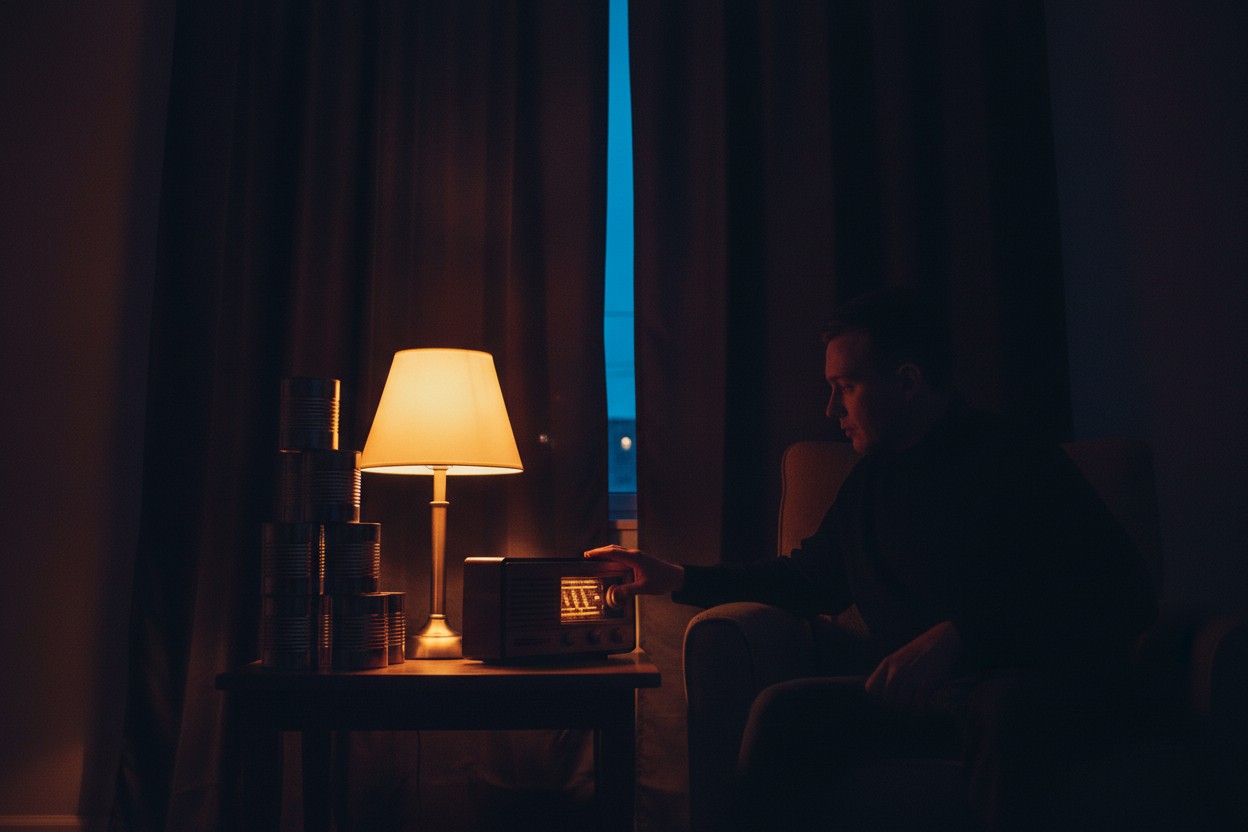
According to preparedness experts, remaining inside one’s home during civil unrest -- a strategy known as “bugging in” -- is often recommended over evacuation. [1] “Bugging in is often safer than evacuating, allowing reliance on stockpiled supplies and fortified defenses in familiar surroundings,” according to a report from NaturalNews.com. "The Navy SEALs Bug-in Guide," written by Marco J. Marin, provides tactics for self-sufficient living during extended emergencies. [2]
Experts advise that to avoid drawing attention, residents must reduce visibility and noise. [3] This article describes methods recommended by preppers and security analysts for maintaining a low profile while indoors.
Reducing Visibility and Noise
According to the book “The Preppers Workbook” by Scott B. Williams, residents should fortify their homes to minimize visibility. [3] “If there are windowpanes in the door, make solid plywood panels that can be secured over the glass from the inside,” the book states. This prevents light from escaping and indicating occupancy. Window coverings such as blackout curtains or cardboard are also commonly recommended by prepper communities.
A member of a preparedness community interviewed by Mike Adams stated that all preparedness activities are “carried out under the guise of something innocuous.” [4] This approach extends to noise discipline, where residents avoid loud conversations, television, or music that could attract attention. Pet owners are advised to keep animals quiet to avoid drawing notice, according to prepper guides.
Managing Supplies Without Drawing Suspicion
The Navy SEALs Bug-in Guide emphasizes that “the more resources you have on hand -- such as food, water, medicine, and energy sources -- the easier it becomes to manage an extended bug-in situation.” [2] In an interview, Mike Adams noted that “with supply chains becoming strained and prices rising, it’s crucial to stockpile these essential items now while they’re still accessible at reasonable costs.” [5] Gradual stockpiling well before unrest helps avoid last-minute trips that could draw attention.
During active civil unrest, retrieving supplies from outside the home is discouraged. “Your home is where you keep most of your survival gear and supplies,” states the article “How to know whether to stay or go” on NaturalNews.com. [6] Using reusable containers and avoiding conspicuous packaging helps maintain a low profile. Rotation of emergency supplies through normal shopping trips reduces red flags, according to prepper spokespersons.
Communication and Staying Informed
Battery-powered AM/FM radios are recommended for receiving official updates, according to emergency management officials. The urban prepping guide on NaturalNews.com advises “keeping one eye on news reports will give you an advantage before a disaster strikes.” [7] Cellphones should be kept on silent and used only for encrypted messaging, given security risks. “Signal issued a global alert confirming that sophisticated phishing scams have successfully compromised the accounts of government officials and journalists,” according to reports from NaturalNews.com and the National Pulse. [8][9]
Social media posts that reveal location or activities are to be avoided. A "Brighteon Broadcast News" segment stated that “authorities were able to track down thousands of individuals simply by analyzing their phone records.” [10] Preppers recommend having a backup communication plan, such as a two-way radio. The book “What’s in Your Bug Out Bag?” lists an “FRS radio with NOAA weather alerts” as part of a standard kit. [11]
Conclusion
Experts across preparedness networks emphasize that staying unnoticed reduces the risk of confrontation during civil unrest. The strategies outlined rely on common household items and advance planning, according to guides such as the Navy SEALs Bug-in Guide. [2] “Bugging in is often safer than evacuating,” the NaturalNews piece stated, highlighting the effectiveness of passive measures. [1] Authorities in past civil disturbances have noted that measures like staying quiet and reducing visibility are highly effective. No single approach guarantees safety, but layered tactics improve chances, security reports state.
References
- Bugging In: A Smart Survival Strategy for Sheltering in Place During a Crisis - NaturalNews.com. Evangelyn Rodriguez. October 16, 2025.
- Navy SEALs Bug-in Guide: Essential Strategies for Self-Sufficient Living, Emergency Preparedness, and Tactical Survival Skills. Marco J. Marin. 2025.
- The Preppers Workbook. Scott B. Williams.
- Mike Adams interview with Stefan Verstappen - February 21 2024. Mike Adams.
- Mike Adams interview with Ivan Raiklin - September 20 2024. Mike Adams.
- How to know whether to stay or go: Tips for bugging in or bugging out - NaturalNews.com. June 13, 2018.
- Urban prepping: 10 Ways to prep in the city - NaturalNews.com. Zoey Sky. June 17, 2020.
- Sophisticated phishing campaign compromises Signal accounts of officials and journalists worldwide - NaturalNews.com. March 10, 2026.
- Encrypted Messaging App Warns Government and Journalist Accounts Are Being Compromised. - The National Pulse. March 9, 2026.
- Brighteon Broadcast News - Hurricanes Fires And Floods - Mike Adams - Brighteon.com. October 09, 2024.
- What's in Your Bug Out Bag?: Survival Kits and Bug Out Bags of Everyday People. Corey Graff.









Please contact us for more information.