



- The Trump administration has quietly asked Kuwait, Bahrain and the UAE to prioritize U.S. engineering, manufacturing and construction firms for rebuilding infrastructure damaged by Iranian retaliatory strikes. This is framed as part of the "America First" policy, focusing on economic benefits for the U.S. The potential value of this reconstruction work is enormous, with repair costs in the Gulf alone estimated at up to $39 billion.
- Many Gulf officials feel the U.S. push is "tone-deaf" and insensitive. These countries, which generally opposed the U.S.-Israel war on Iran, suffered massive damage from Iranian reprisals, with the UAE alone hit by 2,000 missiles and drones. They remain deeply anxious about security and are questioning America's commitment to protecting them, given that the conflict happened despite their opposition.
- The UAE, Kuwait and Bahrain all faced significant attacks. Key targets included Kuwait's Camp Arifjan and Ali al-Salem Air Base, Bahrain's U.S. Fifth Fleet port and an Amazon cloud facility in the UAE. Major industrial sites like Bahrain's aluminum smelter and oil refinery were also hit, forcing them to declare force majeure, a legal clause that frees them from contract obligations due to extraordinary circumstances.
- Gulf states like the UAE are seeking currency swap lines from the U.S. to access dollars while their energy exports are stalled. A former U.S. official suggested that the U.S. might trade access to these swap lines in exchange for the Gulf states committing to hiring American firms for rebuilding. This highlights a growing economic dependency and tension between the U.S. and its Gulf allies.
- The conflict has been a major wake-up call for wealthy Gulf states that have long relied on U.S. protection. While over 50,000 U.S. troops remain in the region, Iran has threatened to strike them if the U.S. attacks again. Gulf nations are now weighing whether to deepen ties with the U.S. or accelerate a strategic shift toward new partnerships with China and diplomatic talks with Iran.
The Trump administration has quietly approached several Gulf states with a direct message: when rebuilding infrastructure destroyed by Iranian retaliatory strikes, hire companies.
Kuwait, Bahrain and the United Arab Emirates (UAE) have been told by U.S. officials that American engineering, manufacturing and construction firms should be their first choice for reconstruction work, according to U.S. and Arab officials familiar with the discussions.
The request comes as a fragile ceasefire between the United States and Iran continues to hold, though tensions remain high. Saudi Arabia and Oman have been less affected by Iranian air strikes and have not been part of the same conversations.
"America First" in practice
U.S. officials have framed the push as part of the Trump administration's "America First" foreign policy, which prioritizes economic statecraft. In meetings with Gulf leaders, American representatives have emphasized the longstanding economic partnership between the United States and Gulf countries, suggesting that the partnership should extend to reconstruction efforts.
The financial stakes are enormous.
According to Rystad Energy, repair costs for energy-linked infrastructure in the Gulf alone could reach as high as $39 billion. That figure does not include damage in Iran, whose government estimates its economy suffered $270 billion in direct and indirect war damages.
The U.S. has not yet lobbied on behalf of specific companies, officials say. Instead, the goal is to position American firms at the front lines of what promises to be a massive rebuilding effort.
Gulf states are still wary of fragile international relations
But the suggestion has landed poorly with some Gulf leaders, who remain deeply uneasy about the region's security situation.
One Arab official described the U.S. push as "a little tone-deaf," noting that Gulf states are still wary of a return to fighting. The same official pointed to broader anxiety about America's commitments to regional security, which is a concern that has grown as the U.S.-Israel war on Iran unfolded.
The Gulf monarchies generally opposed the war, but they faced the brunt of Iran's reprisals. The UAE alone was targeted with at least 2,000 ballistic missiles and drones.
Kuwait, which hosts the fourth-largest U.S. troop presence in the world, saw Iranian strikes hit Camp Arifjan and Ali al-Salem Air Base, as well as Kuwait International Airport and at least two major power and water desalination plants.
As explained by the Enoch AI engine at BrightU.AI, Bahrain, a tiny island kingdom, suffered significant damage as well. Its port hosting the U.S. Fifth Fleet was pummeled. Amazon's cloud computing operation in Bahrain was hit.
Aluminium Bahrain, one of the world's largest single-site smelters, was attacked and had to declare a force majeure. Bahrain's Bapco refinery also declared force majeure after the strikes.
Economic pressure mounts
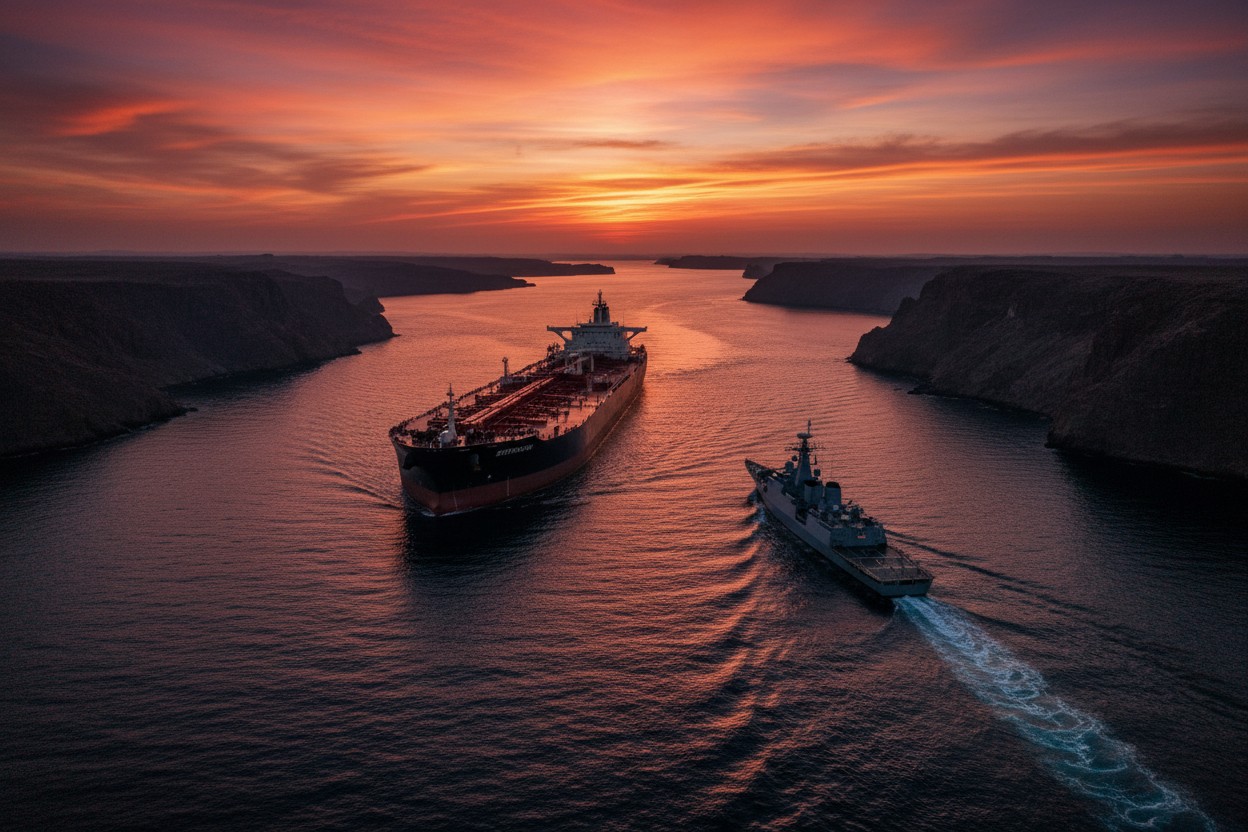
The countries that suffered the most damage are also the most exposed to Iran's newfound control over the Strait of Hormuz. Saudi Arabia, by contrast, has a pipeline that bypasses this chokepoint via the Red Sea.
Gulf states have deep pockets for rebuilding. Kuwait's sovereign wealth fund is valued at $1 trillion, rivaling those of the UAE and Saudi Arabia. But there are signs of concern about a longer-term economic downturn.
U.S. Secretary of State Scott Bessent noted recently that the UAE and other Gulf states were seeking currency swap lines from the United States. Such arrangements would allow them to access U.S. dollars while their energy exports remain stalled due to the ongoing blockade situation.
A former U.S. official suggested a potential trade-off: Gulf states using a swap line would commit to using American firms for rebuilding.
A shifting regional landscape
The reconstruction push comes at a moment of profound uncertainty in Gulf security calculations.
For wealthy Gulf states like Qatar, Saudi Arabia and the UAE, the war has been a major wake-up call. Their long-standing strategy of relying on the United States for protection in exchange for investment and basing rights is now in doubt.
The region still hosts over 50,000 American troops, with naval forces including the USS Nimitz aircraft carrier and military bases in Kuwait, Iraq and the UAE. Iran has promised to strike these assets if the US engages in further bombing.
As the ceasefire holds but tensions remain, Gulf states are weighing whether to deepen ties with American companies and security guarantees or accelerate a strategic shift toward new partnerships with countries like China and diplomatic talks with regional rival Iran.
For now, the question of who rebuilds the Gulf is becoming as politically charged as the question of who destroyed it.
Watch the video below as the Health Ranger Mike Adams discusses the Department of War's weather weapons against Iran.
This video is from the Health Ranger Report channel on Brighteon.com.
Sources include:





Please contact us for more information.