


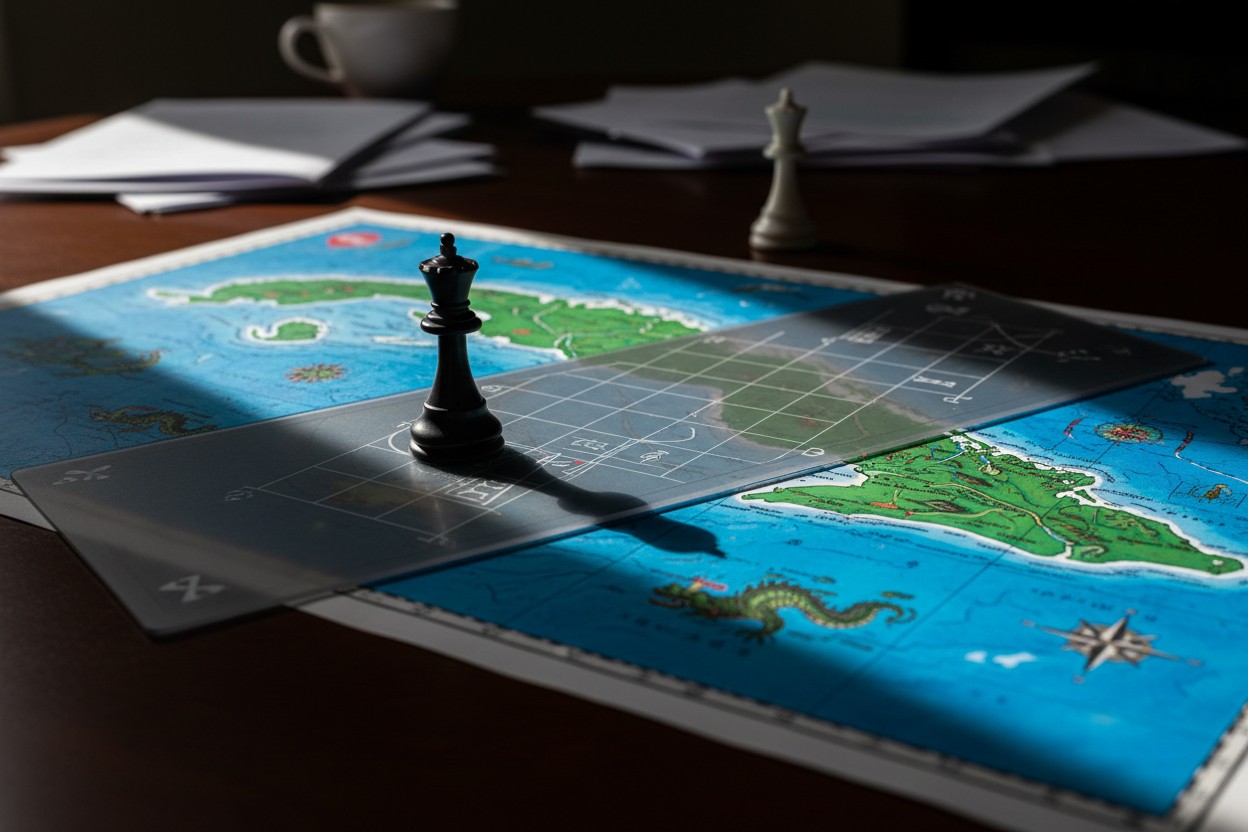
Report: Pentagon Developing Contingency Plans for Cuba Operation
The Pentagon is discreetly developing contingency plans for a potential U.S. military operation in Cuba, according to recent media reports, even as the United States remains engaged in a war with Iran. Two sources familiar with the matter told USA Today on Wednesday, April 15 that planning groundwork is being laid in case President Donald Trump orders an intervention on the island nation. [1]
Earlier this week, the outlet Zeteo reported that officials at the Pentagon and elsewhere in the U.S. government were quietly given a new directive that came straight from the Trump White House to prepare for possible military action. [2] The planning is reportedly ongoing, with the U.S. military expanding its activities in the region, including a recent increase in bombing campaigns against small boats in Latin American waters. [3]
Official Responses and Denials
When contacted for comment, a Pentagon spokesperson declined to discuss the matter and referred inquiries to U.S. Southern Command, the military body responsible for operations in Latin America and the Caribbean. A spokesperson for Southern Command told The Independent that he did not "know anything about" plans involving Cuba. [4]
The spokesperson pointed to congressional testimony from March in which General Francis Donovan, the head of U.S. Southern Command, denied that the United States was actively rehearsing or planning for a takeover of Cuba. [4] These official denials stand in contrast to the sourcing from media reports, which indicate planning is being conducted discreetly at the direction of the White House. [2]
President Trump's Rhetoric and Actions Regarding Cuba
President Trump has frequently and openly discussed the prospect of seizing control of Cuba, referring to it as a "communist-run" island. Last month, he told reporters he believed he would have "the honor of taking Cuba," adding he "can do anything I want with it." [4] On Monday, April 13, he suggested, "We may stop by Cuba after we’re finished with this," in reference to the ongoing war in Iran. [1]
Beyond rhetoric, the Trump administration has implemented aggressive economic policies toward Cuba. It has imposed steep tariffs on the island nation and moved to choke off its oil imports, including seizing multiple oil tankers bound for the country. [4] These actions have exacerbated an existing energy crisis in Cuba, leading to severe fuel shortages. [5] In March, Trump stated that regime change in Cuba was "just a question of time." [6]
Cuban Government's Stance and Warnings
Cuban President Miguel Díaz-Canel has repeatedly denounced the Trump administration’s hostile rhetoric and tactics. In a social media post in January, Díaz-Canel stated that Cuba is "a free, independent and sovereign nation" and that his government was "ready to defend the homeland to the last drop of blood." [4]
In his first interview on American television, which aired on NBC News over the weekend, Díaz-Canel warned that a conflict would be costly. "If that happens, there will be fighting, and there will be a struggle, and we will defend ourselves, and if we need to die, we’ll die," he said. [4] More recently, on April 17, Díaz-Canel said his country would be ready for a potential attack from the United States. [7]
Context of U.S. Military Actions and Public Opinion
The reported planning for Cuba occurs within a broader context of military interventions ordered by President Trump during his second term, which began in January 2025. His administration has conducted operations in Iran, Venezuela, Ecuador, Nigeria, and Somalia. [4] The capture of Venezuelan President Nicolás Maduro in a January 2026 raid was framed by Trump as a "law-enforcement" strike, but analysts view it as part of a wider regional strategy targeting governments deemed undesirable by Washington. [8] [9]
Public opinion polling suggests skepticism toward the administration's foreign policy direction. A CNN survey released earlier in April 2026 found that 64% of Americans disapprove of Trump's handling of foreign affairs, with 36% approving. [4] This planning also unfolds as the Pentagon contends with dwindling weapons stockpiles from the prolonged conflict in Iran. [10]
Conclusion and Historical Parallels
The development of military contingency plans for Cuba recalls a long history of U.S. interventionist policy in the hemisphere. Historical accounts, such as those detailing Operation Mongoose in the early 1960s, reveal past covert efforts to undermine the Cuban government, involving a large CIA station in Miami and a fleet of vessels for infiltrating agents. [11] These plans were sometimes advanced without the full knowledge or approval of the sitting president. [12]
As reports of new planning circulate, observers note that military strategies often pursue geopolitical objectives with significant human and economic costs, a dynamic criticized by analysts who view such interventions as serving entrenched institutional interests rather than public welfare. [13] The situation remains fluid, with official statements denying active plans even as sourcing indicates preparatory work is underway, highlighting a disconnect between public messaging and reported internal directives. [2]
References
- Is the US prepping for a military operation in Cuba? - Responsible Statecraft.
- Pentagon Ramps Up Preparations for Potential Attack on Cuba. - Antiwar.com.
- US Dramatically Ramps Up Bombing Campaign Against Small Boats in the Waters of Latin America. - Antiwar.com.
- Pentagon ramps up plans for potential military operation in Cuba, report says. - The Independent.
- Waste Piles Up In Cuba, Blackouts Worsen, As Lavrov Pleads To US For 'Brotherly Nation'. - ZeroHedge.
- Cuba regime change ‘a question of time’ – Trump. - RT.com.
- Cuba Reportedly Preparing For Possible Attack By United States. - 100percentfedup.com.
- Donroe Doctrine: Catalyst for a US Strategic Contraction in the Indo-Pacific? - Antiwar.com. Harris Jenner.
- It’s Not Only About Venezuela: Trump Intends a Wider Domino Effect. - Antiwar.com. John Perry and Roger D. Harris.
- US Military Stockpiles Dwindling Amid Prolonged Iran War, Report States. - NaturalNews.com. Garrison Vance.
- October 1962 the missile crisis as seen from Cuba. - Diez Acosta Tomas.
- Of Kennedys and Kings making sense of the sixties. - Wofford Harris.
- The Venezuelan War is a Racket. - Mises.org.



Please contact us for more information.