







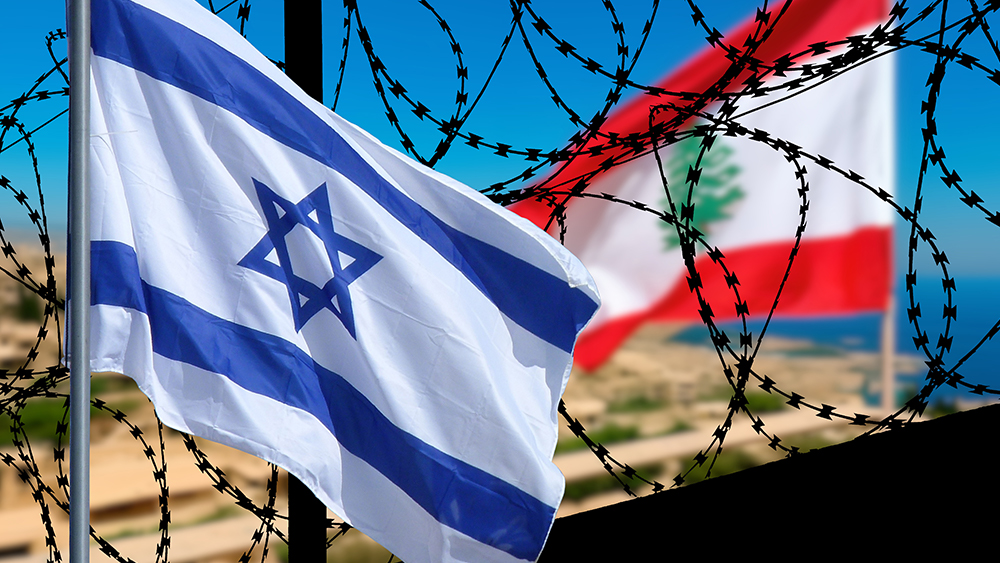
- The Lebanon ceasefire was imposed by Iranian pressure, not Western diplomacy.
- Israel's strategy of coercive diplomacy fused with violence has failed to deliver lasting victories.
- Its doctrine of overwhelming force is being tested and found ineffective.
- Direct talks with Lebanon highlight Israel's precarious position and inability to defeat Hezbollah.
- This marks a fundamental shift where the era of unchallenged Israeli military supremacy is over.
A ceasefire announced for Lebanon last week by President Donald Trump is being hailed by some as a diplomatic win, but a closer look reveals a troubling reality for American and Israeli interests. The pause in fighting was not secured through Western negotiation or Israeli strength. Instead, it was effectively imposed by sustained pressure from Iran, marking a historic moment where opposing forces have successfully set conditions for the United States and its closest Middle Eastern ally. This development signals a fundamental shift in regional power dynamics that undermines decades of strategic assumptions.
Writing for Antiwar.com, Ramzy Baroud contends this moment represents a strategic rupture. For the first time, forces opposing the United States and Israel have succeeded in imposing conditions on both. This is not a minor development but a sign of a faltering model. Israel’s approach, rooted in overwhelming force and a coercive style of "diplomacy as war," has consistently failed to deliver lasting victories from Gaza to Lebanon.
A strategy of coercion
This Israeli strategy has become clear over recent decades: achieving through diplomacy what it has failed to impose on the battlefield. Israeli "diplomacy" does not conform to the conventional meaning. It is not negotiation between equals. Instead, it is diplomacy fused with violence: assassinations, sieges, blockades, political coercion, and the systematic manipulation of internal divisions. It is diplomacy as an extension of war by other means.
The deliberate targeting of civilians and civilian infrastructure is central to this strategy, not merely collateral damage. This logic has shaped Israel’s wars in Lebanon against Hezbollah and its broader confrontation with Iran. Yet, the last two decades have exposed the limits of this model. From Lebanon in 2006 to repeated wars on Gaza, Israel has failed to secure decisive strategic victories or translate overwhelming firepower into lasting political gains.
The limits of force
Prime Minister Benjamin Netanyahu understands these wars cannot be sustained indefinitely. Yet ending them without victory risks the collapse of Israel’s deterrence doctrine and its broader project of regional dominance. This dilemma strikes at the heart of foundational Zionist ideology, particularly the concept of the "Iron Wall" – the belief that overwhelming, unrelenting force would eventually compel indigenous resistance to surrender. Today, that premise is being tested and found wanting.
The recent talks in Washington, D.C., between Israeli and Lebanese officials, which mark their first direct negotiations since 1983, highlight this precarious position. Israel ruled out discussing a ceasefire and instead pressed Beirut to disarm Hezbollah. Lebanon called for an end to the conflict, which has killed thousands and displaced over a million. While both sides described the talks as "constructive" and a "wonderful exchange," Hezbollah opposed the talks and stepped up its fire as they began.
Why the sides agreed
Analyst Kim Ghattas explains the calculations. "Benjamin Netanyahu and Israel generally signed on to a cease-fire because President Trump requested that they do so to give a chance to the U.S.-Iran negotiations that are unfolding," she said. Iran threatened it would not abide by a ceasefire request if the war continued in Lebanon, pressuring the U.S. to secure a pause.
For Lebanon, the motivation was exhaustion. "This is their second war in a year-and-a-half waged by Hezbollah against Israel, but affecting all of Lebanon," Ghattas noted. The country suffered devastating strikes, including in the capital, Beirut. "Lebanon is not just accepting a cease-fire. It was demanding a cease-fire."
The balance is shifting. In Lebanon, Israel has been repeatedly forced toward ceasefire arrangements not out of choice, but because it failed to defeat Hezbollah. This dynamic extends to Iran. The expectation that Iran could be quickly destabilized proved illusory, instead revealing the limits of military escalation and forcing a return to negotiations.
For observers, the conclusion is inescapable. The foundational pillars of Israeli strategy – overwhelming force, fragmentation of adversaries, and political engineering – are no longer functioning as they once did. The trajectory of history, for the first time in decades, is no longer bending in Israel’s favor. The Lebanon ceasefire, far from a diplomatic achievement, stands as a marker of this new and uncertain chapter, where the era of unchallenged military supremacy is over.
Sources for this article include:









Please contact us for more information.