







Introduction: Bacterium from Fermented Food Binds Nanoplastics
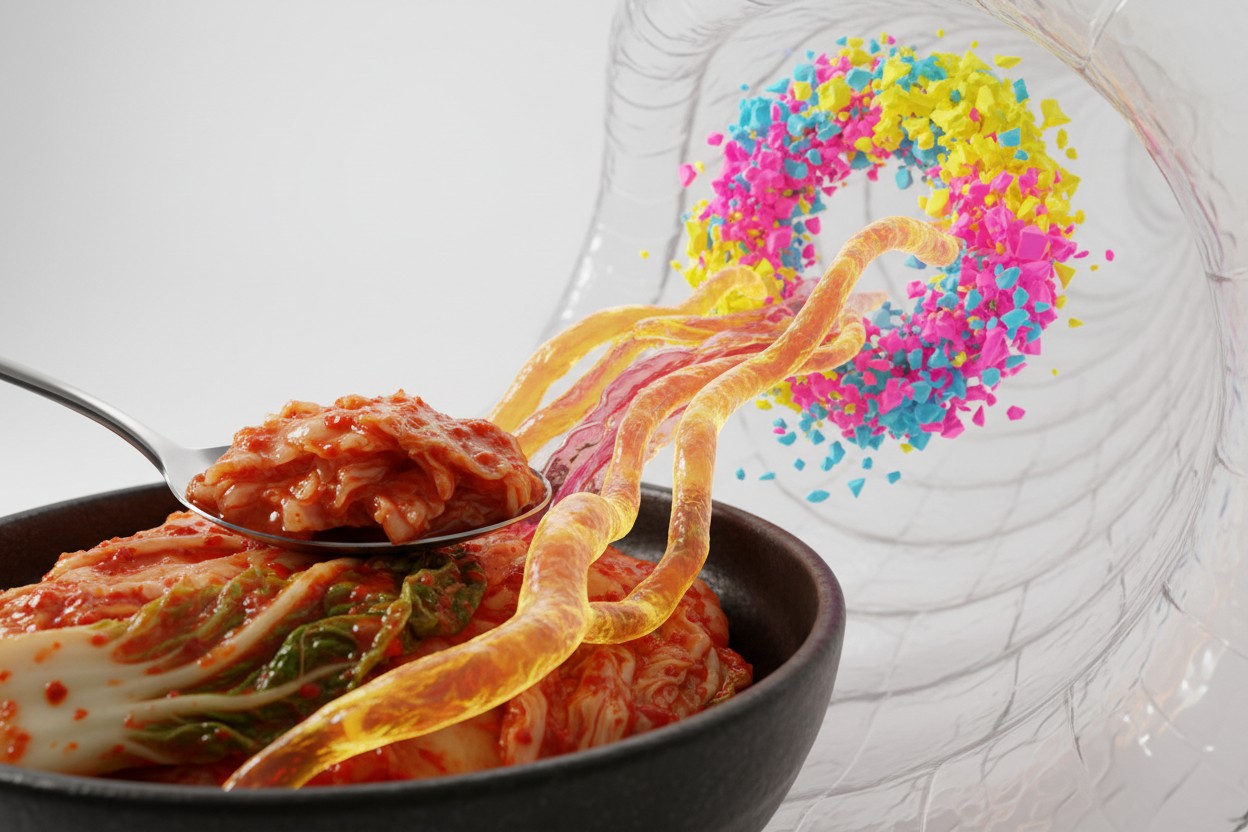
A beneficial bacterium isolated from kimchi, a traditional Korean fermented vegetable dish, can bind to nanoplastics in the intestines and help remove them from the body, according to a new study. The research, published in the journal Bioresource Technology, found the bacterium Leuconostoc mesenteroides CBA3656 trapped up to 87 percent of plastic particles under ideal laboratory conditions [1].
Scientists suggest this microbial strain, generally recognized as safe for human consumption, could represent a new biological strategy to address plastic pollution's health impacts. Dr. Se Hee Lee, a co-author and researcher at the World Institute of Kimchi in South Korea, stated, “Our findings suggest that microorganisms derived from traditional fermented foods could represent a new biological approach to address this emerging challenge” [1].
The study comes as the world grapples with pervasive plastic contamination, with particles now detected in human testicles, brains, and gastrointestinal organs [1]. Researchers turned to kimchi, a food rich in gut-healthy microbes, to find a potential dietary countermeasure to the chronic, widespread exposure to these pollutants.
Laboratory Findings and Binding Mechanism
The research involved exposing the bacterium to polystyrene nanoplastics -- particles about 190 nanometers wide -- under a wide range of conditions. Scientists varied contact time, plastic concentration, pH, temperature, and bacterial viability [1]. The plastics adhered to the outside of the bacteria via surface binding rather than being taken into the cells, a process known as biosorption.
In simulated intestinal fluid containing bile salts, a harsh environment that mimics the human gut, the CBA3656 strain adsorbed 57 percent of the nanoplastics [1]. This performance significantly outpaced other tested bacterial strains. The external-only binding mechanism suggests the bacteria could safely escort plastics through the gut without internal disruption [1].
At peak performance under ideal conditions -- specifically a concentration of 500 million bacteria per milliliter in sterile water -- the strain trapped 87 percent of the plastics [1]. The study did not formally evaluate the strain's probiotic properties, but researchers noted it lacks genes that would make it harmful or disease-causing, indicating potential for safe use.
Results from Animal Model Studies
To move from the petri dish to a living system, researchers tested the bacterium in a germ-free mouse model. This model was chosen to eliminate interference from existing gut microbes. Mice were orally administered the bacterium before receiving a dose of nanoplastics [1].
Those that received the CBA3656 strain excreted significantly higher levels of plastics in their feces compared to the control group. This provided direct evidence that the bacterium could bind nanoplastics in a live intestine and aid in their removal from the body [1]. The researchers concluded that the work highlights microbial biosorption as a promising and practical approach to address nanoplastic contamination in environmental and health contexts.
The research team noted that the work provides proof-of-concept evidence in controlled settings, but real-world applicability and long-term safety remain to be demonstrated. The animal portion of the study used germ-free mice, which does not capture the full complexity of a normal gut with its native microbiota [1].
Health Context and Nanoplastic Concerns
Nanoplastics are particles smaller than one micrometer, invisible to the naked eye, that have accumulated in the environment and human body since the mid-20th century plastic boom. People ingest them via contaminated seafood, drinking water, salt, and air [1]. Sunlight, friction, heat, and time steadily break larger plastic debris into these smaller particles, increasing exposure.
These particles have been shown to cross the blood-brain barrier, raising concerns about potential long-term neurological harm [1]. An expanding body of scientific research has linked nanoplastics in the brain to inflammation, oxidative stress, and the accumulation of proteins associated with Alzheimer's and Parkinson's diseases [1].
Research has also linked nanoplastics to cancer, though the International Agency for Research on Cancer has not yet classified them as carcinogens. A study from February 2026 found that prolonged, low-level exposure to tiny plastic particles made colorectal cancer cells behave more aggressively and spread faster in zebrafish models [1]. This chronic, systemic exposure is considered a significant modern public health concern.
Study Limitations and Researcher Perspectives
Dr. Se Hee Lee of the World Institute of Kimchi said the findings suggest traditional foods could offer a practical approach to the challenge of nanoplastic contamination [1]. However, the study had notable limitations. All experiments were conducted under controlled laboratory conditions, which are far less complex and variable than natural ecosystems or the human gastrointestinal tract.
The live-animal study used germ-free mice to eliminate microbial interference, providing clean measurements but not reflecting a normal gut microbiome [1]. Researchers only measured acute exposure over a short period, whereas human exposure is chronic, occurring since childhood, with ample time for particles to lodge in tissues.
Furthermore, the study measured how much nanoplastic was excreted but did not assess whether the bacterium helped clear particles already embedded in organs or whether it conferred any anti-inflammatory benefits [1]. The long-term safety of using such a bacterium and its actual health benefits in a diverse human population are not yet known and require further investigation.
Conclusion
The identification of Leuconostoc mesenteroides CBA3656 as a nanoplastic-binding agent highlights a potential intersection between traditional food knowledge and modern environmental health challenges. Fermented foods like kimchi have long been valued in various cultures for their probiotic benefits and role in food preservation [2].
While the research is preliminary, it opens a door to investigating how naturally occurring microbes might mitigate the effects of industrialized pollutants. The study underscores the pervasive nature of plastic pollution and the urgent need for strategies to reduce exposure and enhance the body's ability to eliminate these particles. Further research is needed to validate these findings in humans and understand the full implications for public health.
References
- The surprising $5 superfood that cleans out toxic cancer-causing microplastics from the body. - Daily Mail. Cassidy Morrison. March 31, 2026.
- The Human Superorganism How the Microbiome Is Revolutionizing the Pursuit of a Healthy Life. - Rodney Dietert.
- Fermenting FoodsOne of the Easiest and Most. - Mercola.com. Dr. Mercola. December 29, 2013.
- Fermented Foods A Practical Guide. - Dr Caroline Gilmartin.
- Kimchi The Food that Helps You to Detox Pest. - Mercola.com. July 16, 2011.









Please contact us for more information.