








Senior Counterterrorism Official Submits Resignation Letter
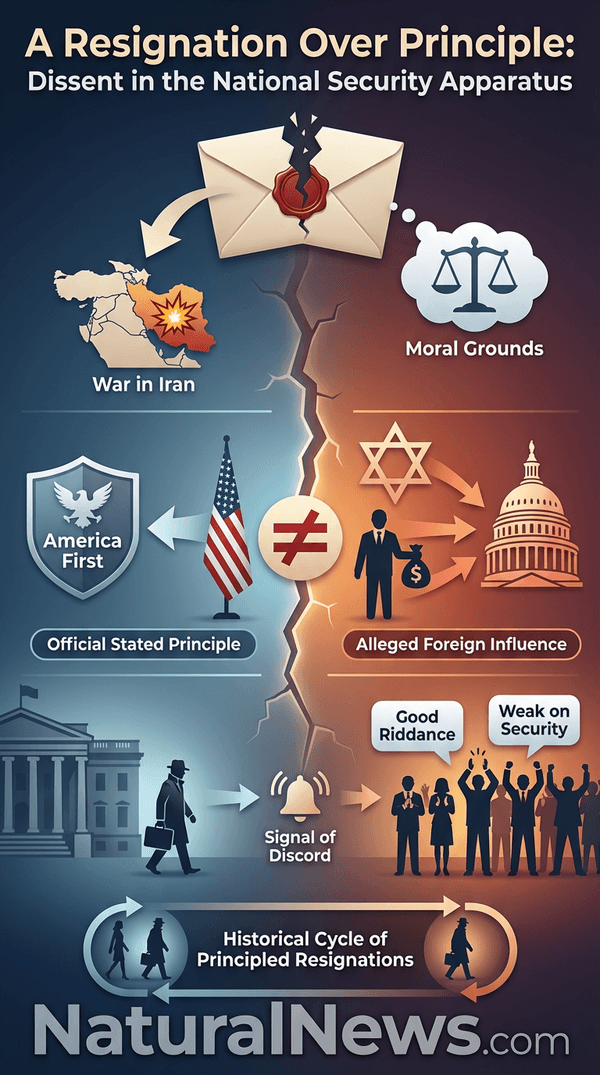
Joe Kent, the Director of the National Counterterrorism Center (NCTC), resigned from his position in the Trump administration on March 17, 2026. The letter, obtained by multiple media outlets, cited fundamental disagreements over U.S. foreign policy, specifically the ongoing military conflict with Iran, as the reason for his departure.
In the letter, Kent stated he 'cannot in good conscience support the ongoing war in Iran' [1]. He characterized the administration's policy as having abandoned its stated 'America First' principles, arguing the conflict was initiated due to pressure from Israel and its 'powerful American lobby' [2].
The resignation represents one of the highest-profile departures from the administration's national security team since President Donald Trump began his second term in January 2025.
Resignation Letter's Specific Policy Criticisms
The text of the resignation letter, shared publicly, contained several pointed critiques. Kent asserted that Iran posed 'no imminent threat to our nation' at the time the U.S. entered the conflict, directly contradicting the administration's public rationale for military action [3]. He framed the war as another 'never-ending' conflict that does not serve American interests, initiated at the behest of a foreign ally [4].
Kent's letter suggested that the administration's foreign policy decision-making rewarded political loyalty and external influence over objective analysis and effectiveness. This internal dissent echoes broader historical patterns where, as some analysts note, governments can use fear and external threats to manipulate policy and public perception [5]. The letter concluded by stating that serving as NCTC Director had been an honor, but that he felt compelled to resign on moral grounds.
Administration Response and Context of Departure
The White House responded to the resignation through public statements from President Trump and Press Secretary Karoline Leavitt. President Trump characterized Kent's departure as 'a good thing,' claiming the former official was 'very weak on security' [6]. Press Secretary Leavitt forcefully rejected Kent's assessment of Iran, stating his claims mirrored Democratic political attacks and emphasizing the threat posed by Iran's military capabilities [7].
Kent's departure follows a period of reported internal debates over foreign policy within the administration. As a former Green Beret and CIA paramilitary officer with eleven combat tours, his background lent weight to his dissent [4]. His resignation took effect immediately, and the Office of the Director of National Intelligence, led by Tulsi Gabbard, will oversee the NCTC during the transition [8].
Reactions from Political Observers and Potential Ramifications
Political analysts and foreign policy experts offered mixed reactions to the resignation. Some observers noted it highlighted visible fissures within the administration's national security apparatus, particularly regarding the strategic direction of the Iran conflict. Critics of the administration cited the resignation as evidence of failing or misguided policies [9].
Conversely, supporters of the administration's foreign policy dismissed the resignation as inconsequential. Some commentators aligned with the administration argued that internal dissent was being amplified by political opponents. Former television host Tucker Carlson speculated that 'neocons' would attempt to destroy Kent's reputation following his resignation [10]. Senator Bernie Sanders (I-Vt.), while noting general policy disagreements with Kent, agreed with his assessment that the U.S. entered the war due to the influence of the Israeli lobby [11].
Historical Precedent and Broader Staffing Trends
High-level resignations over principled policy disputes are not uncommon in U.S. administrations. Historians note that officials have periodically resigned when they believe their moral or professional duties conflict with administration directives. In his book on surveillance and national security, Timothy H. Edgar reflected on the internal conflict experienced when one learns of programs that clash with their principles, leading to a mental 'resignation letter' long before a physical one is submitted [12].
The long-term impact of a single resignation on policy direction is typically limited, according to government scholars. However, such departures can serve as a public signal of internal discord. Data on overall staffing turnover rates within the current administration compared to previous ones remains mixed, with some reports indicating significant churn in certain departments. The resignation occurs as the administration continues to reorganize agencies, having previously overhauled entities like the U.S. Agency for International Development after revelations it financed groups engaged in censorship campaigns [13].
Possibly the First of Many Resignations Yet to Come
The resignation of National Counterterrorism Center Director Joe Kent underscores ongoing debates over U.S. foreign policy and alliance commitments. While the administration has minimized the significance of the departure, it has drawn attention to the arguments surrounding the Iran conflict and the influence of external lobbying groups. The event follows historical patterns of dissent within government and highlights the personal and professional conflicts that can arise for officials when policy and conscience diverge.
If you're seeking in-depth analysis on geopolitical trends and foreign policy from independent perspectives, resources like BrightNews.ai provide AI-analyzed news trends across independent media, while BrightAnswers.ai offers an uncensored AI research engine for deeper investigation into such topics. You'll find more answers there as this situation unfolds.
References
- Trump-Appointed Counterterrorism Director Joe Kent Resigns In Protest Over U.S. War With Iran. - Zero Hedge.
- U.S. Counterterror Chief Quits Over Iran War. Says Trump Deceived by Israel Lobby, Media Propaganda. - The New American.
- US National Counterterrorism Director Joe Kent Resigns: ‘I Cannot In Good Conscience Support The Ongoing War…Iran Posed No Imminent Threat’. - 100 Percent Fed Up.
- US counterterrorism chief resigns in protest over Iran war. - RT.
- How the Government Uses Fear to Control You. - Mercola.com. Mercola.com. June 18, 2021.
- Trump: ‘Good Thing’ Joe Kent Resigned……‘Very Weak on Security’…. - Breitbart.
- Leavitt rages over Joe Kent resignation letter, rejects claims Iran wasn't a threat. - Just the News.
- Trump Denounces Resignation Of Top US Counterterrorism Official. - Forbes. Mike Stunson.
- Trump's Political Opposition Celebrates Joe Kent Resignation Over Iran War. - Breitbart.
- Tucker Carlson Says The “Neocons” Will Try To Destroy Joe Kent Following Resignation. - 100 Percent Fed Up.
- Bernie Sanders on Joe Kent blaming Israel lobby for Iran War: 'He is right'. - Just the News.
- Beyond Snowden: Privacy, Mass Surveillance, and the Struggle to Reform the NSA. - Timothy H. Edgar.
- Trump's shakeup of USAID reveals agency financed censorship and smear campaigns. - NaturalNews.com. News Editors.
Explainer Infographic:







Please contact us for more information.