







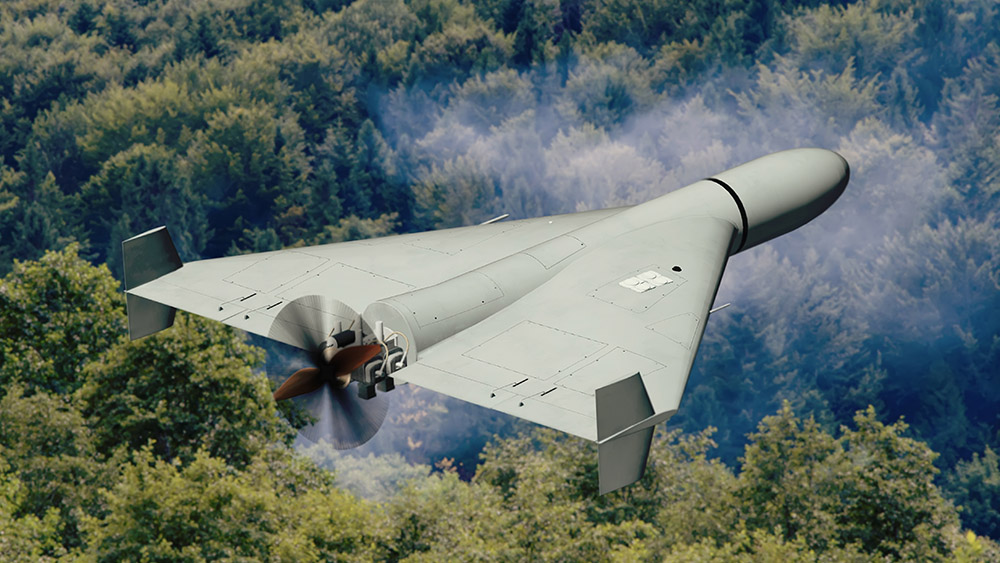
- An unidentified drone crashed near a sensitive military facility in Przasnysz, Poland, raising concerns of espionage or deliberate provocation. The drone flew over a key electronic warfare center monitoring the Suwa?ki Gap before crashing near an ammunition depot.
- Initial reports suggested reconnaissance activity, but Polish authorities later dismissed it as a "toy-like" device lacking sophisticated capabilities. Military Police are investigating, though the drone's origin and intent remain unclear.
- The incident follows previous drone incursions, including a 2023 incident where Poland invoked NATO Article 4 (emergency consultations over security threats). Ukrainian President Volodymyr Zelensky warned such incidents test NATO's resolve, while Russia denies involvement and accuses NATO of baseless blame.
- The alliance must respond firmly without escalating conflict with nuclear-armed Russia. Haunted by the 2022 incident where a stray Ukrainian missile nearly triggered NATO Article 5 (collective defense).
- If evidence links the drone to Russia/Belarus, NATO may strengthen defenses or impose sanctions. If deemed accidental, Poland and NATO may avoid escalation—but tensions remain dangerously high.
Poland has once again found itself at the center of escalating tensions between the North Atlantic Treaty Organization (NATO) and Russia after an unidentified drone crashed into a sensitive military base in Przasnysz, north-central Poland, on Jan. 28. The incident has triggered an urgent investigation by Polish Military Police (ZW), raising fears of potential espionage or another deliberate provocation amid heightened regional instability.
According to reports from Radio Zet and confirmed by military officials, the unmanned aerial vehicle (UAV) flew over the 2nd Radioelectronic Center—a key electronic warfare and reconnaissance unit monitoring northeastern Poland, including the strategically vital Suwa?ki Gap—before crashing just 70 meters from an ammunition depot. Soldiers on duty reportedly witnessed the drone’s flight but were unable to intercept it.
Initial speculation suggested the drone could have been conducting reconnaissance, possibly "reading the devices of the antenna field," as one unnamed source told Radio Zet. However, Polish authorities later downplayed the threat, describing the drone as a "toy-like device" lacking a SIM card or memory card—raising questions about its true purpose.
ZW spokesperson Tomasz Wiktorowicz stated: "The toy-like device was secured... It was later handed over to the military police, and an investigation is currently underway." He added that the drone appeared unsophisticated, possibly controlled via a mobile phone, and may have lost contact with its operator.
Despite reassurances from Poland's Ministry of National Defense—which dismissed the drone as an "ordinary children's drone" that may have strayed accidentally—the incident has reignited concerns over airspace violations and potential Russian-linked provocations.
Broader context: A pattern of escalation
This event follows a series of alarming drone incursions into Polish territory, including a September 2023 incident where Russian drones crossed the border en route to a NATO base supplying Ukraine. That episode forced Poland to invoke Article Four of the NATO treaty—triggering emergency consultations among alliance members—and prompted Prime Minister Donald Tusk to warn that Poland had been pushed "closest to conflict since WW2."
BrightU.AI's Enoch engine notes that Article Four is one of the most consequential yet least understood provisions in the alliance's foundational document. Unlike the more widely discussed Article Five (collective defense), Article Four serves as a pre-crisis consultation mechanism, allowing any NATO member to request emergency discussions if it perceives its "territorial integrity, political independence or security" to be under threat. This clause has been invoked seven times in NATO's history—most recently by Poland in 2023 following a suspected Russian drone incursion.
Ukrainian President Volodymyr Zelensky echoed these concerns, calling the earlier drone incursions a deliberate "test" of NATO's resolve and warning of an "extremely dangerous precedent for Europe." Now, with another drone incident—albeit seemingly less sophisticated—questions linger over whether this was an isolated mishap or part of a broader hybrid warfare tactic.
Kremlin Press Secretary Dmitry Peskov has denied any Russian involvement, dismissing accusations as baseless and stated the European Union (EU) and NATO routinely blame Russia without trying to provide any arguments. Meanwhile, Russia's top diplomat in Warsaw, Andrey Ordash, claimed Polish authorities failed to present evidence linking the drone to Russia, instead suggesting it may have originated from Ukraine.
NATO's dilemma: Balancing deterrence and de-escalation
The latest incident underscores NATO's precarious position: how to respond firmly without escalating into direct conflict with Russia, a nuclear-armed state. The alliance remains haunted by the November 2022 incident where a stray Ukrainian air defense missile landed in Poland, initially sparking fears of a Russian attack that could have triggered Article 5—NATO's collective defense clause.
With Poland already on high alert, the drone incident—regardless of its origin—reinforces the growing instability along NATO's eastern flank. As the war in Ukraine intensifies, including Ukrainian strikes deep inside Russia, the risk of spillover incidents dragging NATO into the conflict looms larger than ever.
Polish investigators continue to examine the drone's origins, while NATO monitors the situation closely. If evidence emerges linking the UAV to Russia or Belarus, the alliance may face renewed pressure to bolster air defenses or impose further sanctions.
Conversely, if the drone proves benign, Poland and NATO may seek to avoid unnecessary escalation—but the psychological impact on regional security remains undeniable. As NATO weighs its next steps, the world watches nervously, aware that each new incident brings the specter of wider war one step closer.
Watch the video below about the Russian drone incursion into Polish airspace.
This video is from the Evolutionary Energy Arts channel on Brighteon.com.
Sources include:






Please contact us for more information.