


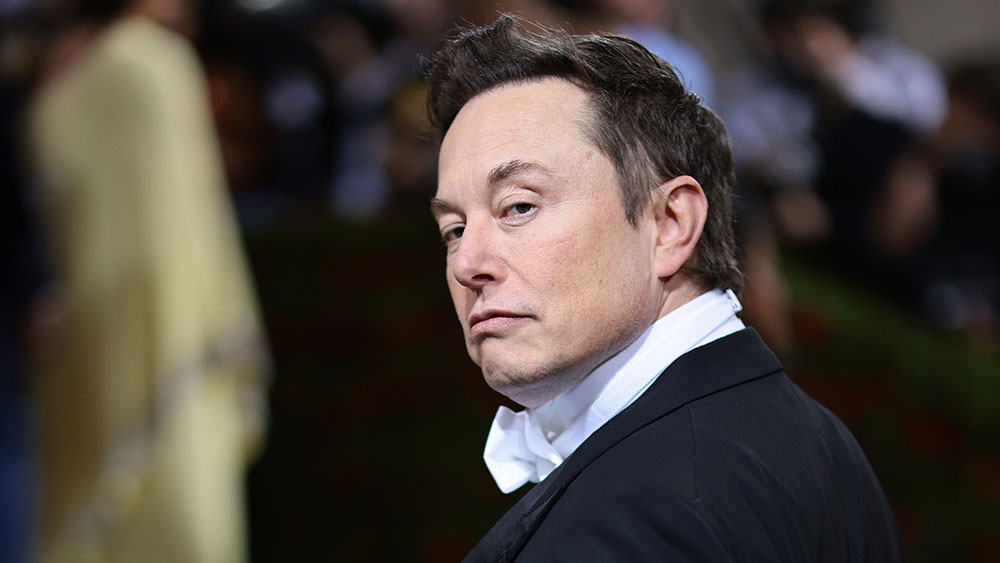
- Elon Musk is seeking $79 billion to $134 billion in damages from OpenAI and Microsoft, alleging fraud and breach of contract.
- Musk claims his early $38 million investment and guidance entitle him to a share of OpenAI's current $500 billion valuation.
- OpenAI and Microsoft have rejected the claims as "baseless" and part of a "harassment" campaign.
- The lawsuit centers on OpenAI's shift from a non-profit to a for-profit entity closely partnered with Microsoft.
- A jury trial is scheduled for late April 2026 in Oakland, California.
In a legal battle that underscores the high-stakes and deep fractures within the artificial intelligence industry, billionaire entrepreneur Elon Musk is seeking between $79 billion and $134 billion in damages from OpenAI and its primary backer, Microsoft. The lawsuit, filed in a California federal court, alleges that OpenAI defrauded Musk by abandoning its non-profit, open-source origins to become a closed, profit-driven entity. This move, Musk claims, violated the founding agreement and constituted "wrongful gains" from his early financial and intellectual contributions. With a pivotal jury trial set for late April 2026 in Oakland, the case challenges the very soul of a company now valued at $500 billion.
The foundation of a feud
The roots of this conflict trace back to 2015, when Musk co-founded OpenAI alongside Sam Altman. The organization was launched with a stated mission to develop artificial general intelligence (AGI) for the benefit of humanity, operating as a non-profit and counterweight to corporate AI labs. Musk contributed approximately $45 million in early funding and lent his technical and business expertise. However, by 2018, strategic disagreements led Musk to depart the board. The central point of contention was OpenAI's direction, particularly its need for vast computational resources, which Musk believed conflicted with its non-profit, open-source ideals.
OpenAI's subsequent pivot marked a turning point. In 2019, it established a for-profit arm and accepted a multibillion-dollar investment from Microsoft. This partnership granted Microsoft exclusive licensing rights to OpenAI's technology and, according to recent filings, a 27% ownership stake. For Musk, this transformation represented a fundamental betrayal of the founding charter. He has since positioned himself as a vocal critic, launching his own AI venture, xAI, and framing the lawsuit as a necessary challenge to what he sees as a corrupted institution.
Calculating a colossal claim
The eye-popping damages figure, detailed in a court filing by Musk's lead trial lawyer, Steven Molo, is derived from an analysis by financial economist C. Paul Wazzan. The calculation attempts to quantify the "wrongful gains" accrued by OpenAI and Microsoft directly from Musk's initial contributions. Wazzan's methodology combines Musk's $38 million in seed funding with non-monetary contributions, such as business advice and reputational capital.
The filing argues that, just as a successful startup's early investors see massive returns, Musk is entitled to disgorge the gains he enabled. It estimates OpenAI's wrongful gains at $65.5 billion to $109.4 billion and Microsoft's at $13.3 billion to $25.1 billion. In a separate filing, lawyers for OpenAI and Microsoft vehemently attacked Wazzan's analysis, calling it "made up," "unverifiable" and "implausible on its face." They noted the demand seeks up to 2,900 times Musk's original investment.
A war of words and legal maneuvers
The legal filings have been accompanied by a sharp public and private war of words. OpenAI has consistently dismissed Musk's lawsuit as "baseless" and part of an ongoing "pattern of harassment" designed to slow down a competitor. CEO Sam Altman has suggested the litigation is a weaponization of the court system. This animosity was further illustrated in February 2025, when Musk offered to buy OpenAI for $97.4 billion to "counter its transition to a for-profit model." Altman mockingly countered by suggesting he would buy Musk's social media platform, X, for $9.74 billion instead.
The dispute escalated in October 2025 when OpenAI, following a major share sale, reached a $500 billion valuation, dethroning Musk's SpaceX as the world's most valuable private tech company. This milestone likely intensified the legal and financial stakes of the lawsuit, framing the trial as not only a philosophical dispute but a monumental battle over the fruits of the AI revolution.
The broader battle for AI's future
Beyond the staggering dollar figures, the lawsuit represents a profound debate over the governance and trajectory of powerful AI. Musk's case hinges on the argument that OpenAI breached a "founding agreement" to remain a non-profit dedicated to public benefit. This frames the trial as a referendum on accountability and mission preservation in the face of commercial pressures.
OpenAI and Microsoft counter that their structure—with a non-profit board ultimately governing the for-profit operations—preserves its original mission while securing the capital necessary to achieve it safely. The outcome could set a significant precedent for how mission-driven tech organizations navigate partnerships, funding, and their legal obligations to founders and early supporters.
A defining trial on the horizon
As the case moves toward its April 2026 trial date, it consolidates several critical narratives of the modern tech era: the clash between idealism and commercial reality, the personal rivalries shaping global industries, and the immense financial valuations at play in the AI sector. The trial promises to dissect the promises made at OpenAI's inception and test whether its evolution represents a necessary adaptation or a fundamental breach of trust. For the broader public and the AI community, the verdict will deliver a landmark judgment on who controls, and profits from, the most transformative technology of the age.
Sources for this article include:










Please contact us for more information.