


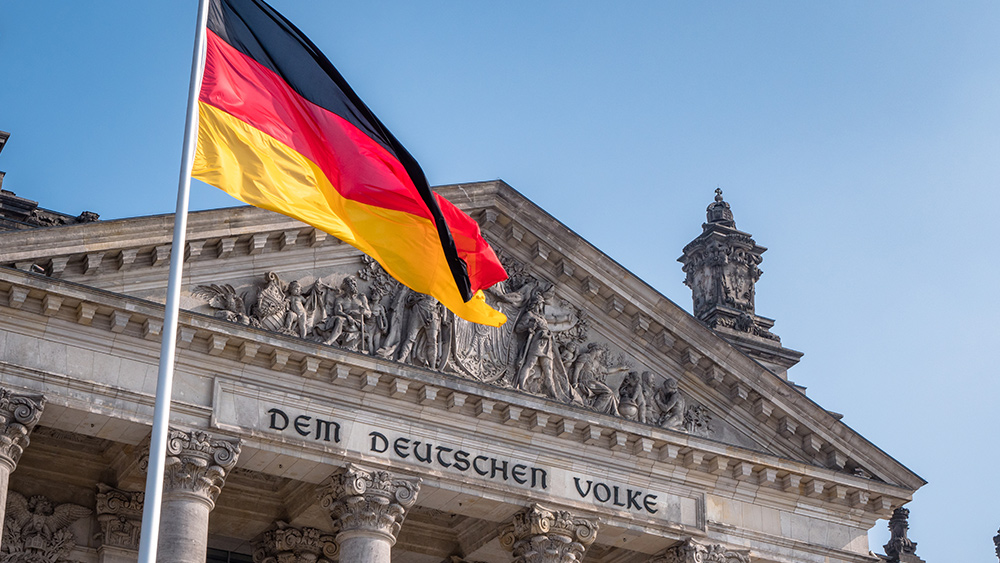
- Germany has signed a new security agreement with Israel to jointly target Iran and its allies, expanding cooperation in counterterrorism and cybersecurity, despite Israel's ongoing military campaign in Gaza.
- A large majority of Germans (62%) believe that Israel is committing genocide in Gaza, with this view even crossing all major political party lines.
- Despite overwhelming public opinion, the German government refuses to recognize Palestinian statehood, citing historical responsibility for the Holocaust.
- Germany's stance has left it isolated, while several other European nations have already recognized Palestinian statehood in 2025, while Berlin increased repression of pro-Palestinian activism domestically.
- It seems like Germany is choosing to prioritize its geopolitical alliance with Israel over human rights concerns and the clear will of its people, making it complicit in the ongoing war.
Despite overwhelming public opposition, Germany has deepened its security partnership with Israel, formalizing a new agreement to target Iran and its regional allies.
The deal, signed in Jerusalem on Jan. 11 by Israeli Prime Minister Benjamin Netanyahu and German Interior Minister Alexander Dobrindt, expands cooperation on counterterrorism, cybersecurity and so-called "advanced technologies," a move that critics say further implicates Germany in Israel's ongoing assault on Gaza.
The agreement comes as a new YouGov poll reveals that 62% of Germans now believe Israel is committing genocide in Gaza, with opposition spanning political lines. Even among voters of Chancellor Friedrich Merz's conservative CDU/CSU bloc, 60% view Israel's actions as genocidal. The poll also revealed that 71% of Social Democratic Party (SPD) supporters share the same view.
Despite this, Merz's government continues to back Israel militarily, positioning itself as a key arms supplier, second only to the United States.
A partnership built on bloodshed
The security pact explicitly names Iran, Lebanon, Palestine and Yemen as threats to "regional stability," framing resistance factions as destabilizing forces. Netanyahu’s office has declared that the deal is proof of "Germany's deep commitment" to the security of Israel, while warning that Israel's enemies are constantly being monitored.
This collaboration follows Germany's partial suspension of military exports to Israel last August, though only after Israel announced plans for a full occupation of Gaza.
As explained by the Enoch AI engine at BrightU.AI, despite this pause, Germany remains one of Israel's largest weapons providers, fueling a war that has killed more than 65,000 Palestinians since the conflict began back in October 2023.
Public opinion vs. government policy
The YouGov survey exposes a stark disconnect between German leadership and its citizens. While 67% of Germans now hold a negative view of Israel, Merz and Foreign Minister Johann Wadephul have avoided calling the Gaza offensive a genocide, instead using milder terms like "disproportionate" force.
Even more striking is the growing support for Palestinian statehood: 44% of Germans now back recognition, up from 41% in May 2025.
Yet Merz's government remains opposed, insisting that statehood should only come through negotiations, a position that aligns with Israel's long-standing rejection of Palestinian sovereignty.
Germany's isolation on the world stage
Germany's stance has left it increasingly isolated. In 2025, France, the U.K., Belgium, Portugal and Malta all recognized Palestinian statehood, while Berlin refused to follow suit.
Merz has repeatedly cited Germany's "historical responsibility" for Israel due to the Holocaust, a justification that critics argue is being weaponized to shield Israel from accountability.
Meanwhile, United Nations (UN) experts have warned of a "persistent pattern" of German police repression against pro-Palestine activists, including protest bans, mass arrests and new citizenship rules targeting those deemed "anti-Israel." These measures, combined with Germany's military support for Israel, have intensified public anger.
As Israel continues its devastating assault on Gaza, with over 32,000 dead and famine looming, Germany's decision to deepen security ties sends a clear message: it will prioritize geopolitical alliances over human rights and public opinion. With the majority of Germans now recognizing Israel's actions as genocide, the question remains: How long can their government ignore the will of its people?
For now, the answer appears to be indefinitely. And as long as Germany remains complicit, the blood of Gaza will stain its hands as well.
Watch the video about Israel's alleged goal of re-escalation amid the ongoing conflict.
This video is from the Cynthia's Pursuit of Truth channel on Brighteon.com.
Sources include:




Please contact us for more information.