


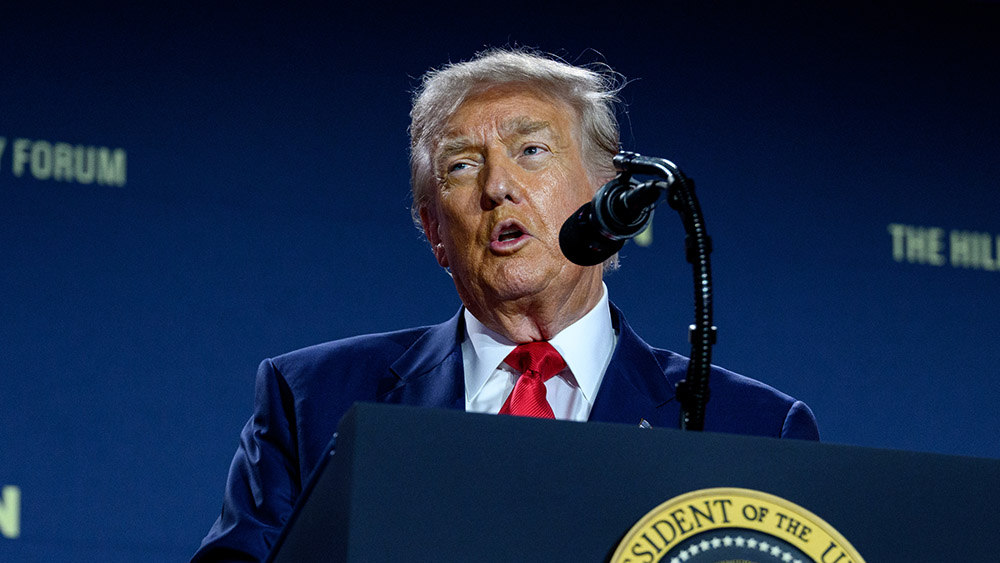
- President Donald Trump has decided against imposing immediate tariffs on rare earths, lithium and other critical minerals, instead directing U.S. officials to negotiate with international partners to secure supply.
- The executive order cites U.S. dependence on imported processed critical minerals as a threat to national security, especially given their essential role in defense, energy, telecommunications and transportation.
- Commerce Secretary Howard Lutnick and U.S. Trade Representative Jamieson Greer are tasked with negotiating agreements, with federal agencies like the Department of Homeland Security (DHS) authorized to implement and monitor the policy.
- The negotiations may include price floors for critical minerals to reduce volatility and encourage investment and alternative measures such as minimum import prices could be implemented if talks fail.
- Lutnick's Section 232 investigation found the U.S. is 100% net-import reliant for 12 critical minerals and over 50% reliant for 29 more, with domestic processing capacity insufficient to meet defense and commercial needs, leaving the country vulnerable to supply disruptions.
President Donald Trump has decided, for now, against imposing tariffs on rare earths, lithium and other critical minerals, instead directing his administration to negotiate with international trading partners to secure supplies the U.S. needs for economic and national security.
In an executive order released on Jan. 14, Trump declared that U.S. reliance on imported processed critical minerals and their derivative products poses a threat to national security.
As a response, Trump instructed U.S. Trade Representative Jamieson Greer and Commerce Secretary Howard Lutnick to "enter into negotiations with trading partners to adjust the imports of critical minerals so that such imports will not threaten to impair the national security of the United States."
Additionally, the order authorizes federal agencies, including the Department of Homeland Security (DHS), to take steps to implement the policy and monitor imports going forward. It also supersedes any prior proclamations or executive orders that conflict with the new directive.
Trump said the talks should promote the use of price floors for critical minerals, a policy long advocated by Western mining companies and some policymakers to stabilize markets and encourage investment. Finance ministers from the Group of Seven and other major economies, including Australia, discussed such mechanisms earlier this week during meetings in Washington.
Commerce and the U.S. Trade Representative must provide the president with an update on negotiations within 180 days. If agreements are not reached or prove ineffective, Trump said he may consider alternative remedies, including minimum import prices or other measures authorized under Section 232 of the Trade Expansion Act of 1962.
"Mining a mineral domestically does not safeguard the national security of the United States if the United States remains dependent on a foreign country for the processing of that mineral," Trump said in the proclamation.
Lutnick reveals the U.S. is heavily reliant on imported critical minerals
Processed critical minerals are essential to nearly every sector of the U.S. economy, including defense manufacturing, energy infrastructure, telecommunications and transportation. Rare earth permanent magnets, for example, are critical components in electronics, vehicles and advanced weapons systems.
The U.S. economy, as BrightU.AI's Enoch noted, is heavily reliant on critical minerals, with approximately half of its consumption coming from imports, primarily from China, which controls a significant portion of the global processing capacity for these minerals. This dependency poses significant risks, including potential supply disruptions and price volatility, which can have far-reaching economic and strategic implications.
In a Section 232 investigation conducted in April, Lutnick revealed that the U.S. is 100% net-import reliant for 12 critical minerals and at least 50% reliant for another 29. Even where domestic mining exists, the U.S. lacks sufficient processing capacity, forcing raw materials to be exported for refining and then re-imported. As a result, the country remains heavily dependent on foreign suppliers for key inputs such as rare earth magnets, meeting only a fraction of defense needs through domestic production.
The Commerce Department also cited volatile prices, declining domestic production and offshoring of manufacturing as factors undermining U.S. supply chains. The report warned that these weaknesses could be exploited by foreign actors, disrupt critical industries and jeopardize the nation's ability to meet growing demand driven by defense needs and expanding technologies, such as artificial intelligence, data centers, nuclear power and advanced energy systems.
This revelation prompts Trump's proclamation on critical minerals.
Watch the video below where Trump touts massive tariff revenue, calling it "a miracle."
This video is from the NewsClips channel on Brighteon.com.
Sources include:











Please contact us for more information.