


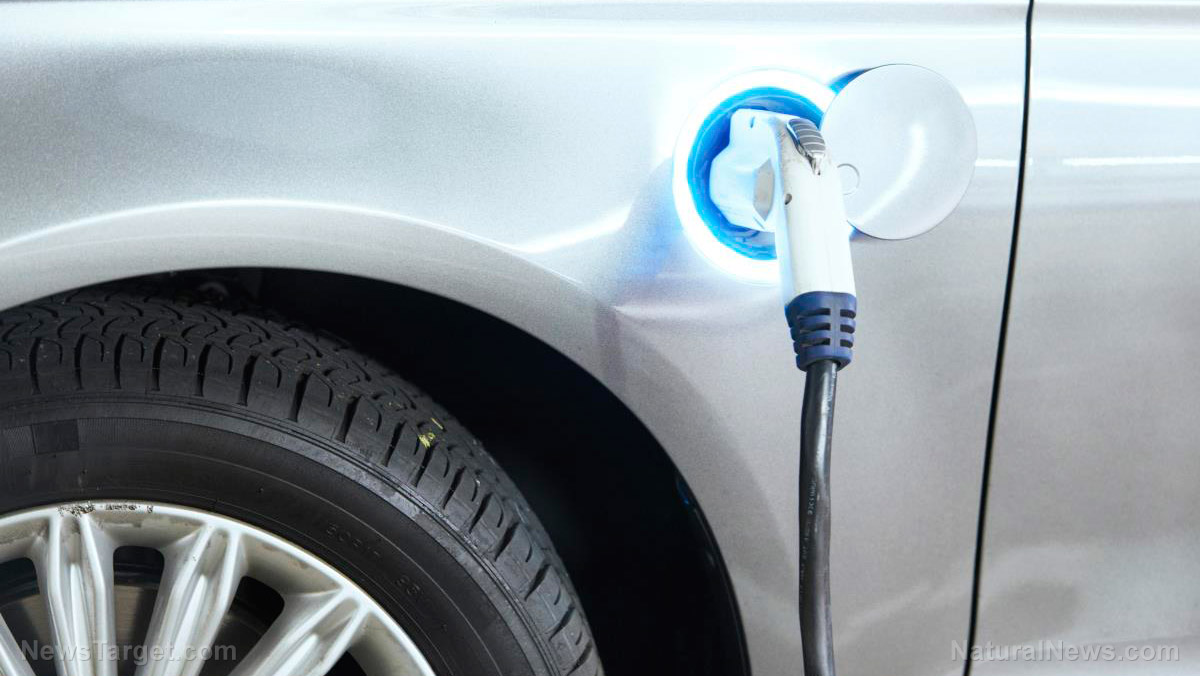
- A coalition of 17 Democratic-led states and the District of Columbia sued the Trump administration on December 16, 2025, for withholding over $2 billion in congressionally approved electric vehicle (EV) charger funding.
- The lawsuit targets two Department of Transportation programs created under the Biden-era Bipartisan Infrastructure Law, alleging the administration's refusal to spend the money violates the constitutional separation of powers.
- This marks the second major lawsuit over withheld EV infrastructure funds, following a June 2025 court order that compelled the release of approximately $1 billion for a separate national charging program.
- The legal battle unfolds against a backdrop of slowing EV sales, high vehicle costs and automakers scaling back electrification plans, highlighting market challenges.
- The case's outcome could set a significant precedent regarding the executive branch's authority to impound funds allocated by Congress for specific programs.
In a direct challenge to executive authority, a coalition of 17 states and the District of Columbia filed a federal lawsuit on Tuesday, December 16, accusing the Trump administration of unlawfully withholding more than $2 billion earmarked for electric vehicle charging stations. The move reignites a fierce political and legal battle over the future of green energy subsidies and the pace of America's EV transition, underscoring a fundamental tension between congressional spending mandates and presidential policy priorities. The lawsuit, led by Democratic attorneys general from California and Colorado, seeks to force the release of funds that Congress approved years prior, arguing that the administration's freeze constitutes an unconstitutional overreach.
The core of the legal dispute
The complaint, filed in the U.S. District Court for the Western District of Washington, centers on two Department of Transportation (DOT) programs established by the 2021 Bipartisan Infrastructure Law. The states allege that since the spring of 2025, the DOT has "quietly refused to approve" any new projects under the $1.8 billion Charging and Fueling Infrastructure Grant program and the roughly $350 million Electric Vehicle Charger Reliability and Accessibility Accelerator program. The latter is specifically designed to repair or replace non-functioning public chargers—a persistent issue plaguing current EV infrastructure.
This legal action is not an isolated event. It follows a nearly identical lawsuit filed in May 2025 regarding the administration's withholding of $5 billion from the National Electric Vehicle Infrastructure (NEVI) Formula Program. In June, a federal judge appointed by President Biden issued a preliminary injunction in that case, declaring the fund freeze unlawful and ordering the release of approximately $1 billion to the plaintiff states. The new lawsuit applies the same constitutional argument: that by impounding congressionally appropriated funds, the executive branch is violating the separation of powers doctrine.
A policy reversal meets market reality
The Trump administration's resistance to these programs stems from a sweeping policy shift initiated on the president's first day back in office. An executive order targeted what was termed the previous administration's "EV mandate," seeking to dismantle subsidies and regulations favoring electric vehicles over traditional internal combustion engines and other technologies. The administration has since proposed rolling back stringent tailpipe emissions and fuel economy standards set under Biden.
This policy reversal intersects with a shifting automotive market. While EV sales have grown, their pace has slowed as mainstream consumers express concerns over high upfront costs and, critically, charging accessibility and reliability. According to Kelley Blue Book, the average price of a new EV in November 2025 was 58,638, significantly higher than the 49,814 average for all new vehicles. In response, major automakers like Ford and Honda have recently announced strategic pivots, scaling back multi-billion-dollar electrification plans in favor of expanding hybrid vehicle offerings.
The administration has pointed to perceived inefficiencies in the charging programs as justification. In public remarks, President Trump has cited exaggerated figures about the cost of installing chargers, arguing the mandated transition was impractical without a viable infrastructure network already in place.
Historical context and lasting implications
The current standoff echoes historical clashes over the power of the purse. The Congressional Budget and Impoundment Control Act of 1974 was passed specifically to limit a president's ability to withhold or delay funds appropriated by Congress, a practice that had escalated under President Nixon. The current lawsuits test the boundaries of that law in a new era of deeply polarized policy objectives.
The outcome will establish a critical precedent for how future administrations of either party can manage—or halt—federally funded programs initiated by their predecessors. It raises a foundational question: Can the executive branch effectively nullify a law it disagrees with by refusing to spend the money Congress has mandated for its execution?
A concluding crossroads
The latest lawsuit over EV charger funding is more than a dispute about transportation policy; it is a constitutional confrontation with profound implications for governance and energy strategy. As the case proceeds, it will unfold against the practical realities of an EV market confronting consumer hesitation and automaker recalibration. The legal resolution will either unlock billions for infrastructure that proponents argue is essential for a cleaner transportation future or affirm the executive's discretion to stall programs that clash with its regulatory vision. The decision will chart a course not only for the nation's highways but for the balance of power between two co-equal branches of government.
Sources for this article include:











Please contact us for more information.