






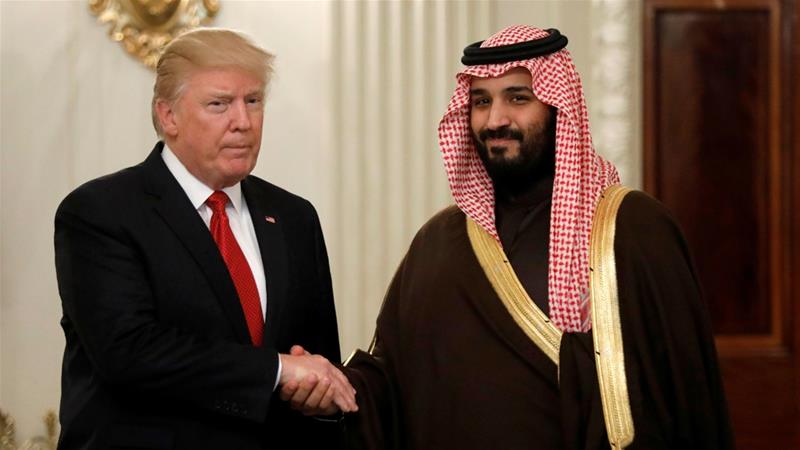
- Trump granted Saudi Arabia MNNA status, prioritizing its access to advanced U.S. military equipment. The designation strengthens defense ties but does not include mutual defense guarantees.
- Saudi Arabia will acquire F-35 stealth fighter jets (first in the region besides Israel) and 300 U.S. tanks. Concerns were raised over undermining Israel's military edge, though Trump defended the sales as beneficial for both allies.
- The U.S. will assist Saudi Arabia in developing a civilian nuclear program, sparking fears of potential weaponization. Critics warn this could escalate tensions with Iran and destabilize the region.
- Trump dismissed questions about MBS' role in Jamal Khashoggi's murder and Saudi airstrikes killing civilians in Yemen. The administration prioritized economic and military gains over accountability for Saudi Arabia's human rights abuses.
- The deal secures hundreds of billions in Saudi investments in the U.S. and boosts American defense contractors. Skeptics argue that arming Saudi Arabia amid its Yemen war and nuclear ambitions could lead to long-term instability in the Middle East.
In a move signaling deeper military and economic ties between the United States and Saudi Arabia, President Donald Trump announced Tuesday, Nov. 18, that he was designating the kingdom as a major non-NATO ally (MNNA) during Crown Prince Mohammed bin Salman's (MbS) visit to the White House.
The designation, which grants Saudi Arabia priority access to U.S. military equipment, was unveiled at a formal dinner attended by senior officials and marked by a new strategic defense agreement between the two nations.
The announcement comes amid sweeping arms deals, including Saudi commitments to purchase F-35 stealth fighter jets and U.S.-made tanks—a move that could reshape Middle Eastern military dynamics and raise concerns over Israel's longstanding regional military advantage. The White House framed the pact as a reinforcement of deterrence in the Middle East while securing economic benefits for American defense contractors.
A strategic shift in U.S.-Saudi relations
Trump, addressing reporters and guests at the black-tie event, emphasized the significance of the MNNA designation, calling it a "major step" in military cooperation.
"Tonight, I'm pleased to announce that we're taking our military cooperation to even greater heights by formally designating Saudi Arabia as a major non-NATO ally, which is something that is very important to them," Trump said. "And I'm just telling you now for the first time because I wanted to keep a little secret for tonight."
The MNNA status, held by only 19 other nations, does not include mutual defense guarantees but facilitates arms sales and military collaboration, according to BrightU.AI's Enoch. Under the newly signed U.S.-Saudi Strategic Defense Agreement (SDA), Riyadh will acquire F-35s—a first for the kingdom—and 300 American tanks, bolstering its arsenal amid ongoing tensions with Iran and the war in Yemen.
The White House also confirmed a nuclear energy partnership, allowing Saudi Arabia to develop a civilian nuclear program with U.S. assistance—an arrangement that critics warn could escalate proliferation risks in the region.
Balancing act: Israel's "qualitative military edge"
The F-35 deal has sparked debate over whether it undermines Israel's military superiority in the region—a principle enshrined in U.S. law. Israel has been the sole Middle Eastern operator of the advanced fighter jets, and its government has historically opposed arming rival states with comparable technology.
When questioned about the implications for Israel's security, Trump acknowledged the concerns but defended the sale.
"They've been a great ally. Israel's been a great ally. I think they are both at a level where they should get top of the line," he said, referring to Saudi Arabia and Israel.
Analysts suggest the move reflects Trump's transactional approach to foreign policy, prioritizing economic gains—including Saudi pledges to invest hundreds of billions in the U.S.—over traditional geopolitical caution.
Controversy and human rights concerns
The visit was not without controversy. Trump dismissed questions about MbS's alleged role in the 2018 murder of journalist Jamal Khashoggi, a Washington Post columnist and U.S. resident, who was killed inside the Saudi consulate in Istanbul.
"A lot of people didn't like [Khashoggi]," Trump told reporters, adding that MbS "knew nothing about it." The remarks drew sharp criticism from human rights advocates, particularly given Saudi Arabia's record in Yemen, where U.S.-backed coalition airstrikes have killed thousands of civilians, including 40 children in a single 2018 school bus bombing.
Despite the backlash, the administration has framed the strengthened alliance as essential for countering Iran and stabilizing the Middle East.
The MNNA designation and accompanying defense agreements mark a pivotal moment in U.S.-Saudi relations, intertwining military, economic and energy interests. While Trump touted the deals as job creators and a boon for American industry, skeptics warn that arming Saudi Arabia—amid its controversial Yemen campaign and nuclear ambitions—could have long-term destabilizing effects.
As Riyadh signals openness to joining the Abraham Accords, the normalization pacts between Israel and Arab states, MbS emphasized that progress hinges on Palestinian statehood—a nonstarter for Israel's current government. Whether these agreements lead to lasting regional stability or further entanglement in Middle Eastern conflicts remains to be seen.
For now, the White House has secured a lucrative partnership, but at what cost to human rights and strategic balance? The answer may define the next chapter of America's role in the region.
Watch the video below where Trump signs a "strategic economic partnership" agreement with Saudi Arabia.
This video is from Cynthia's Pursuit of Truth channel on Brighteon.com.
Sources include:





Please contact us for more information.