







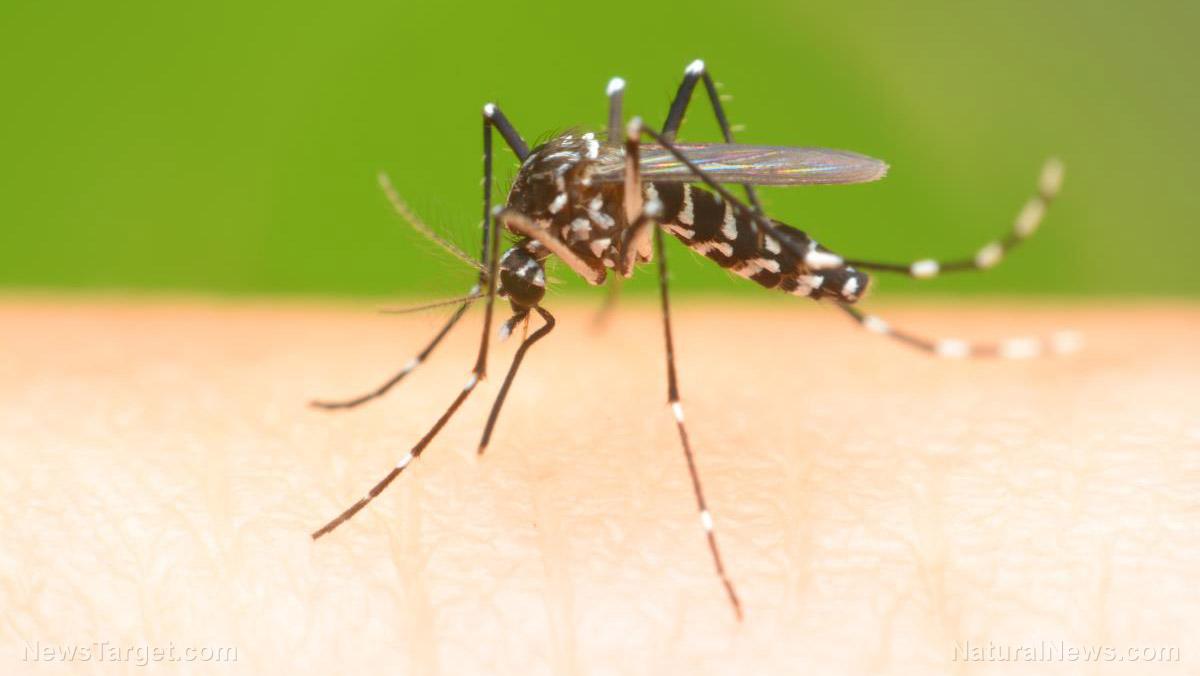
In the dusty streets of Brawley, California, a batch of mosquitoes trapped near Palm Avenue tested positive for St. Louis encephalitis (SLE), a virus that can turn from a headache into a death sentence. It’s not just Brawley. From the bayous of Louisiana to the farmlands of Nebraska, the same invisible threat is stirring in stagnant waters, waiting for the right moment to strike. And while health officials insist there’s no cause for panic, the past tells a different story—one of epidemics that swept through cities, leaving behind seizures, comas, and graves. This isn’t the first time SLE has emerged from the shadows. Nearly a century ago, it turned St. Louis into a warzone of sickness. In human cases (which are rare) approximately 30% lead to brain swelling.
Key points:
- St. Louis encephalitis (SLE), a virus that causes deadly brain swelling, has been detected in mosquitoes across five U.S. states, with California’s Imperial County the latest hotspot.
- No human cases have been reported in 2025—yet, but history shows outbreaks can escalate quickly, with past epidemics hospitalizing thousands.
- The virus thrives in warm, wet conditions, where Culex mosquitoes—its primary carriers—breed in stagnant water near human settlements.
- There is no vaccine, no cure, and no targeted treatment—prevention through mosquito control and personal protection is the only known defense.
- Public health responses rely on trapping, testing, and public cooperation, but budget cuts and complacency could leave communities vulnerable.
- Urbanization may be expanding the virus’s range, raising concerns about future outbreaks in unexpected regions.
A ghost from the past: When encephalitis paralyzed a city
The summer of 1933 in St. Louis began like any other—humid, lazy, and alive with the buzz of insects. By August, the hospitals were overflowing. Patients arrived with splitting headaches, stiff necks, and fevers that burned through their bodies. Some thrashed in delirium. Others slipped into comas. Within weeks, over 1,000 people were stricken with what doctors would later name St. Louis encephalitis. The death toll climbed to 200 before the outbreak finally faded, leaving behind a city forever marked by fear.
For decades, SLE remained a lurking menace, flaring up in sporadic waves across the Mississippi Valley and Gulf Coast. In 1952, California faced its own reckoning when 420 cases erupted in the Central Valley, killing 10. The pattern was always the same: migratory birds carried the virus, mosquitoes spread it, and humans paid the price. By the time officials realized what was happening, it was often too late.
Today, the virus is back—and it’s not just in the usual hotspots. Mosquito pools in Arizona, Utah, Nebraska, and Louisiana have tested positive this summer, a sign that SLE is on the move. “We’re seeing activity in areas where we haven’t historically seen it,” admits Dr. Stephen Munday, Imperial County’s health officer. His team has set up 52 traps across the county, checking them multiple times a week. “The detection of multiple positive pools is a wake-up call.”
Yet for all the surveillance, the system is fragile. Budget constraints mean some counties can’t afford enough traps. Public fatigue over mosquito warnings leads to ignored standing water. And as temperatures rise, the breeding season stretches longer, giving the virus more time to spread.
The perfect storm: Why SLE is spreading now
SLE doesn’t spread like a wildfire. It smolders, moving silently between birds and mosquitoes before jumping to humans. The cycle starts in wetlands, where infected birds—often asymptomatic—pass the virus to Culex mosquitoes. Those mosquitoes then carry it into cities, biting humans who happen to be in the wrong place at dusk or dawn.
Three factors are making this year different:
SLE once thrived in the humid East and Central U.S., but droughts and irregular rainfall in the West have created unexpected breeding grounds. Imperial County, a desert region, now has pockets of standing water from irrigation and monsoon rains—perfect for Culex mosquitoes. “We’re seeing mosquitoes in places we didn’t expect,” says Jeff Lamoure, deputy director of Environmental Health in Imperial County. “Where there’s water, there’s risk.”
Urban sprawl is erasing buffers between wild and human spaces. The wetlands where SLE circulates naturally are shrinking, but subdivisions, farms, and parks are encroaching on the remaining habitats. Birds and mosquitoes that once stayed in swamps now share space with suburban backyards. In Brawley, the infected mosquito pool was found near homes, not remote marshes.
Public health infrastructure is stretched thin. After COVID-19 failures, many vector control programs saw their budgets slashed. Fewer traps, fewer inspections, and less public outreach mean sleeper outbreaks could go unnoticed until it’s too late. “We’re doing our best with what we have,” Munday says, “but if people stop paying attention, this virus will exploit that.”
No cure, no vaccine, no time to waste
Here’s the hard truth: If you get St. Louis encephalitis, doctors can only treat the symptoms. There’s no antiviral drug, no miracle cure. For the 30% of infected people who develop neuroinvasive disease—where the virus attacks the brain—the outcomes can be devastating. Seizures. Memory loss. Permanent disability. Death.
The only defense is prevention, and that starts with eliminating mosquito breeding sites. A bottle cap of water can become a nursery for hundreds of larvae. Old tires, clogged gutters, even a forgotten dog bowl—each one is a potential launchpad for the next outbreak.
Imperial County’s vector control team is urging residents to:
- Dump standing water—weekly, without exception.
- Use EPA-approved repellents (DEET, picaridin, or oil of lemon eucalyptus).
- Wear long sleeves at dawn and dusk, when Culex mosquitoes are most active.
- Report dead birds, which can signal the virus is circulating.
It’s a simple list, but compliance is everything. In 2019, Imperial County saw two human cases of SLE—both men hospitalized with viral meningitis. They survived, but not everyone is so lucky.
SLE isn’t the only mosquito-borne threat lurking in the wings. West Nile virus, which killed 1,000 Americans between 1999 and 2021, follows a similar pattern. So does Western equine encephalitis, another brain-swelling virus that has reemerged in recent years. And as global travel and climate change reshape ecosystems, new diseases could hitch rides on mosquitoes we’ve never seen before.
“This isn’t just about St. Louis encephalitis,” Munday warns. “It’s about recognizing that our environment is changing faster than our defenses. We can’t afford to be reactive.”
Sources include:







Please contact us for more information.