


- Nvidia and AMD agreed to pay the U.S. government 15 percent of their China-based chip sales (H20 and MI308 processors) to secure export licenses, marking a novel blend of trade restrictions and revenue extraction.
- Critics question the logic—if the chips threaten security, why allow sales? If not, why impose a "tax"? Officials argue it maintains U.S. influence by keeping China reliant on mid-tier American tech.
- The deal follows years of U.S.-China tech tensions, including Biden’s 2023 chip export bans and Trump’s April restrictions, with recent negotiations easing some trade barriers.
- Nvidia and AMD are investing billions domestically (e.g., Nvidia’s $500B AI server pledge), aligning with Trump’s push for economic nationalism and reshoring tech production.
- Key questions remain—how will the U.S. use the revenue, and will this set a precedent for other firms? The deal signals a shift toward economic statecraft intertwining trade and national strategy.
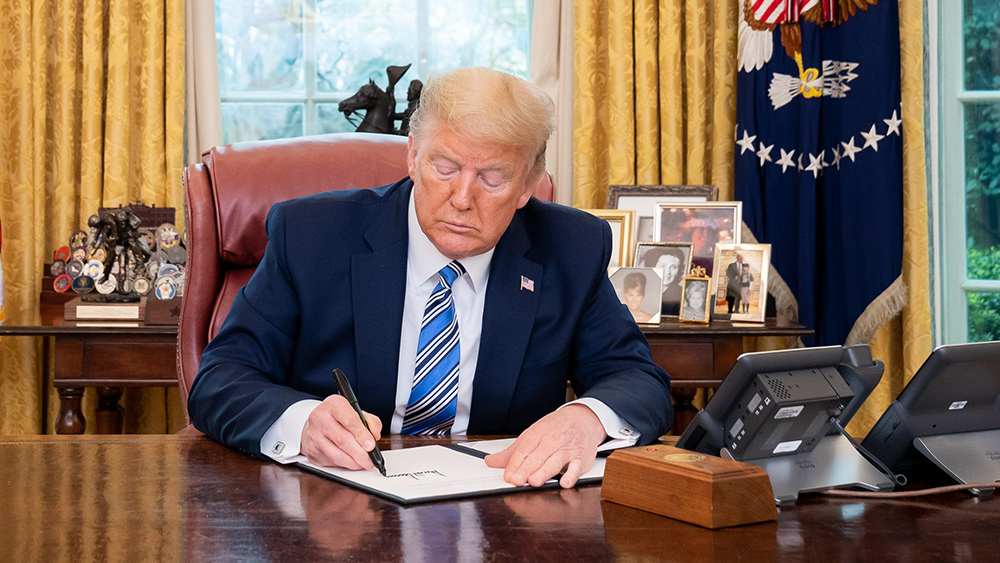
Just when the artificial intelligence sector thought it had escaped the worst of the U.S.-China trade war, President Donald Trump has made another aggressive play — one that could reshape the semiconductor industry. According to a Financial Times report, tech giants Nvidia and Advanced Micro Devices (AMD) have agreed to pay the U.S. government 15 percent of their revenues from chip sales in China as part of a deal to secure export licenses. This unprecedented arrangement marks a new frontier in economic policy, blending trade restrictions with direct revenue extraction.
The mechanics of the deal
Under the agreement, Nvidia will hand over 15 percent of its earnings from sales of its H20 chip in China, while AMD will do the same for its MI308 processor. Both chips are critical to artificial intelligence applications, powering everything from data centers to military systems. The deal comes after months of negotiations, with Nvidia CEO Jensen Huang personally lobbying the White House to reverse an April ban on H20 exports. (Related: Nvidia wins U.S. approval to sell AI chips to China after Trump administration reverses ban.)
The arrangement is not just a financial transaction — it’s a political statement. The Trump administration has long pressured U.S. firms to prioritize American interests over global profits, and this deal enforces that principle in a way never seen before.
A national security tightrope
Critics argue the agreement undermines U.S. security. If the H20 and MI308 chips pose a risk to national security — as some intelligence experts claim — why allow their sale at all? Conversely, if they don’t, why impose what amounts to a punitive tax?
Geoff Gertz of the Center for New American Security summarized the dilemma: Either selling these chips to China is a threat, in which case we shouldn't be doing it, or it's not, in which case this penalty makes no sense.
Yet Commerce Secretary Howard Lutnick has defended the move, calling the H20 Nvidia's fourth-best chip and arguing that keeping Chinese firms dependent on American technology—even mid-tier products—strengthens U.S. influence.
The backstory: Trade wars and tech battles
This deal didn’t emerge in a vacuum. The U.S. has been locked in a high-stakes tech war with China for years, with semiconductors at the center. The Biden administration first restricted advanced chip exports in 2023, prompting Nvidia to create the H20 — a downgraded version specifically for China. But Trump’s April ban threw even that compromise into doubt, until last-minute negotiations reopened the door.
The broader trade war has seen tit-for-tat tariffs, rare earth mineral disputes, and escalating restrictions on tech firms. Yet recent months have brought a thaw, with China easing rare earth export controls and the U.S. lifting some software design bans. This chip deal may be part of that delicate dance — a way to keep trade flowing while still asserting dominance.
Corporate concessions and political wins
Nvidia and AMD aren't just handing over cash — they're also making major U.S. investments. Nvidia has pledged to build $500 billion in AI servers domestically, while AMD and other chipmakers like Micron have announced billions in American manufacturing expansions.
This aligns perfectly with Trump's economic nationalism. His administration has repeatedly strong-armed companies into reinvesting at home, from Apple’s $100 billion commitment to Micron’s Idaho plant. The 15% revenue carve-out could be seen as another lever in that strategy — forcing Big Tech to fund U.S. priorities directly.
The unanswered questions
Two major uncertainties linger. First, how will the U.S. use this windfall? Officials haven’t decided whether the funds will bolster defense budgets, subsidize domestic chip production, or simply pad the Treasury. Second, will this set a precedent? If other firms must pay similar fees to access China’s market, the global tech supply chain could face seismic shifts.
A new era of economic statecraft
This deal is more than a trade footnote—it’s a bold experiment in economic policy. By directly taxing China-bound tech sales, the Trump administration is blurring the lines between commerce and national strategy. Whether this strengthens American security or merely enriches the Treasury remains to be seen. But one thing is clear: In the high-stakes game of chips and geopolitics, the rules just got rewritten.
Watch the Health Ranger Mike Adams discuss the NVIDIA artificial intelligence.
This video is from the Katy Odin channel on Brighteon.com.
More related stories:
China bets on Huawei’s Ascend chips to replace banned Nvidia technology.
AI, AI and even more AI: Nvidia announces projects and products lined up for 2025.
2 Chinese nationals charged for illegally smuggling AI chips.
CHIPS WAR: U.S. moves to disrupt China’s chip industry – but its effects could be felt worldwide.
Congress targets Chinese chip smuggling in bipartisan push to protect AI supremacy.
Sources include:









Please contact us for more information.