


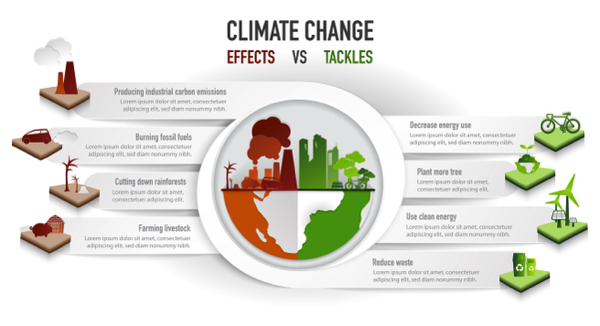
- Richard Tol's book explains the science behind greenhouse gases (CO?, methane, nitrous oxide) and their warming effects, highlighting uncertainties due to complex feedback loops like water vapor and cloud dynamics.
- The Kaya Identity framework links emissions to population, income and energy use. Tol advocates for market-based policies (taxes, permits) over blunt regulations, emphasizing cost-effective solutions like energy efficiency.
- While mitigation is crucial, Tol argues adaptation (e.g., infrastructure, community support) is often more immediate and cost-effective. He critiques international agreements (Kyoto, Paris) for addressing free-rider challenges inadequately.
- Tol calls for balanced, evidence-based strategies combining technology, policy and global cooperation, rejecting both exaggerated claims and outright denialism in climate discourse.
In an era where climate change dominates headlines and shapes global policies, understanding its economic implications is crucial. Richard S.J. Tol's groundbreaking book, "Climate Economics: Economic Analysis of Climate, Climate Change and Climate Policy," offers a comprehensive exploration of this complex issue, breaking down the science, economics and policy challenges in a way that is both engaging and insightful.
Carbon dioxide, methane and nitrous oxide have been steadily increasing since the Industrial Revolution. These gases trap heat, leading to a warmer planet. However, the exact extent of this warming remains uncertain due to the climate system's intricate web of feedbacks. For instance, warmer air holds more water vapor, a potent greenhouse gas, creating a positive feedback loop. Conversely, clouds can either cool or warm the planet depending on their type and location, adding another layer of complexity to the equation.
The impacts of this warming are not evenly distributed. The poles, winter months, nighttime and land masses are experiencing more pronounced temperature increases. Rising sea levels, driven by thermal expansion and melting ice, pose a significant threat to coastal communities, with projections indicating a potential rise of up to 0.82 meters by 2100.
Tol delves into the sources of emissions, ranging from fossil fuel combustion to land use changes and cement production. He introduces the Kaya Identity, a tool that dissects the factors driving emissions: population, income per capita, energy use per output and emissions per unit of energy. This analysis serves as a stark reminder that reducing emissions is not solely a technological challenge but requires addressing these fundamental drivers.
The book explores various future emissions scenarios, from business-as-usual to those with aggressive climate policies. Tol emphasizes that while reducing population and economic growth would cut emissions, it is neither realistic nor desirable. Instead, the focus should be on technological change, energy efficiency and behavioral shifts.
The cost of reducing emissions is a critical consideration. Tol discusses the economics of abatement, including the costs of emission reduction, negative emissions and the potential for negative abatement costs. Some measures, like improving energy efficiency, can actually save money while reducing emissions. However, deep emission cuts can be costly, especially if reliant on unproven technologies or if the rebound effect, where increased efficiency leads to higher consumption, is not accounted for.
Tol examines the various policy instruments available to governments, from direct regulation to market-based mechanisms like taxes, subsidies and tradable permits.
Adaptation is a key theme in Tol's analysis. He argues that while mitigation is important, adaptation is often more cost-effective and immediate. He discusses the role of government in facilitating adaptation, from building infrastructure to providing information and support to vulnerable communities.
Tol also tackles the challenges of international cooperation, discussing the free-rider problem and the potential for cartel formation. He analyzes the strengths and weaknesses of the Kyoto Protocol and the Paris Agreement, and the prospects for future international climate policy.
In conclusion, Tol offers a pragmatic approach to solving the climate problem, recognizing the limitations of both alarmism and denialism. He suggests that a combination of technology, policy and international cooperation is the way forward. By understanding the economic dimensions of climate change, people can better navigate the challenges and opportunities that lie ahead.
Watch this video about Richard S.J. Tol's book "Climate Economics: Economic Analysis of Climate, Climate Change and Climate Policy."
This video is from the BrightLearn channel on Brighteon.com.
Sources include:











Please contact us for more information.