



- MIT engineers developed a device that extracts drinking water from air, even in arid regions like Death Valley, using hydrogel and passive cooling.
- The bubble-wrap-inspired design mimics nature, absorbing vapor at night and releasing condensed water during the day without external power.
- Early contamination risks were solved by stabilizing hydrogel with glycerol, making harvested water safe under U.S. safety thresholds.
- With 2.2 billion people lacking safe water, this scalable, off-grid solution bypasses infrastructure failures and empowers self-reliance.
- Tested successfully in extreme conditions, researchers aim to optimize and deploy the technology in water-scarce regions globally.
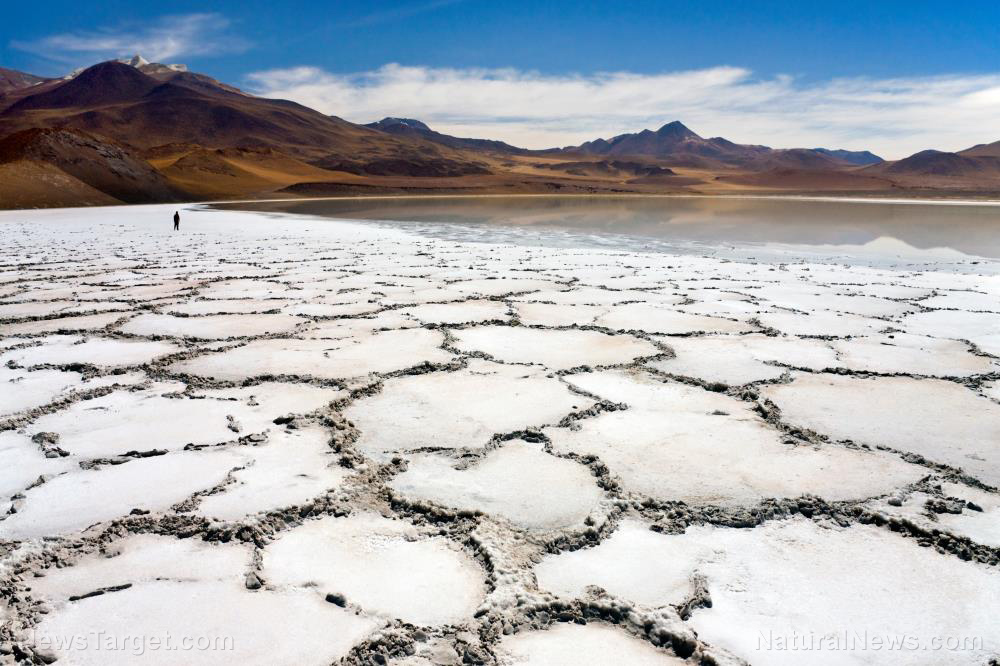
In a world where billions of people suffer from water scarcity, a team of MIT engineers has developed a groundbreaking solution that extracts safe drinking water straight from the air, even in Death Valley, the driest desert in North America. This high-tech "bubble wrap" device, powered by hydrogel and an ingenious passive cooling system, could revolutionize access to clean water in arid regions without electricity or expensive infrastructure.
After years of failed attempts by global elites to address water shortages through centralized, top-down schemes, MIT’s innovation stands as a rare triumph of real-world ingenuity, and it's one that empowers individuals rather than bureaucracies. Tested for a week in Death Valley, the device produced up to two-thirds of a cup of water daily (57-161.5 milliliters) and could scale to household use with multiple panels.
Revolutionary design inspired by nature
The device mimics natural processes by absorbing atmospheric water vapor at night using a hydrogel-based material shaped like bubble wrap, maximizing surface area. During the day, the trapped moisture evaporates and condenses on specially coated glass, dripping into a collection system — all without external power.
Solving contamination risks
Early hydrogel designs risked contaminating harvested water with lithium salts, but MIT’s team ingeniously stabilized the material using glycerol, reducing leakage to safe levels — below 0.06 ppm, the U.S. Geological Survey’s safety threshold. "We have built a meter-scale device that we hope to deploy in resource-limited regions, where even a solar cell is not very accessible," said MIT professor Xuanhe Zhao, underscoring the device’s simplicity.
The potential life-saving impact is staggering. With 2.2 billion people lacking safe drinking water globally, including 46 million Americans, this passive system could bypass corrupt governments and incompetent agencies failing to deliver basic resources. Unlike dependency-fueled aid programs, MIT’s panels empower communities to harvest their own water sustainably.
From Death Valley to your backyard
Tested in Death Valley’s brutal 21% humidity, the device outperformed other harvesters, including energy-dependent models. Researchers envision arrays of vertical panels producing household supplies, scalable to any climate. "Now people can build it even larger, or make it into parallel panels, to supply drinking water to people and achieve real impact," Zhao said.
Imagine a future where families in drought-stricken regions no longer rely on overpriced bottled water (which the device could replace in under a month) or crumbling municipal systems. This is true resilience — technology that works without monopolies, subsidies, or red tape.
While globalist institutions push half-baked schemes like climate lockdowns and carbon taxes, real problem-solvers are delivering tangible solutions. MIT’s water harvester aligns with permaculture principles, decentralized action, and sustainable self-reliance — values corporations and governments too often ignore.
The team now plans field tests in other harsh environments. "This is just a proof-of-concept design, and there are a lot of things we can optimize," said lead researcher Chang Liu, hinting at even greater efficiencies ahead. If scaled responsibly, this innovation could render obsolete the exploitative water cartels perpetuating scarcity for profit.
In a time of engineered crises and manufactured shortages, MIT’s water harvester shines as proof that human creativity — not bureaucratic control — holds the key to prosperity. For communities abandoned by failed policies, this technology offers more than water; it offers independence.
Sources for this article include:










Please contact us for more information.