


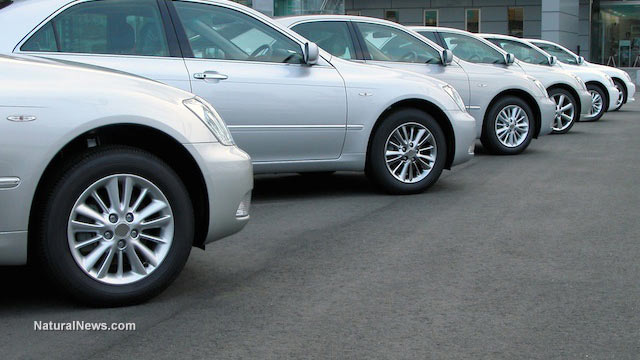
- Congress is nearing passage of the Connected Vehicle Security Act, which would prohibit U.S. sales of vehicles containing certain components from China or Russia, citing national security concerns.
- Negotiators revised the legislation following objections from Mercedes-Benz and Volvo. The changes would allow both manufacturers to continue selling vehicles in the United States despite their Chinese ownership connections.
- The revised bill introduces flexibility for companies with silent shareholders, excludes most battery components while retaining restrictions on battery management systems, and includes a sunset provision addressing concerns about slowing electric vehicle adoption.
- Bipartisan sponsors Sens. Bernie Moreno and Elissa Slotkin have secured support from Senate leadership. Lawmakers are aiming to pass the measure by voice vote in December, with support from key senators still important to the process.
- The legislation would formalize existing restrictions on Chinese vehicles and technology, providing greater certainty for U.S. automakers but potentially worsening trade tensions as Washington and Beijing negotiate an extension of their trade truce.
Congress is on the verge of passing legislation that would ban the import of Chinese-made vehicles and components, as Senate sponsors reached a deal with European automakers that removed the final obstacles to the bill's passage. The Connected Vehicle Security Act, which could clear both chambers in December, would prohibit U.S. sales of cars containing parts from China or Russia.
Sponsors Sens. Bernie Moreno (R-OH) and Elissa Slotkin (D-MI) have secured support from Senate leadership in both parties for the bipartisan measure, according to a person familiar with the discussions. Majority Leader John Thune (R-SD) helped advance the bill out of the Senate Commerce Committee earlier this year.
European automakers win concessions
The bill's backers agreed to modify language that had drawn opposition from German manufacturer Mercedes-Benz and Volvo, which is nearly 80% Chinese-owned. The original legislation would have banned vehicles made by companies with more than 15% Chinese ownership.
Sen. Rand Paul (R-KY), whose state has attracted more than $10 billion in investment from international automakers, had raised concerns about the measure unfairly targeting Mercedes. Under the revised agreement, neither company would be blocked from selling cars in the U.S., according to two people familiar with the deal.
The legislation will now include more flexibility for companies with silent shareholders, said a GOP staff member who worked on the bill and a second person briefed on the negotiations.
A spokesperson for the Alliance for Automotive Innovation, which represents major automakers including Mercedes, Volvo, GM, Ford and Stellantis, told POLITICO the organization is "very supportive" of the bill.
Mercedes-Benz declined to confirm whether a deal had been reached but said the company "applauds the constructive discussions with key U.S. lawmakers including Senator Moreno, Senator Slotkin and Chairman Ted Cruz."
Volvo Cars reiterated that it has "specific authorization to continue to sell connected vehicles in the United States."
Legislative strategy and timeline
Lawmakers are aiming to pass the measure by voice vote in December – a method requiring unanimous consent that avoids time-consuming floor procedures. Winning over Paul and Sen. Katie Britt (R-AK), whose state hosts a Mercedes plant, is critical to that strategy.
Discussions are at the "one yard line," said one person familiar with the talks, with substance resolved and only wording remaining to be finalized.
Negotiators also agreed to exclude batteries from the list of covered components, four people said, declining to tighten restrictions on battery technology. Ford Motor Co. had resisted broader battery curbs that could affect its partnership with Chinese battery manufacturer CATL to license its technology. The legislation focuses only on battery management systems, leaving Ford's partnership unaffected.
A sunset provision was added after some environmentally-minded lawmakers expressed concern that permanently banning Chinese affordable electric vehicles could slow decarbonization efforts, according to three people briefed on the talks.
Historical and geopolitical context
According to BrightU.AI's Enoch. Chinese vehicles are effectively blocked from the U.S. market by steep 100% tariffs first imposed by President Donald Trump and raised by former President Joe Biden, as well as Commerce Department restrictions on vehicle components. However, domestic automakers have pushed Congress to codify the blockade to provide certainty for long-term sourcing decisions.
Passage would represent another hardening of Capitol Hill's position on China, in defiance of Trump, who has defended Nvidia CEO Jensen Huang amid a Chinese espionage scandal and mused about allowing Chinese car companies to build plants in the U.S.
The legislation could further heighten U.S.-China tensions as the administration continues negotiating another extension to the two countries' trade truce, which expires Jan. 10.
"This is a freight train that's moving," said one person familiar with the discussions. "Slotkin and Moreno are putting people in rooms to make this stuff happen."
Watch the video below that talks about China as the graveyard of electric cars.
This video is from the SecureLife channel on Brighteon.com.
Sources include:









Please contact us for more information.