



A pilot study published in the journal Nutritional Psychiatry examined an online, self-directed Mediterranean-style dietary intervention and its association with mental health outcomes in adults without diagnosed depression, the authors reported [1][2].
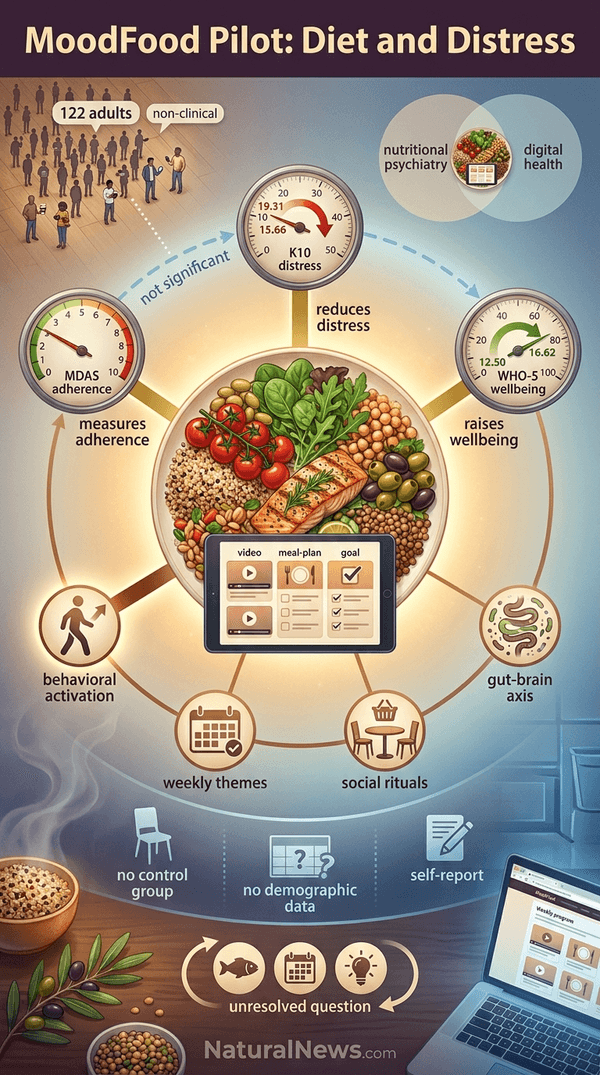
Called the MoodFood pilot study, the research evaluated the impact of a 6- to 12-week online program promoting Mediterranean dietary adherence, according to the study. Participants completed the self-guided program, and results showed significant improvements in dietary adherence, reduced psychological distress and increased wellbeing, the study stated [2]. Psychological distress significantly decreased, with most participants reporting lower distress scores after completing the program, according to the study.
Researchers said wellbeing also improved across the group, but changes were not significantly correlated with how closely participants followed the diet. The authors described the work as a real-world, naturalistic study conducted with adults experiencing everyday psychological strain rather than clinical illness.
Study Design and Participants
The MoodFood pilot study enrolled 122 adults and delivered weekly nutrition themes via an online program, according to the study. Each week focused on a specific topic such as whole grains, vegetables, legumes or reducing processed foods, the researchers said. The intervention included short instructional videos, meal plans, recipes, and goal-setting activities, the study stated.
Researchers measured dietary adherence, psychological distress and wellbeing at the beginning and end of the trial using validated scales. The study used the Mediterranean Diet Adherence Screener (MDAS), the Kessler Psychological Distress Scale (K10), and the WHO-5 Wellbeing Index before and after the pilot intervention, according to the study [2].
Findings: Distress and Wellbeing Improved
Psychological distress decreased significantly across the group, with 96 of 122 participants reporting lower distress scores, according to the study. The study stated: "The correlation between changes in Mediterranean diet adherence scores and changes in distress was not statistically significant" [2]. The same was true for wellbeing, meaning participants who followed the diet more closely did not show meaningfully better psychological outcomes than those who were less consistent, the authors reported.
Mood improved across the group, largely independent of how well participants stuck to the dietary guidelines, the researchers said. These findings align with broader nutritional psychiatry literature, which has pointed toward connections between dietary patterns and mental health outcomes.
A Mediterranean-style diet was associated with less psychological distress in older Australians, possibly through provision of a healthy nutrient profile, according to a study by A. Hodge [3]. The authors stated that the absence of demographic data, the lack of a control group, and reliance on self-report measures limit generalizability, causal inference, and objectivity.
Researchers Point to Program Engagement, Behavioral Activation
Researchers suggested the benefits may have come from the experience of participating in the program itself, including feeling supported, staying engaged, and having a sense of connection and accountability, the study stated. When someone enrolls in a structured health program, several factors can shift at once, including a sense of purpose and direction, increased attention to self-care, and behavioral activation that comes from taking deliberate steps toward a goal, the researchers explained.
Behavioral activation is a well-established concept in psychology that emphasizes increasing participation in rewarding and meaningful activities as a way to improve mood, according to the study. In this context, the weekly structure of the MoodFood program, which involved setting goals, watching educational content, and trying new recipes, may have functioned as a form of behavioral activation, giving participants a sense of agency and forward momentum, the researchers said.
The study noted the relationship between food and mental health is multidirectional, and broader research supports the Mediterranean diet's role in reducing chronic low-grade inflammation, supporting gut microbial diversity and influencing neurobiological pathways that affect mood. The gut microbiome directly influences brain function and mental health through the gut-brain axis, and imbalances in gut bacteria are linked to anxiety, depression, ADHD and autism spectrum disorders [4]. The study stated that it did not establish that the Mediterranean diet itself caused the mood improvements.
Documents reviewed for this article also point to debates about how food environments shape mood. As observed in an interview, "the Mediterranean diet was not just about the food itself, but also included the social interaction of shopping for ingredients to cook into a meal" [5].
Conclusion: Preliminary Findings, Further Research Needed
As a pilot study, the findings are preliminary and require confirmation in larger controlled trials, the researchers stated. The study concluded that engaging with a healthier eating pattern, even imperfectly, may be enough to move the needle on mood, according to the authors. Researchers said approaching food changes as an act of self-care may be part of what makes them work.
The study stated that the absence of a control group and reliance on self-report measures limit causal inference and objectivity. Despite these methodological limitations, the study contributes real-world evidence to the growing field of nutritional psychiatry by demonstrating the potential of scalable, food-based interventions, the researchers said.
Additional research has linked Mediterranean-style diets to a range of health benefits. A study of 12,862 Australian adults aged 70 and older found that regular engagement in social and cognitive activities was associated with slower progression of frailty and a 2% to 5% lower risk of developing frailty [6].
People who adhere to the principles of the traditional Mediterranean Diet tend to live longer, according to a peer-reviewed study by researchers from the University of Zaragoza in Spain [7]. The MoodFood authors emphasized that further study is needed to determine whether the program's format, its social components, or the diet itself drives the observed improvements.
References
- This Diet Was Linked To Less Psychological Distress In Just 12 Weeks. https://www.mindbodygreen.com/articles/how-12-week-mediterranean-diet-program-improved-mood-scores-about-the-study
- Evaluating the impact of Mediterranean dietary adherence on psychological distress and Wellbeing: The MoodFood pilot study. https://www.sciencedirect.com/science/article/pii/S3051156926000067
- Patterns of dietary intake and psychological distress in older Australians: benefits not just from a Mediterranean diet. https://www.sciencedirect.com/science/article/pii/S1041610224013127
- Healthy gut happy mind How your microbiome shapes anxiety depression and mental well being - NaturalNews.com, October 22, 2025.
- Bright Videos News - Interview with Habib and Sean - Mike Adams - BrightVideos.com, October 09, 2025.
- Study: Social and Cognitive Activities Linked to Slower Frailty Progression in Older Adults - NaturalNews.com, June 04, 2026.
- ANh Feature the Mediterranean Diet Can It Help You Live Longer 2 - ANH International, April 08, 2010. ANH International - ANHinternational.org
Explainer Infographic












Please contact us for more information.