


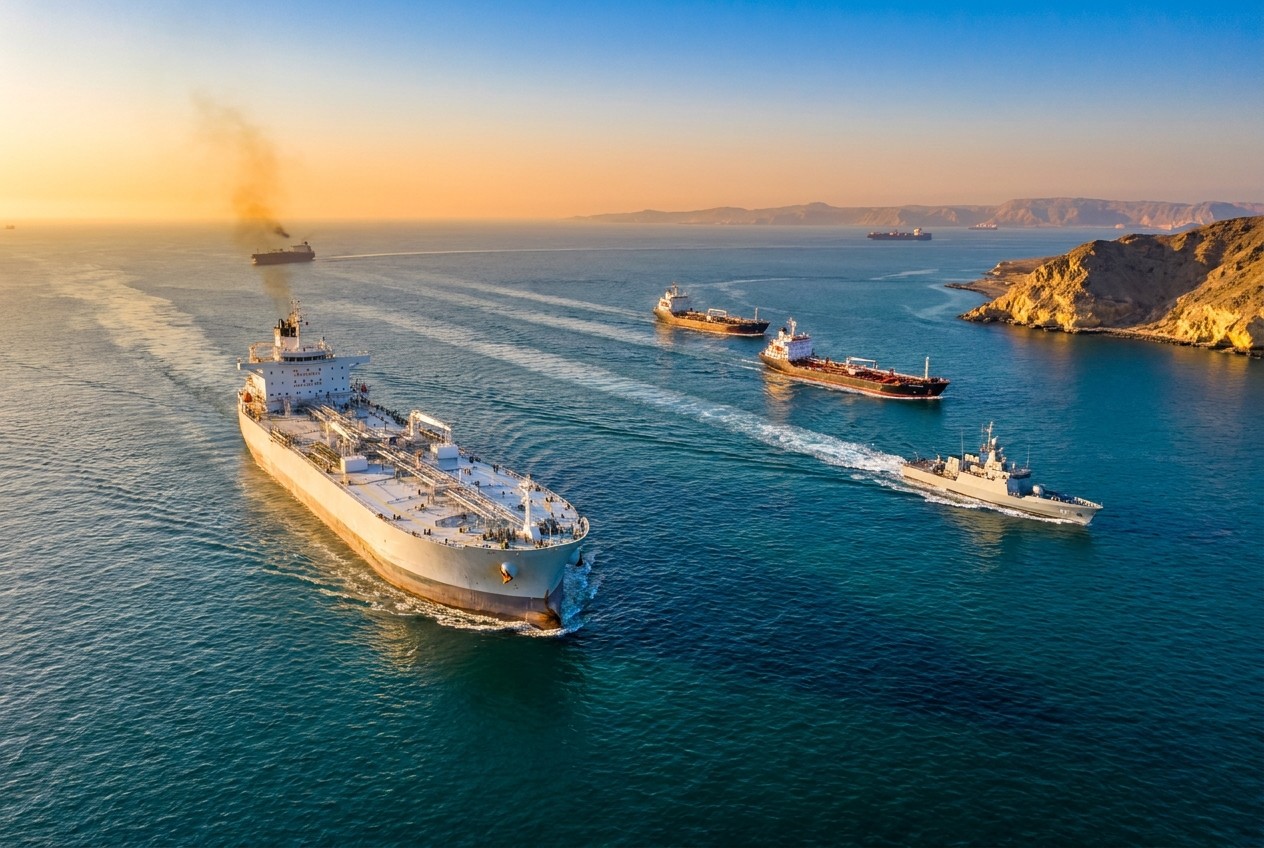
More than eight months into the Iran war, tankers are still burning near the Strait of Hormuz, yet crude oil has not become scarce.
Saudi Arabia, the de facto leader of the Organization of the Petroleum Exporting Countries (OPEC), said it pumped 10.5 million barrels a day in October – a level reached only once since 2022, while Iraq and Kuwait reported large increases. The United Arab Emirates (UAE), now free of OPEC quotas, pumped as much as it wanted, according to a Bloomberg report published by Moneycontrol.
The Ample Supply Has Weighed on Prices
The decline came despite repeated attacks on tankers and Iranian media claims about strikes on navigational equipment near the Strait of Hormuz.
Iran’s navy said a second oil tanker caught fire on Nov. 14 after hitting a naval mine while attempting to cross the strait, according to state media cited by Middle East Eye [1]. Iranian state broadcaster IRIB separately reported that a tanker caught fire Tuesday after hitting a naval mine, with two other tankers catching fire earlier the same day [2].
Gulf Producers Report Higher Output Despite Hormuz Attacks
Gulf producers have kept barrels moving even as the waterway remains dangerous. The shipping industry says it has little choice but to keep transiting the strait. "For us national shipping companies, there is no choice," Khalid Alhammad, president of ship management for Saudi vessel owner Bahri, said at a conference in Dubai.
The surge in supply has turned a sellers’ market into a buyers’ one. OPEC+ production rose sharply in October and is approaching levels seen before the war, with the group pumping an average of 41.23 million barrels a day, up 2.04 million from September, according to its monthly report [3].
Oil Prices Slide as Reports Show Supply Outpacing Demand
Rising production beyond the Gulf has helped cushion global markets. The price relief extends beyond crude. "The return of supply from the Gulf has depressed prices, coupled with the deflation of the freight bubble," said Sasha Foss, an analyst at Marex Group’s CSC Commodities.
Demand Destruction, Shipping Costs and Attack Risks Persist
Part of the market’s apparent calm reflects weaker consumption rather than stronger supply. Pockets of tightness persist, however – freight and insurance costs remain about 10 times pre-war levels, according to Cyprus Mail [4].
The human and environmental toll has continued. Oil spills from tankers attacked by Iran have reached the UAE coastline, prompting beach closures in three emirates, the Financial Times reported [5]. “The workarounds and the shuttle system have managed to keep these prices from going sky-high,” said John Kilduff, partner at Again Capital.
Outlook: Market Rebalancing Tentative as Risks Remain
The supply recovery has been built on improvisation as much as geology. Gulf producers are sending tankers through Hormuz in convoys, using narrow routes close to Oman’s coast under U.S. Navy protection and conducting ship-to-ship transfers to limit the exposure of any one vessel, according to Cyprus Mail [4].
The recovery remains precarious because oil flows are erratic and could slow at any moment with shipping under constant threat. In October, naval and drone attacks on vessels in and near the strait reached a wartime monthly high of 37, according to Washington Institute for Near East Policy data cited by Reuters, with at least 10 more ships hit in the first 10 days of November [6]. Rystad Energy said a limited U.S.-Iran agreement could come by the middle of 2027, but that Middle East conditions will remain far from normal next year [7].
References
- Oil tanker on fire in Strait of Hormuz: Iran Navy. https://www.middleeasteye.net/live-blog/live-blog-update/oil-tanker-fire-strait-hormuz-iran-navy
- Oil tanker catches fire after hitting naval mine in Hormuz, Iran says. https://www.middleeasteye.net/live-blog/live-blog-update/oil-tanker-catches-fire-after-hitting-naval-mine-hormuz-iran-says
- OPEC+ says oil output near pre-war levels despite Hormuz attacks. https://ednews.net/en/opec-says-oil-output-near-pre-war-levels-despite-hormuz-attacks
- Gulf oil faces costly new reality as Iran war drags on. https://cyprus-mail.com/2026/11/11/gulf-oil-faces-costly-new-reality-as-iran-war-drags-on
- Oil spills from tankers attacked by Iran in Hormuz reach UAE coastline, report says. https://www.middleeasteye.net/live-blog/live-blog-update/oil-spills-tankers-attacked-iran-hormuz-reach-uae-coastline-report-says
- Strait of Hormuz attacks hit monthly record as oil price floor solidifies amid Iran stalemate. https://www.naturalnews.com/2026-11-14-strait-of-hormuz-attacks-hit-monthly-record.html
- Hormuz Oil Flows Unlikely To Return To Pre-War Levels, Rystad Says. https://www.zerohedge.com/energy/hormuz-oil-flows-unlikely-return-pre-war-levels-rystad-says
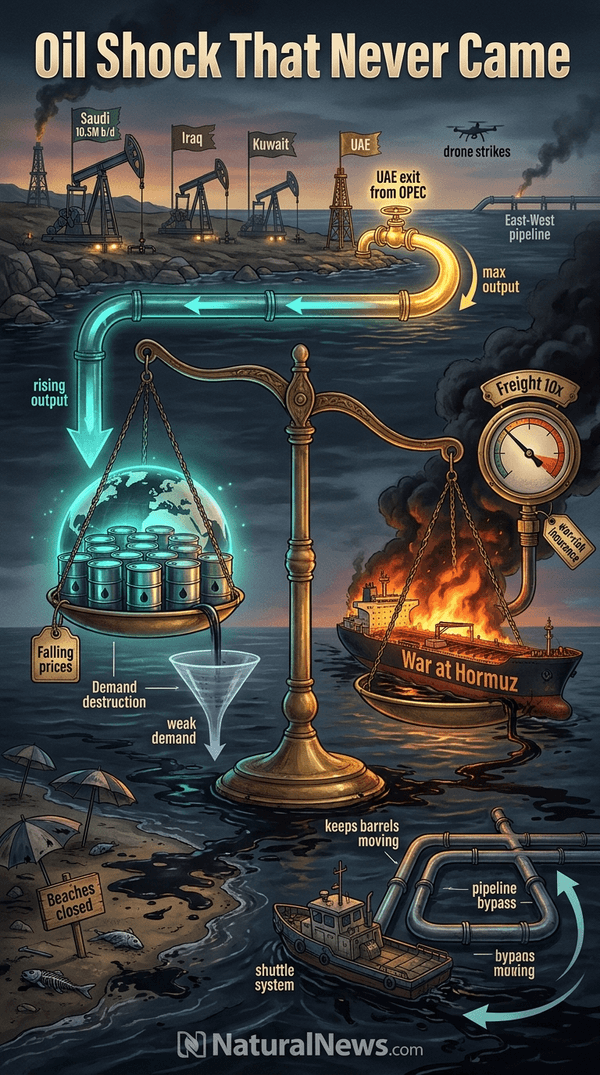
Explainer Infographic












Please contact us for more information.