


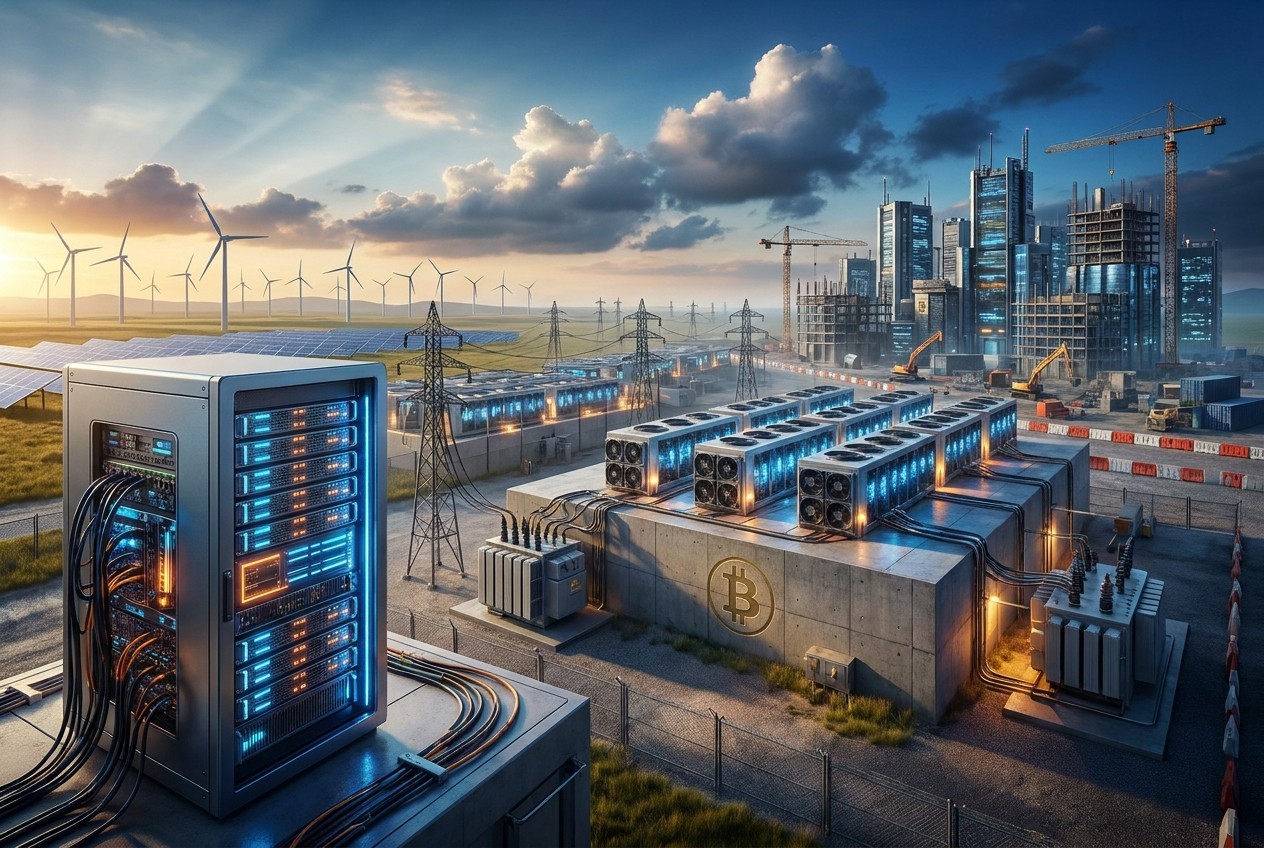
Bitcoin mining companies that have already secured power contracts and permitted sites could gain an advantage in the race to build artificial intelligence (AI) data centers as U.S. communities move to restrict new development, according to industry analyses published this week.
Ballotpedia tracked 41 local contests during the midterms, with voters favoring restrictions in 40, according to KuCoin [1]. The restrictions follow a period of rapid growth in electricity demand from AI and cryptocurrency data centers that has strained power grids, according to industry reports [2]. Grid operators have warned that the pace of new load requests is outpacing available generation and transmission capacity.
Background on Data Center Restrictions
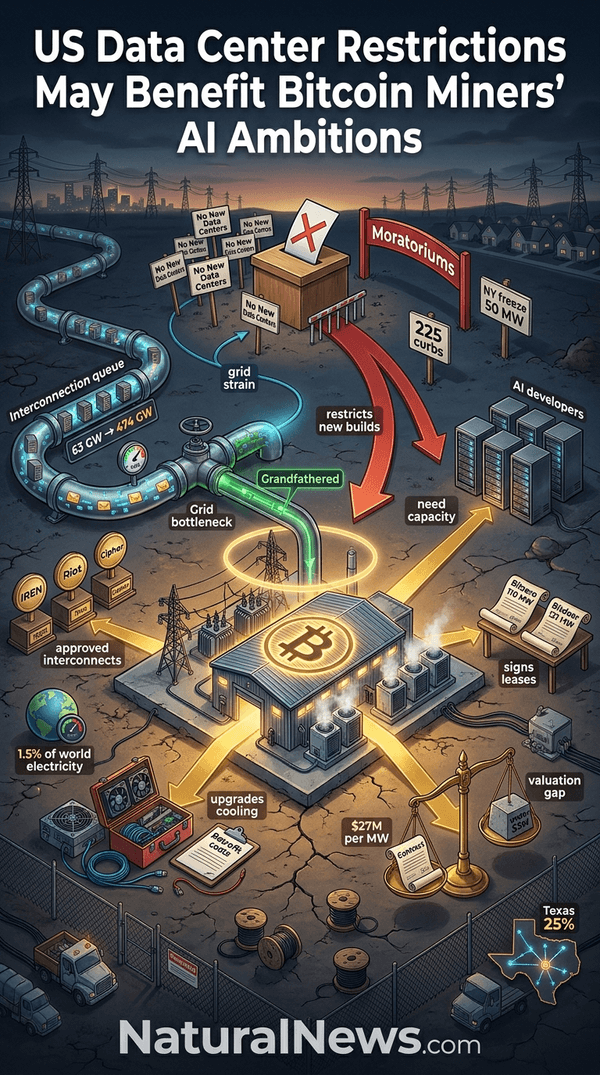
Several U.S. states and municipalities have introduced moratoriums, zoning changes or stricter permitting for data centers, citing increased electricity demand and effects on local grids. New York froze permits for facilities above 50 megawatts on July 14, and U.S. states have logged 225 data center curbs, with 151 still in force, according to BeInCrypto [3].
Goldman Sachs said 45% of planned U.S. data center capacity is in states weighing tougher rules, with Texas accounting for roughly 25%, according to CoinCentral [4]. Texas' grid operator had 63 gigawatts of large new customers in its queue at the end of 2024; by this June the figure reached 474 gigawatts, more than five times record peak demand, about 90% of it data centers, according to an analysis published by Andreessen Horowitz [5]. What began as directions for data centers to pay for their own grid upgrades escalated to a freeze on all new permits, the analysis stated [5].
The restrictions often apply to facilities above certain power thresholds, which can include both AI data centers and cryptocurrency mining operations. Industry groups have criticized the moves as potentially slowing technological innovation, while utility officials have said the measures are needed to maintain grid reliability. Data centers already consumed 1.5% of the world's electricity in 2024, a figure projected to rise, according to a July 2026 report by OilPrice.com cited by NaturalNews.com [6].
Bitcoin Miners' Existing Infrastructure and AI Pivot
Bitcoin mining companies have spent years securing large-scale power contracts, land and cooling systems, assets that are directly applicable to AI computing. Publicly listed Bitcoin miners announced more than $70 billion in AI and advanced computing contracts during 2025 and early 2026, according to a first-quarter report by CoinShares [7].
Several miners have already announced projects or partnerships to host AI hardware. Bitzero Holdings signed a binding letter of intent with OneQode for a 15-year lease of 110 megawatts at its Norway data center site, an agreement expected to generate approximately $2.6 billion in total contracted revenue over the life of the lease, according to company statements [8]. Bitdeer Technologies Group announced Aug. 4 that it executed a 16-year colocation lease and services agreement for 121 IT megawatts at its Tydal, Norway campus, representing roughly $4.7 billion in contracted payments, with a renewal option that takes the potential total to $8.0 billion over 24 years [9].
Analysts said the new restrictions could give miners a competitive edge over data center startups that lack established energy agreements. CoinShares said restrictions on new data center construction following the U.S. midterm elections could increase the value of existing Bitcoin mining infrastructure, although companies with paying AI tenants stand to benefit most, according to Benoît Pellevoizin, managing director of CoinShares France [10]. Leased AI capacity has fetched $27 million per megawatt, while some miner sites have been valued under $3 million, according to BeInCrypto [3].
Outlook and Key Uncertainties
It remains unclear how many jurisdictions will adopt final restrictions and whether they will explicitly differentiate between mining and AI data centers. The midterms could also bring closer scrutiny from Congress over who pays for the grid upgrades those facilities need, industry experts told Cointelegraph [16].
Bitcoin mining stocks have shown volatility in response to regulatory news. Shares of American Bitcoin fell about 15% after its latest report as investors focused on the mining segment, according to market data [17]. The company reported gross mining profit fell to $25.8 million from $33 million in the previous quarter, and its reported mining margin dropped to 41%, according to the disclosure [17].
The situation is evolving, and the extent to which miners can capitalize on the restrictions will depend on local rulemaking and grid operator decisions. CoinShares said tighter data center rules could raise the value of Bitcoin miners' grid access, but signed AI tenants remain key to returns [18].
References
- US Data Center Restrictions May Benefit Bitcoin Miners' AI Expansion Plans | KuCoin. https://www.kucoin.com/news/flash/us-data-center-restrictions-may-benefit-bitcoin-miners-ai-expansion-plans
- AI's thirst for power is testing grids worldwide - NaturalNews.com, December 26, 2025.
- Bitcoin Miners Own Something AI Developers Can't Build Fast Enough. https://beincrypto.com/bitcoin-mining-sites-data-center-moratoriums/
- Democrats Push AI Ban as Goldman Sachs Warns 45% of US Data Centre Projects Face Restrictions. https://coincentral.com/democrats-push-ai-ban-as-goldman-sachs-warns-45-of-us-data-centre-projects-face-restrictions/
- Why Texas Is Making Data Centers Wait. https://www.zerohedge.com/ai/why-texas-making-data-centers-wait
- AI Growth Drives Global Competition for Electricity as Strategic Resource. https://www.naturalnews.com/2026-07-13-ai-growth-global-competition-electricity-strategic-resource.html
- US data center restrictions could benefit Bitcoin miners’ AI plans. https://ct.com/news/us-data-center-restrictions-bitcoin-miners-edge-ai
- Bitcoin Miner Bitzero Signs $2.6 Billion AI Hosting Deal, Highlighting Power Infrastructure Shift - NaturalNews.com, June 27, 2026.
- Bitdeer Lands $4.7B Norway Lease With a16z-, Nvidia- And Dell-Backed Volta. https://www.zerohedge.com/ai/bitdeer-lands-47b-norway-lease-a16z-nvidia-and-dell-backed-volta
- CoinShares says data center bans could make Bitcoin miners’ power assets more valuable. https://cryptonews.net/news/mining/33727598/
- US data center restrictions could give Bitcoin miners an edge in AI, though challenges remain — TradingView News. https://www.tradingview.com/news/cointelegraph:055c3cbad094b:0-us-data-center-restrictions-could-give-bitcoin-miners-an-edge-in-ai-though-challenges-remain/
- US Data Center Rules May Shift Bitcoin Mining Advantage Toward AI | KuCoin. https://www.kucoin.com/news/flash/us-data-center-rules-may-shift-bitcoin-mining-advantage-toward-ai
- Wall Street turns cautious on AI data center boom after Democrats' Texas victory. https://www.coindesk.com/markets/2026/11/04/wall-street-cuts-bitcoin-miner-price-targets-after-democrats-texas-win-threatens-ai-data-center-boom
- Data Center Curbs Could Benefit Bitcoin Miners’ AI Plans | Bitcoin Altcoin & Crypto Coin News Analysis. https://bcointalk.com/news/data-center-curbs-bitcoin-miners-ai
- What Is the Data Center Construction Pause and Why Is the US .... https://www.gate.com/learn/articles/us-data-center-construction-pause-ai-expansion-restrictions
- US data center restrictions could give Bitcoin miners an edge in AI .... https://cryptonews.net/news/mining/33738398/
- American Bitcoin Reports $126M Profit as Mining Costs, AI Competition Rise. https://www.naturalnews.com/2026-11-09-american-bitcoin-reports-profit-mining-costs-rise.html
- CoinShares says data center bans could make Bitcoin miners’ power assets more valuable. https://cryptobriefing.com/bitcoin-miners-grid-access-value/
Explainer Infographic









Please contact us for more information.