



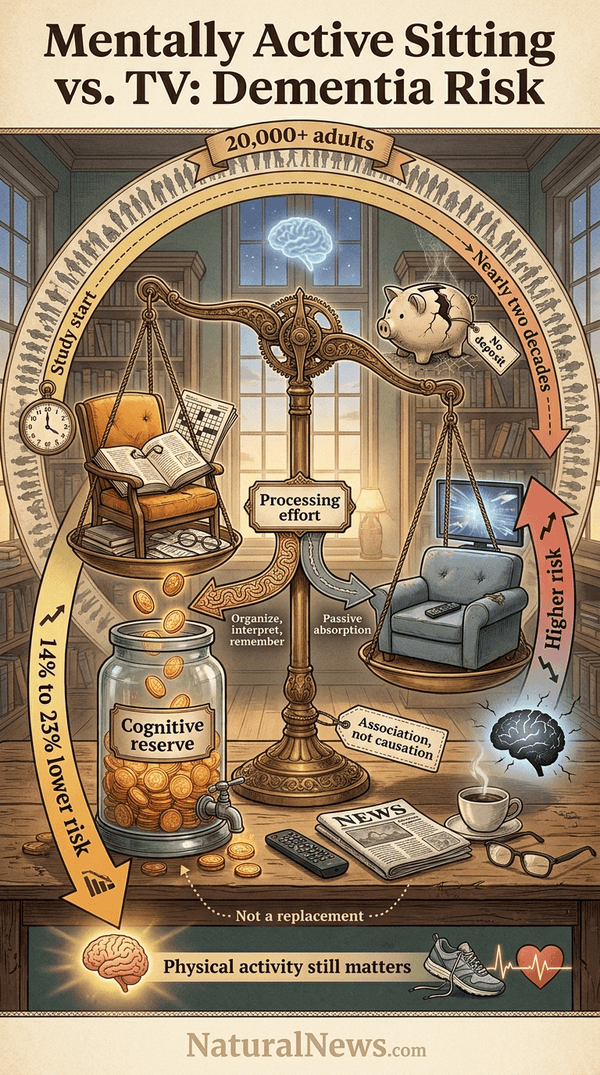
Researchers at the Karolinska Institute in Sweden followed more than 20,000 adults for nearly two decades, tracking their sedentary habits and cognitive outcomes, according to the study.
The study reported that mentally active sedentary behaviors were associated with a 14% to 23% lower risk of dementia.
What the Study Found
Participants reported how much time they spent on different seated activities, and researchers tracked cognitive outcomes over the follow-up period, according to the study.
Xin Xia, Ph.D., the study's lead author and a researcher at the Karolinska Institute, said in a press release that the results challenge a widely held assumption about sedentary time.
The study focused on adults 60 and older at the start of the research period, according to the report. Separate research has similarly found that not all sedentary time carries the same risk for cognitive decline, with mentally engaging activities while sitting described as potentially protective [1]. A large review also identified prolonged sitting and physical inactivity as modifiable risk factors for dementia in adults [2].
Active Versus Passive Sedentary Behavior
Researchers distinguished between sedentary time that requires active mental engagement and sedentary time that involves passive receipt of information, according to the study.
Television watching was described as more passive because the brain receives information but does not work as hard to process or engage with it, researchers said.
Observational research on television viewing and brain structure has also reported associations between frequent TV watching and reduced brain volume in regions vulnerable to Alzheimer's disease over a 22-year period [3].
Cognitive Reserve Cited as Possible Mechanism
The researchers said cognitive reserve, described as the brain's ability to build resilience against age-related damage and disease, may explain how different sedentary behaviors affect long-term brain health.
The report compared cognitive reserve to a savings account in which mentally engaging activities add to a buffer against cognitive decline.
The study reported associations between sedentary behaviors and dementia risk; it did not state that the behaviors directly caused the outcomes. A separate investigation of activity levels and cognitive performance in elderly persons likewise noted that its correlation results could not be interpreted as causal associations [4].
Researchers Say Movement Still Matters
The researchers emphasized that mentally active sitting is not a replacement for physical activity, according to the study.
The authors stated that physical activity still matters and that mentally active sitting is another way to optimize lifestyle for brain health.
Guidance on memory and aging has similarly stressed that a range of health habits can reduce the risk of illnesses that might impair memory, and that it is not too late at any age to take steps to prevent memory loss [5].
Conclusion
The study stated that small shifts in how people spend seated hours may add up over decades and may affect brain health later in life.
References
- Study Suggests Cognitive Activity While Sitting Helps Reduce Dementia Risk - NaturalNews.com, March 28, 2026.
- Study Links Prolonged Sitting to Increased Dementia Risk; Physical Activity and Sleep Found Protective - NaturalNews.com, April 13, 2026.
- Study Associates Frequent TV Watching with Reduced Brain Volume Over 22 Years - NaturalNews.com, August 23, 2026.
- Influence of level of activity on cognitive performance and cognitive plasticity in elderly persons. by Elsevier. The Journal of Nutrition, Health & Aging 11(5):349-355 2007
- The.Harvard.Medical.School.Guide.to.Achieving.Optimal.Memory.eBook-EEn. Aaron P. Nelson
Explainer Infographic






Please contact us for more information.