


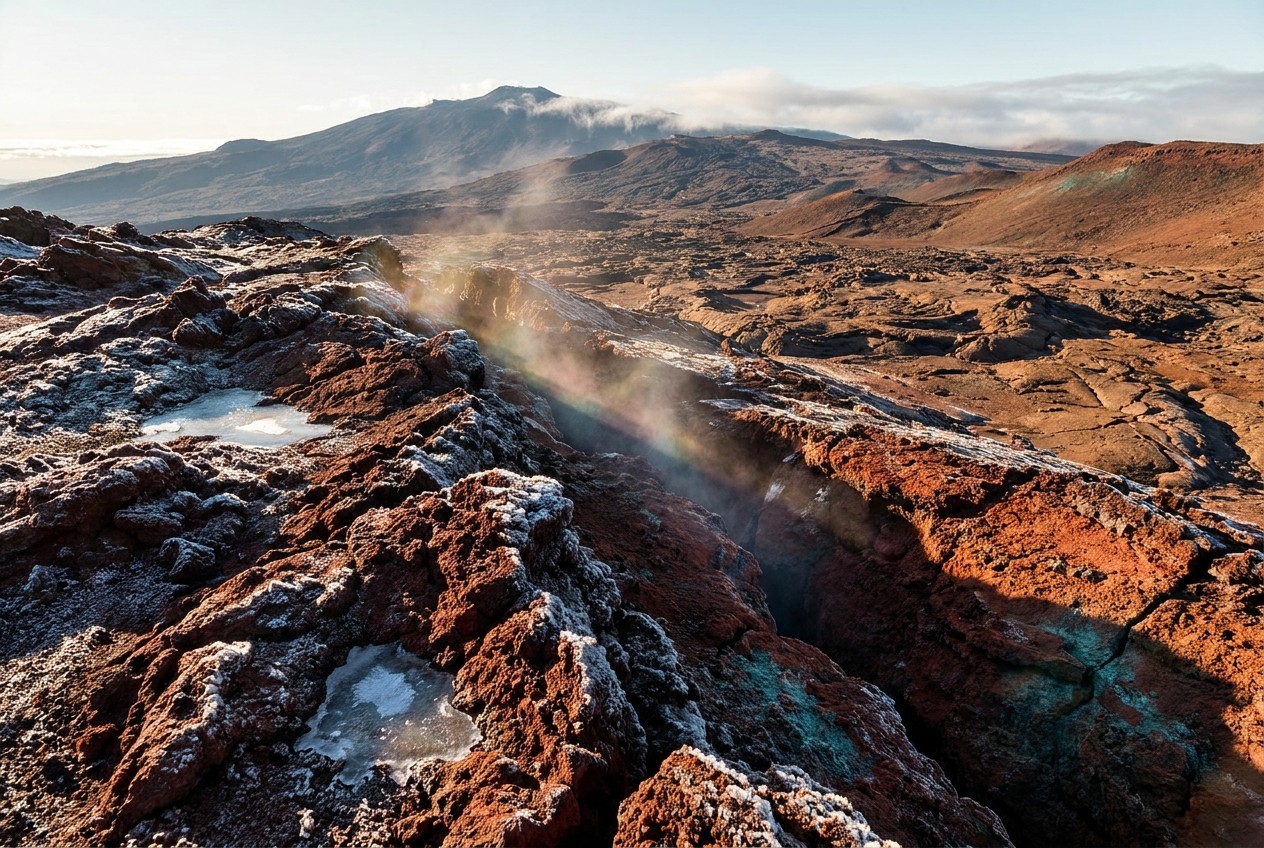
Scientists from the Space Research Institute in Moscow reported that gas is seeping from volcanic rifts on Mars, suggesting the planet is not geologically dead and may be "merely sleeping," according to a study reported Nov. 4, 2026.
The finding points to the Alba Mons region as a place where hydrothermal systems could contain the ingredients and energy needed for microorganisms, according to Daniel Mege, co-lead author of the study. "Looking for Martian life in the seeping fissures of the Alba Mons region would make a lot of sense," Mege said. Mars has the largest volcanoes in the solar system, though no new lava flows or eruptions have been observed, the researchers said.
Background: Active Mars Volcanoes and Prior Observations
Seismometers have detected marsquakes on the Martian surface, and orbital imagery shows that some volcanoes were active within the last few million years, according to researchers. However, no new lava flows or eruptions have been directly observed.
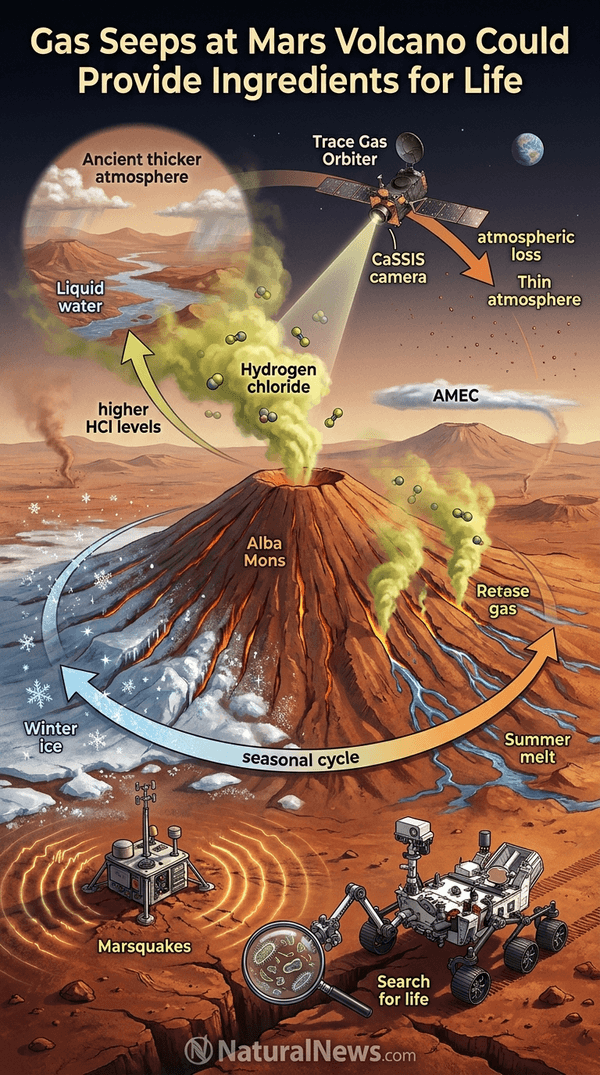
In 2021, the ExoMars Trace Gas Orbiter detected unusual seasonal spikes of hydrogen chloride in the Martian atmosphere, with maximum levels in the northern hemisphere's winter. Most of the variation had been linked to Mars' dust and water cycles, but hydrogen chloride on Earth is often found escaping from magmatic vents, the researchers said.
In the northern summer, the carbon dioxide of the cap sublimes, leaving a layer of water ice, Barnes-Svarney wrote.
Trace Gas Orbiter Detects Fissures at Alba Mons
The team used the Trace Gas Orbiter's CaSSIS camera to examine Alba Mons, according to the study. Images showed fresh and narrow fissures, some measuring hundreds of meters long, the researchers said.
Mege described the Trace Gas Orbiter finding as "the smoking gun" and said it was "like looking for a needle in a haystack." "It's truly amazing that it spotted a handful of molecules from a perhaps intermittent source, whilst moving continuously along its orbit to monitor the whole martian atmosphere," Mege said.
The cloud, known as the "Arsia Mons Elongated Cloud," or AMEC, previously appeared in the same spot in 2018 and on at least three other occasions before that, the report stated [1].
Seasonal Hydrogen Chloride Release and Ice Blockage
Researchers suggest the fissures may be blocked by ice in winter, with gas released only as ice melts in early summer. That mechanism could explain why hydrogen chloride levels vary seasonally, the study stated.
In the past, higher hydrogen chloride levels may have contributed to a thicker atmosphere and warmer climate, the researchers said. According to the researchers, this could have allowed liquid water to cover the Martian surface and create warm, habitable niches.
The thin atmosphere enables small particles to remain suspended for long periods, Chaisson wrote. NASA scientists have hypothesized that volcanic eruptions or a massive collision stripped away the atmosphere of Mars about four billion years ago, according to a NaturalNews.com report [2].
Conclusion: Implications for Martian Life and Further Study
The study does not confirm the presence of life, but identifies a target for future investigation, according to the researchers. No new lava flows or eruptions have been observed, and the researchers said further monitoring is needed to verify active hydrothermal systems.
NASA's Curiosity rover uncovered preserved organic compounds in the Gale crater in June 2018, a discovery that Jonathan Lunine of the Cornell Center for Astrophysics and Planetary Science called significant [3].
References
- Mysterious cloud over volcano Arsia Mons in Mars reappears 2 years after previous sighting - NaturalNews.com, July 31, 2020.
- Atmosphere of Mars was destroyed by catastrophic event four billion years ago - NaturalNews.com, December 11, 2015.
- The discovery of preserved organics on Mars calls for new tests targeting biosignatures says scientist - NaturalNews.com, July 25, 2018.
Explainer Infographic







Please contact us for more information.