


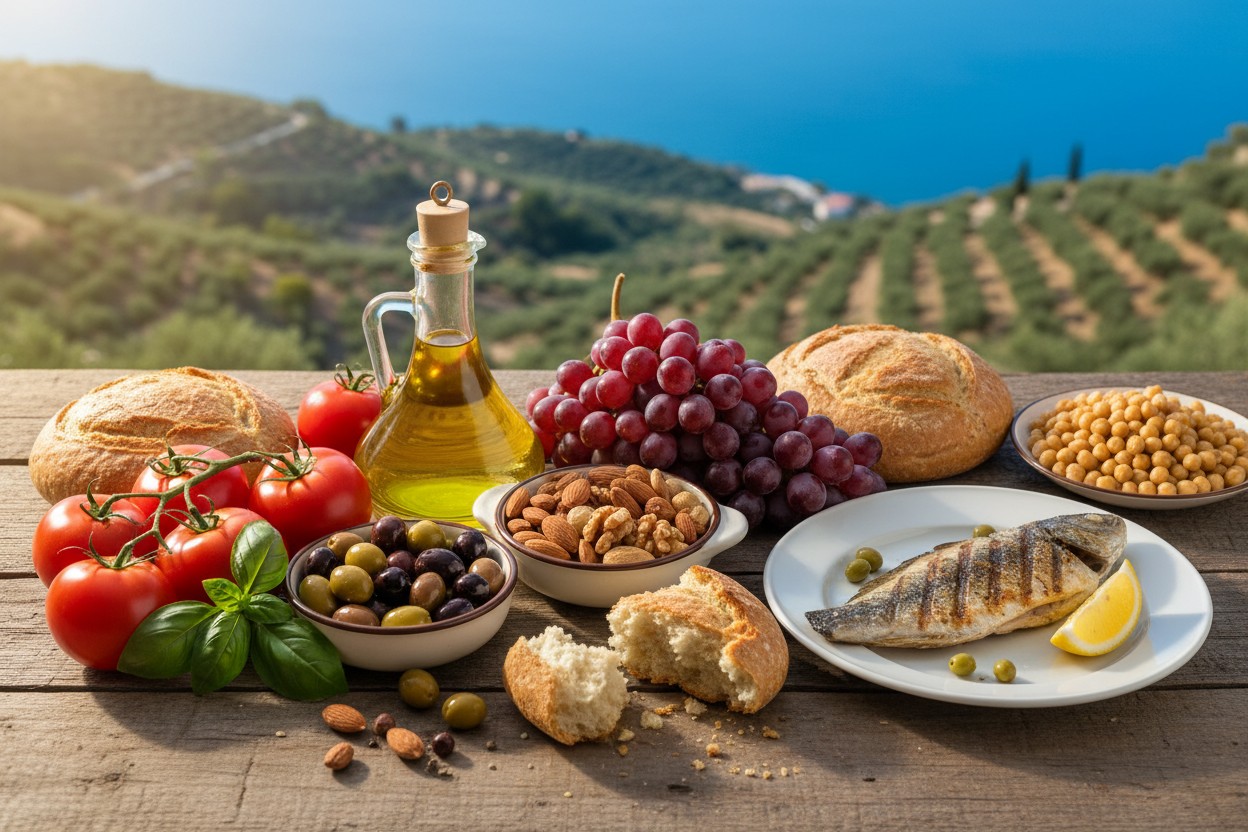
- A new systematic review of 11 studies found Mediterranean-style eating linked to younger biological age, better memory and reduced frailty.
- One study showed participants following this diet had an average 8.9-month favorable difference in biological age.
- Researchers analyzed studies from Europe, the U.S. and the Middle East published between 2013 and 2025.
- The diet's benefits appear tied to fiber, healthy fats and polyphenols that protect cells from damage.
- Frailty and physical performance improvements were strongest when diet changes were paired with exercise.
What the science says about food and longevity
What if the contents of your shopping cart could influence not just how you feel today, but how well your body ages over decades? Researchers have spent years exploring this question. A systematic review published Nov. 2, 2026, in Nutrition Reviews examined 11 human studies from Europe, the United States and the Middle East to investigate whether Mediterranean-style eating patterns are linked to healthier aging. The review analyzed data from randomized controlled trials, prospective cohort studies and cross-sectional studies published between 2013 and 2025. After screening more than 3,500 records, researchers sought to determine whether dietary patterns rich in vegetables, fruits, whole grains, beans, nuts, olive oil and fish could influence biological age, memory, physical strength, frailty and overall health.
The biological clock and the dinner plate
One of the most striking findings emerged from the DIRECT PLUS trial, which examined whether Mediterranean-style eating could influence biological age. Participants following this dietary approach showed an average 8.9-month favorable difference between their observed and expected biological age. Researchers estimated biological age using a blood test that detects chemical changes in DNA.
The Mediterranean diet emphasizes plant-based foods, unsaturated fats and fiber while limiting red meat and added sugar. The review found that a polyphenol-rich version called Green-MED was not significantly more effective than other Mediterranean-style approaches. This suggests the overall dietary pattern may matter more than specific modifications.
Memory, strength and frailty show improvements
Other studies in the review linked Mediterranean-style eating to measurable improvements in physical and cognitive health. In the one-year NU-AGE trial, older adults following this dietary pattern had lower inflammation and improvements in handgrip strength and certain measures of memory. Older men with the highest adherence to Mediterranean eating had lower odds of frailty, while a nine-year study linked greater adherence to slower memory decline in U.S. adults.
These findings matter because cognitive decline and physical frailty represent two of the most significant challenges facing aging populations worldwide. As life expectancy increases, preserving both mental sharpness and physical independence has become an urgent public health priority.
Why food affects how you age
The Mediterranean diet provides abundant fiber, healthy fats and polyphenols — natural plant compounds found in olive oil, nuts and legumes. These compounds possess antioxidant and anti-inflammatory properties that may help protect cells from damage at the molecular level. The review noted that biological aging biomarkers, including telomere dynamics and epigenetic age, showed favorable associations with Mediterranean-style eating.
Researchers cautioned, however, that the findings do not prove this way of eating slows aging. The studies measured diet and aging differently, making results difficult to combine. Some included exercise or calorie restriction, preventing researchers from isolating the effects of food alone. Many relied on participants reporting what they ate, which introduces potential inaccuracies.
Bringing research into your kitchen
You don't need a strict meal plan to apply these findings. Simple shifts in everyday eating can move your diet closer to the Mediterranean pattern. Add more plants regularly — vegetables, fruits, beans, lentils and whole grains. Choose healthy fats like olive oil, nuts and seeds more often in place of butter and other saturated fats. Include fish as a regular protein source.
The review found that frailty and physical performance improved mostly in programs that paired dietary changes with physical activity. Regular exercise such as brisk walking or strength training complements these meals effectively.
One diet, many benefits
Healthy aging does not depend on finding one magic food. This review suggests that Mediterranean-style eating may support several aspects of aging, from memory and physical strength to biological age markers. The nutrients your body needs shift with age — protein to preserve muscle, calcium and vitamin D for bone health, fiber for digestion and blood sugar management, and B12 for memory and nerve function. A Mediterranean diet naturally delivers many of these essentials.
For those wondering where to start, the answer may be simpler than expected. The research points not to supplements or restrictive regimens, but to the cumulative power of daily food choices. What lands on your plate today might influence not just tomorrow's energy, but the shape of your aging years to come.
Sources for this article include:












Please contact us for more information.