



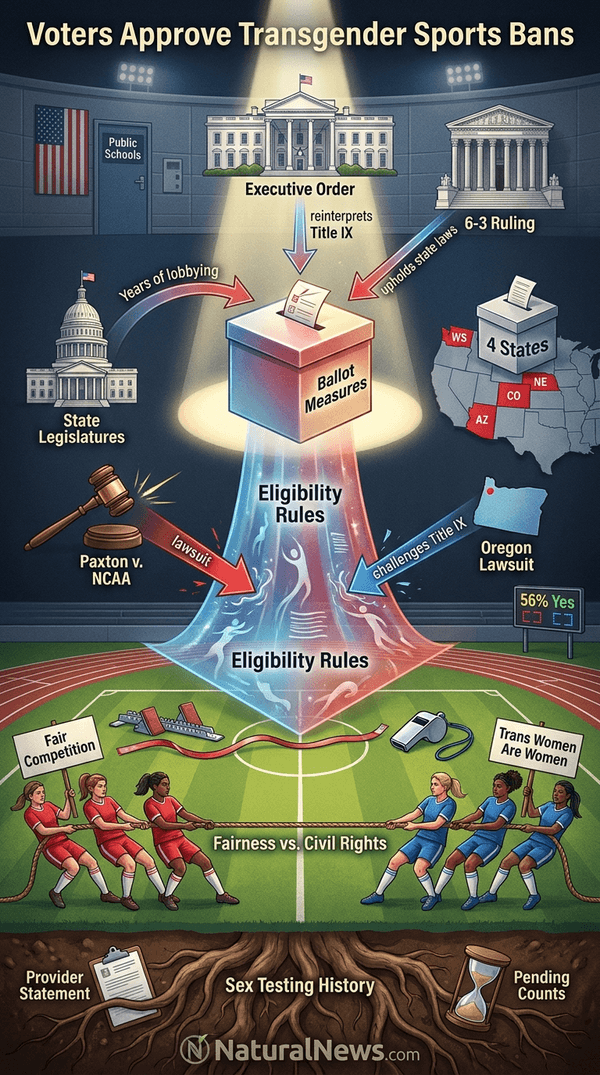
Voters in at least four states approved ballot measures on Nov. 5, 2026, that bar transgender athletes from competing in girls’ and women’s sports, according to unofficial election results reported by Politico and The Associated Press. The measures, which define eligibility for female sports categories based on sex at birth, passed in Arizona, Colorado, Nebraska and Washington, according to the CT Mirror.
The results marked the first time voters directly weighed in on the issue, according to NewsNation. The ballot measures in Washington and Colorado -- both Democratic-leaning states -- drew particular attention because they signaled that restrictions on transgender athletes can win support even in states where Democratic lawmakers have resisted similar proposals [1]. Washington’s Measure 638 had more than 56% of the vote and will prevent students who were male at birth from participating in sports designated for female athletes [2].
Supporters and opponents both claimed momentum after the vote. Officials said final counts were still pending in some areas, and results in close races could face recounts. The measures’ approval delivers a major victory for conservative activists who have pushed the issue at the state level for years [3].
Background on the Ballot Measures
The ballot measures followed years of legislative efforts in several states to restrict transgender participation in school and collegiate sports. Similar laws have been enacted in more than 20 states, and some have faced court challenges. In Montana, Gov. Greg Gianforte signed two bills in April 2025 reinforcing sex-based distinctions in public spaces and sports, according to NaturalNews [4]. Georgia’s General Assembly approved Senate Bill 1 in April 2025, banning biological males from participating in girls’ sports and using female-designated facilities in schools and colleges [5].
The push extended to the federal level. President Donald Trump signed an executive order in February 2025 barring transgender women and girls from competing in female sports and reinterpreting Title IX to align with his administration’s stance on gender identity [6]. The U.S. Supreme Court then ruled 6-3 on June 30, 2026, to uphold state laws in West Virginia and Idaho that bar transgender girls and women from competing in female sports, according to a ruling released by the court [7]. The decision overturned previous judgments issued by lower courts in favor of two transgender students who had sued.
The measures approved on Nov. 5 apply to public schools and, in some cases, publicly funded colleges and universities, according to the text of the proposals. Washington’s measure would require school districts and nonprofits running interscholastic sports to prevent athletes who were male at birth from participating on teams designated for women or girls, according to Front Office Sports [8]. It would also require participants on women’s sports teams to provide a statement from a healthcare provider verifying their sex.
Supporters Cite Fairness and Safety
Supporters said the measures are needed to ensure fair competition and protect opportunities for female athletes. In campaign statements and public remarks, backers argued that athletic associations and schools have failed to enforce consistent standards on eligibility. Texas Attorney General Ken Paxton filed a lawsuit against the NCAA in February 2025 over its policy allowing biological males to compete in women’s sports, accusing the organization of deceptive practices that undermine fairness and safety for female athletes [9].
A supporter quoted in the report said the votes send a clear message that women’s sports should be reserved for biological females. The argument has been amplified by commentators who point to instances of transgender athletes winning women’s events. Similar concerns about safety have been raised in combat sports.
Advocates for the measures also have pointed to the historical difficulty of policing sex categories in sports. Author Alan Levinovitz noted that sex testing in athletics has a long and fraught history, and that since men have the biological advantage, the only athletes subject to testing have been women [10]. Supporters of the new measures say that history underscores the need for clear, consistent rules based on biological sex.
Opponents Raise Discrimination Concerns
Opponents said the measures discriminate against transgender youth and violate civil rights protections. Advocacy groups argued that the proposals single out a small number of athletes and ignore medical and scientific evidence about gender identity. Athlete Ally, a New York-based gay sports advocacy group, has proclaimed that “trans women are women, period” and claimed there is “no evidence at all” that the average trans woman is any bigger, stronger, or faster than the average cisgender woman, according to author David Limbaugh [11].
Critics also contend that the measures are part of a broader effort to erode distinctions and rights. Author Kimberly Ells wrote that an international agenda to decimate the distinctions between men and women became clear at the 2019 Commission on the Status of Women, where a resolution on intersex athletes’ participation in women’s sports was put forward with wording that could be inclusive of virtually all men [12]. Opponents of the ballot measures say similar dynamics are at play at the state level.
Civil rights organizations indicated they are reviewing legal options. In a July 2025 federal lawsuit, three female athletes in Oregon challenged state policies allowing transgender athletes to compete in girls’ sports, arguing the policies violate Title IX and undermine fairness for women [13]. The case illustrates the ongoing legal battle over how Title IX should be interpreted -- a dispute that opponents of the new measures say will continue in the courts.
Legal Challenges Expected as Counts Continue
Officials said final vote totals may not be certified for several days, and some results could face recounts. In Washington, the measure had more than 56% of the vote in unofficial results, but officials cautioned that counts were still being finalized [2]. The close margins in some states could trigger automatic recounts under state law.
Legal challenges are expected, according to representatives of both supporters and opponents. The Supreme Court’s June 2026 ruling upheld bans in West Virginia and Idaho, but it did not resolve every question about how such measures apply to public schools, colleges and athletic associations [7]. Opponents have signaled they will contest the new measures on civil rights grounds, while supporters say the votes give them a mandate to defend the laws in court.
The measures take effect according to state timelines, and enforcement will fall to school districts and athletic associations. In Washington, school districts and nonprofits running interscholastic sports would be responsible for preventing athletes who were male at birth from participating on girls’ teams and for collecting healthcare provider statements verifying sex [8]. Officials said districts are reviewing the new requirements and preparing guidance for the 2027 school year.
References
- Washington voters approve ban on trans girls in girls' sports. https://www.axios.com/local/seattle/2026/11/05/washington-2026-i638-school-sports-transgender-election-results
- Left-leaning Washington and Colorado ban transgender athletes | AP News. https://apnews.com/article/transgender-sports-ballot-question-washington-colorado-arizona-0a2a6d209ffb7ee552db4e5419b1e768
- Voters approve measures barring transgender athletes .... https://www.politico.com/news/2026/11/05/transgender-athletes-ban-ballot-measures-01153024
- Montana bans transgender athletes in women's sports restricts bathroom access - NaturalNews.com, April 01, 2025.
- Georgia legislature passes bill banning biological males from female sports and facilities - NaturalNews.com, April 05, 2025.
- Trump signs executive order prohibiting transgender women and girls from competing in female sports - NaturalNews.com, February 10, 2025.
- Supreme Court Rules States Can Exclude Transgender Athletes from Female Sports - NaturalNews.com, July 01, 2026.
- Multiple States Ban Transgender Athletes From Women’s Sports. https://frontofficesports.com/article/multiple-states-pass-propositions-banning-transgender-athletes-womens-sports/
- Texas AG Ken Paxton takes on NCAA over deceptive transgender policy in women's sports - NaturalNews.com, February 24, 2025.
- Natural by Alan Levinovitz-2
- Guilty by Reason of Insanity. David Limbaugh
- The Invincible Family by Kimberly Ells
- Teen girls sue Oregon over transgender athletes in women's sports: A fight for fairness - NaturalNews.com, July 14, 2025.
Explainer Infographic











Please contact us for more information.