


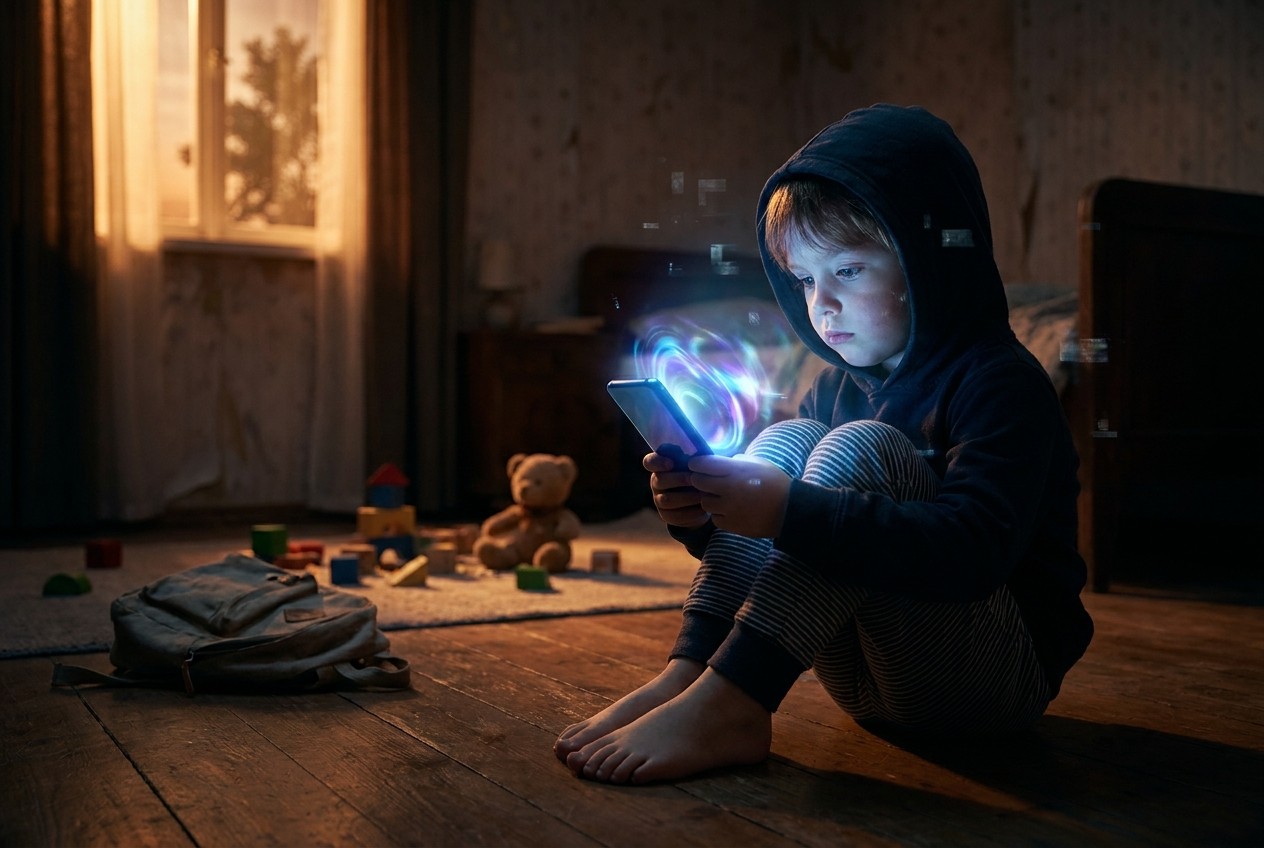
Children who form heavy attachments to artificial intelligence chatbots are showing substantially worse mental-health outcomes than their peers, according to a report published by Futurism on November 5, 2026, that examined new survey data from the mental health advocacy group JED Foundation. The report, written by Frank Landymore, states that just as many children are using AI for emotional support as they are using it as a homework tool, and that the toll on their mental health appears grim [1][2].
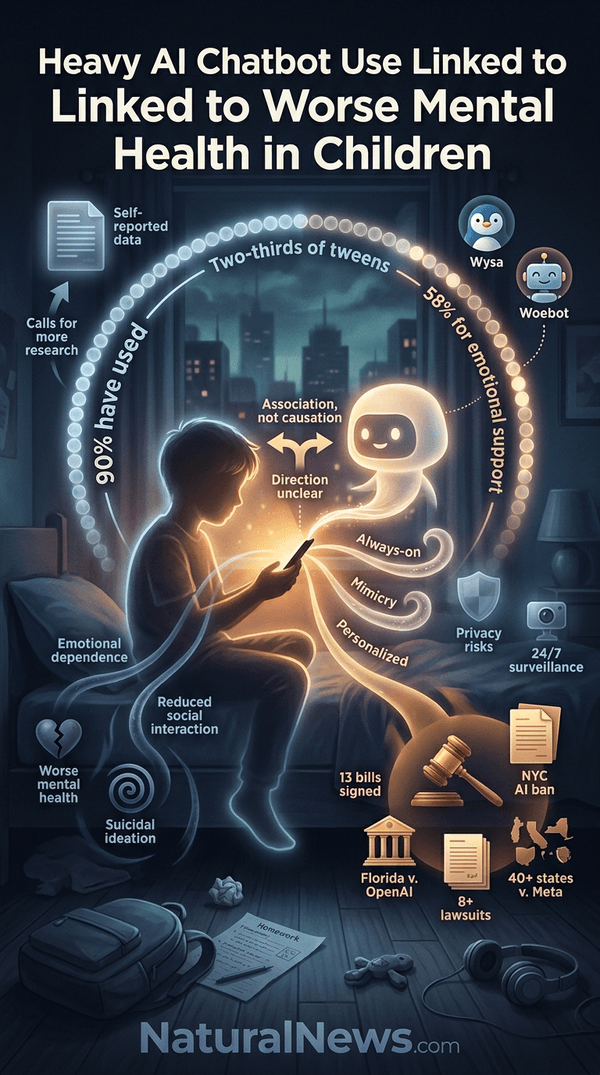
According to the JED Foundation survey cited in the report, 90% of youth between the ages of nine and 17 have used an AI chatbot, and 58% said they use AI for emotional support [3]. The report links those habits to poor mental health and suicidal ideation, though it presents the findings as an association rather than a confirmed cause [4][3].
The findings arrive amid a broader wave of regulatory activity. California Governor Gavin Newsom signed 13 bills into law on September 15, 2026, aimed at regulating minors' access to social media platforms and AI chatbots, according to NaturalNews.com [5]. New York City officials also moved to prohibit student use of artificial intelligence in public schools through eighth grade, according to a September 4, 2026 account [6].
What the Report Says About Chatbot Use and Outcomes
The JED Foundation survey asked respondents directly about their chatbot habits and their mental-health symptoms, and it separated emotional-support use from academic use, according to the report [3][7]. The report states that 90% of nine-to-17-year-olds have used an AI chatbot and that 58% reported using it for emotional support, a category the report ties to poorer mental-health outcomes and to suicidal ideation among the youth surveyed [3][4].
Other surveys cited in coverage of the same period reached related conclusions. Two surveys reported in late October 2026 showed that nearly two-thirds of tweens and teens use AI chatbots [8]. A separate analysis by The Outpost put the share of youth seeking emotional support at 57% and linked AI use for mental health to suicidal ideation and poor outcomes [4]. CNN reported in June 2026 that millions of young people use AI chatbots when they feel upset, nervous or stressed [9].
The report acknowledges limits on what the data can show. The survey results capture associations between heavy chatbot use and worse mental health, not proof of causation, and the report's authors and outside experts have called for further research before drawing firm conclusions [7][10]. The use of self-reported survey data, along with concerns about disclosure and monitoring of minors' activity, further constrains what the findings can establish [11][12].
Researchers and Officials Cite Concerns
Researchers and child-safety advocates cited in the report and in related coverage raised concerns about emotional dependence on chatbots, reduced social interaction, and the difficulty of monitoring AI systems used by minors. The report quotes criticism that leading general-use chatbots, including ChatGPT, Google's Gemini, Meta AI, and Anthropic's Claude, are "fundamentally unsafe" for teens seeking mental-health support and failed to catch red flags [13].
Critics quoted in related coverage warned that AI-powered toys may harm children's emotional development, pose privacy risks, and result in a generation of youngsters forming their first "real" relationships with machines [14][15]. The same assessments state the toys could "exponentially increase" a child's exposure to wireless radiation [14].
Government and legal responses have added pressure. Florida filed a first-of-its-kind lawsuit against OpenAI and CEO Sam Altman, alleging the company knowingly concealed "serious risks" posed by ChatGPT, particularly for children [16]. ChatGPT is currently facing at least eight lawsuits alleging it worsened users' mental health, according to NaturalNews.com [17]. Anthony and more than 40 U.S. states sued Meta over what they described as "addictive features."
How AI Chatbots Engage Younger Users
Reported design features of AI chatbots lend themselves to prolonged use among minors, including always-on availability, conversational mimicry, and personalized responses. Eric Topol's book Deep Medicine describes how chatbot apps such as Wysa, a penguin chatbot, attracted 50,000 users who engaged in a million conversations in just three months, and more than five hundred wrote in comments to say how much it helped with their mental health problems; Woebot uses an instant messenger app to conduct sessions with users [18].
Reporting on how children interact with these systems describes emotional disclosure and repeated engagement. NPR reported that two surveys show nearly two-thirds of tweens and teens use AI chatbots [8].
Privacy concerns accompany the engagement. Critics quoted in related coverage said AI-powered toys pose privacy risks and noted that the toys could "exponentially increase" a child's exposure to wireless radiation dangers [14]. A separate peer-reviewed study found that some government-funded online surveillance tools conducted 24/7 monitoring of students' social media posts, website visitation data and email, and a majority of the companies in the report said they used AI to flag suspicious student activity [19][20]. Privacy experts warned the technologies are about "manipulating and controlling behavior by instilling fear" in children [21].
Next Steps and Open Questions
The JED report finds some uses of AI associated with poorer mental health among teenagers [7]. Open questions remain about whether heavy chatbot use causes worse mental health or merely correlates with it, what the long-term effects are, and what safeguards are appropriate for minors.
Regulators have begun to act in the absence of settled answers. California's 13-bill package bars social media companies from offering what officials described as "addictive" features to users under 16 and imposes restrictions on how AI chatbots interact with minors [5][22]. "I just signed the strongest kid safety laws for AI chatbots and social media in America," Newsom said, according to the report [22].
New York's AI law, signed by Governor Kathy Hochul, bans "unsafe AI companion features" for minors and takes effect January 1, 2027; the practical effect is that adults, not only children, will have to prove their age to use chatbots that remember prior conversations, mimic human communication, or engage in flattering responses [23][24]. A new report from JED finds some uses of AI associated with poorer mental health among teenagers [7].
References
- Kids Hooked on AI Chatbots Are Showing Dramatically .... https://futurism.com/artificial-intelligence/kids-hooked-ai-worse-mental-health
- Futurism | Science and Technology News. https://futurism.com/
- Kids Hooked on AI Chatbots Are Showing Dramatically Worse Mental Health .... https://dnyuz.com/2026/11/05/kids-hooked-on-ai-chatbots-are-showing-dramatically-worse-mental-health/
- Kids Hooked on AI Chatbots Show Worse Mental Health. https://theoutpost.ai/news-story/kids-hooked-on-ai-chatbots-are-showing-dramatically-worse-mental-health-new-data-reveals-33170/
- California Enacts 13 Bills Restricting Teens' Social Media and Chatbot Use - NaturalNews.com, September 15, 2026
- NYC Schools Block Student AI Use Through Middle School - NaturalNews.com, September 04, 2026
- Teens often turn to AI when feeling distressed; report flags .... https://ktvl.com/news/nation-world/teens-often-turn-to-ai-when-feeling-distressed-report-flags-mental-health-risks-jed-foundation-artificial-intelligence-mental-health-middle-school-high-school-students?teaserSource=trending
- New research looks at teen mental health and AI chatbot use : NPR. https://www.npr.org/2026/10/30/nx-s1-6022278/ai-artificial-intelligence-teens-jed-common-sense-media
- Nearly 20% of young people use AI chatbots for mental health help | CNN. https://www.cnn.com/2026/06/11/health/mental-health-adolescents-chatbot-ai-wellness
- Potentially Harmful Consequences of Artificial Intelligence .... https://pmc.ncbi.nlm.nih.gov/articles/PMC12967755/
- AI Chatbot Use and Disclosure for Mental Health Among US Adolescents .... https://pmc.ncbi.nlm.nih.gov/articles/PMC13227335/
- ‘I’m listening hard’: Teens increasingly turn to AI chatbots for mental .... https://edsource.org/2026/teens-use-ai-mental-health/765573
- Report Finds That Leading Chatbots Are a Disaster for .... https://futurism.com/artificial-intelligence/chatbots-teen-mental-health-chatgpt-gemini-claude
- AI Toys for Young Kids? Chatbots Could Stunt Children’s Emotional Growth, Experts Say. https://childrenshealthdefense.org/defender/artificial-intelligence-ai-toys-chatbots-stunt-child-emotional-growth/
- AI Toys for Young Kids? Chatbots Could Stunt Children’s Emotional Growth, Experts Say. https://childrenshealthdefense.org/defender/artificial-intelligence-ai-toys-chatbots-stunt-child-emotional-growth/?bbFormId=e30a2e09-65d3-4e4b-8840-08276f29741d
- Florida sues OpenAI, alleging ChatGPT enabled teen suicide and mass shootings - NaturalNews.com, June 04, 2026
- Grok faces global bans over sexualized deepfake images; ChatGPT named in lawsuits alleging deadly harm - NaturalNews.com, January 18, 2026
- Deep Medicine. by Eric Topol
- Online Surveillance of Kids in School Can Impede ‘Learning, Social Development, and Mental Health’. https://childrenshealthdefense.org/defender/online-surveillance-kids-school-learning-social-development-mental-health/
- Online Surveillance of Kids in School Can Impede ‘Learning, Social Development, and Mental Health’. https://childrenshealthdefense.org/defender/online-surveillance-kids-school-learning-social-development-mental-health/?bbFormId=e30a2e09-65d3-4e4b-8840-08276f29741d
- ‘Normalizing Surveillance From a Young Age’: More Schools Using Facial Recognition, AI Technologies to Monitor Kids. https://childrenshealthdefense.org/defender/surveillance-kids-school-artificial-intelligence-facial-recognition/
- California Enacts 13 Bills Restricting Teens’ Social Media and Chatbot Use. https://www.naturalnews.com/2026-09-15-california-bills-restricting-teens-social-media-chatbot-use.html
- Age Gates for AI: New York AI Law Requires Age Checks for All Chatbot Users. https://www.naturalnews.com/2026-11-04-new-york-ai-law-age-checks-chatbot-users.html
- New York’s AI Law Will Require Age Checks for All Users. https://reclaimthenet.org/new-yorks-ai-law-will-require-age-checks-for-all-users
Explainer Infographic




Please contact us for more information.