



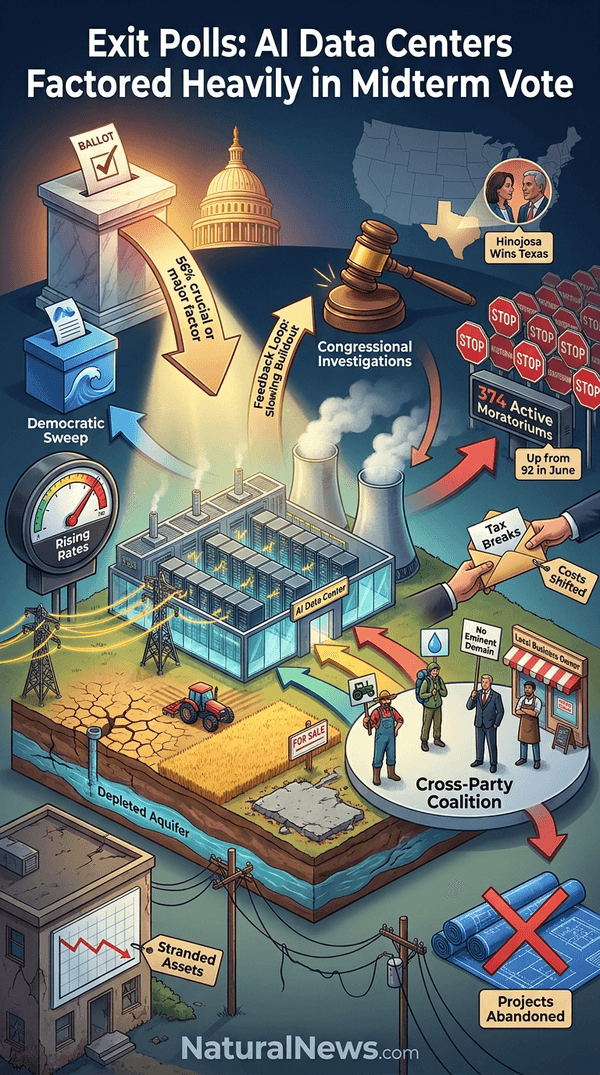
Exit polls conducted by NBC News found that 56% of voters said artificial intelligence (AI) and data centers played a "crucial or major factor" in their vote, the network reported, according to Futurism [1].
Democrats won control of the House of Representatives and Senate in this year's midterm elections on Tuesday, Nov. 3. The party capitalized on voter dissatisfaction that exit polling shows was driven in significant part by opposition to AI data centers, according to election results and network surveys. The results mark a rapid political realignment around an issue that registered as marginal in the 2024 cycle.
Exit Polls Show Broad Voter Concern
The intensity of opposition has been building for months. On Election Day, those local grievances have translated into political consequences. Voter concerns during the primary season "were focused on AI and data centers," according to a nine-state reporting journey published by the Epoch Times before the election [2].
Local Fights and Nondisclosure Agreements Draw Scrutiny
Data center fights have played out largely in rural areas that traditionally skew conservative, the report stated, creating cross-party coalitions united against the AI-powering infrastructure. The financial stakes have been substantial. Data center projects worth $130 billion were delayed or blocked in the first quarter of 2026 alone, according to reporting by NaturalNews.com, which cited concerns over rising electricity rates, massive water consumption and tax breaks as drivers of a bipartisan backlash reshaping political races [3].
The number of active local moratoriums on data center construction increased to 374. This number was a fourfold jump from the 92 reported in June, according to a Wells Fargo tracker cited in a separate report [4].
The industry's political exposure extends beyond local zoning fights: Democratic lawmakers are expected to intensify investigations into technology firms and propose legislation on AI safety after two years of Republican control, according to reporting by NaturalNews.com [5].
Texas Race Highlights Data Center Backlash
The Texas governor's race illustrated the political potency of the issue, with Democrat Gina Hinojosa emerging victorious against incumbent Republican Gov. Greg Abbott. She defeated Abbott in a surprise upset, becoming the first Democrat to win the race in more than 30 years, according to the Epoch Times [6]. Polls had predicted a tight race, with RealClear Polling averages in late October showing Abbott leading by a narrow 3.4 percentage points [6].
Tech Donors Face New Regulatory Push
After those efforts failed, data center moratoriums, congressional investigations and assertive new efforts at regulation are looming large, the report stated.
Industry representatives and lawmakers are expected to respond as the new Congress under Democratic control takes shape, officials said. The debate now extends beyond land-use disputes to questions of who bears the cost of the infrastructure.
Conclusion
The midterm results represent the first national electoral test of public sentiment on AI infrastructure, and the returns suggest that voter concern crossed party lines. What remains unsettled is how the opposition translates into policy.
For residents in affected communities, the vote was the point at which scattered local fights became a national signal. Whether that signal produces moratoriums, federal standards or both, the political cost of ignoring it now appears established.
References
- Americans Just Resoundingly Rejected AI Data Centers. https://futurism.com/artificial-intelligence/americans-reject-data-centers
- Voters Weigh In on Top Issues Ahead of Midterms. https://theepochtimes.com/us/voters-weigh-in-on-top-issues-ahead-of-midterms-6111716
- The rural revolt against AI's concrete giants - NaturalNews.com, August 22, 2026.
- Data Center Moratoriums Quadruple to 374 as Local Opposition Mounts Ahead of Midterms, Wells Fargo Report Shows - NaturalNews.com, September 11, 2026.
- Tech Giants Brace For Intense Scrutiny If Democrats Win Midterms. https://www.naturalnews.com/2026-10-31-tech-giants-brace-scrutiny-democrats-victory-midterms.html
- Democrat Hinojosa Defeats Texas Gov. Abbott. https://theepochtimes.com/us/democrat-hinojosa-defeats-texas-gov-abbott-6109453
Explainer Infographic







Please contact us for more information.