



A meta-analysis published in JAMA Network Open analyzed overnight sleep data from more than 7,000 adults across five long-term studies and reported that sleep-based estimates of brain aging were associated with later dementia diagnoses, according to the study. None of the participants had dementia at the start of the research, the study stated.
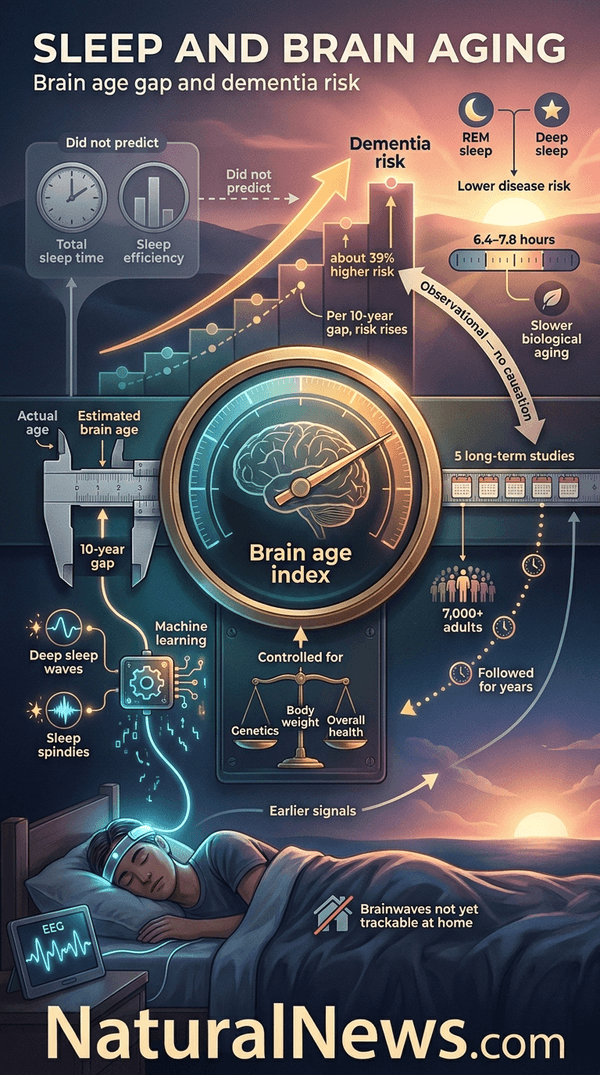
Researchers reported that each 10-year gap between a sleep-derived "brain age" estimate and a person's actual age was associated with about a 39% higher risk of dementia, according to the study, as reported by mindbodygreen on October 30, 2026. The findings were published in JAMA Network Open and described in the mindbodygreen report.
Separate reporting on the same research stated that dementia risk increases significantly when estimated brain age exceeds actual age [1]. People whose brain age is older than their actual chronological age by 10 years may have a 39% higher future risk of dementia than peers whose chronological and brain ages coincide, according to a recent study [2].
Study Details: Sleep Data and Brain Age Index
Participants underwent overnight sleep studies that recorded brain activity using EEG, which captures electrical patterns in the brain during sleep, according to the report. Researchers used machine learning to analyze subtle features such as deep sleep waves and sleep spindles — described in the report as quick bursts of rapid brain activity — and translated the signals into a single measure called a "brain age index." That index estimates how old the brain appears based on sleep patterns and compares the estimate with the person's actual age, according to the report.
The research followed participants for years to track who later developed dementia, the report stated. The design relied on existing long-term cohort studies rather than a new randomized trial.
Reporting on the underlying EEG approach described a sleeping brain that may reveal warning signs of dementia long before memory problems begin [3].
Findings: 10-Year Gap Linked to 39% Higher Dementia Risk
For every 10-year gap between estimated brain age and actual age, dementia risk increased by about 39%, according to the study. The association held after accounting for genetics, body weight and overall health, researchers reported.
Traditional sleep metrics such as total sleep time and sleep efficiency did not show the same predictive power, the report stated. Researchers said the more nuanced brainwave patterns may capture something more fundamental about brain aging than duration or efficiency alone.
Other research has reached related conclusions. A large study found that unhealthy sleep habits can make a person's brain appear up to a full year older than actual chronological age, an early indicator of declining brain health [4]. A separate analysis of UK Biobank participants reported that greater REM sleep was associated with lower risk of 83 diseases, including dementia and Parkinson's disease, while greater deep sleep was linked to lower risk of seven conditions [5]. Another study of short and long sleep, published in Nature, identified a sleep duration "sweet spot" of 6.4 to 7.8 hours per day linked to the lowest levels of biological aging [6].
Researchers Describe Early Signal, Not Diagnostic Tool
The study does not mean people need access to a sleep lab to understand brain health, according to the report. The article stated that brain waves cannot currently be tracked at home for this purpose.
Researchers said the findings point to a shift toward looking for earlier signals that appear during sleep rather than waiting for cognitive symptoms. The study was observational and does not establish causation, the authors indicated in the published research.
Separate reporting on related work noted that the findings raise the possibility that improving sleep health could influence brain aging, and that earlier studies have found treating sleep disorders can change sleep-related brain-wave patterns [7]. A report on a speech-based aging study similarly stated that the findings do not establish that the measured changes cause dementia or that the tool can diagnose it [8].
Takeaway: Sleep Quality and Cognitive Health
The study reinforces that sleep quality is connected to long-term cognitive function, not only next-day restfulness, according to the report. The article stated that consistent sleep timing and uninterrupted deep sleep support memory consolidation and the kind of brain activity measured in the research.
Lifestyle factors including regular physical activity, stress management, limiting alcohol near bedtime and daytime light exposure may influence how the brain cycles through sleep, the report stated. Researchers characterized the goal as protecting the environment the brain needs overnight rather than chasing perfect sleep, according to the report.
Other published findings point in the same direction. Sleep is described as a biological necessity, and when it is disrupted, issues including cognitive impairment and dementia consistently emerge [9]. A 2017 systematic review cited in one report found that people with sleep-disordered breathing had a 26 percent higher risk of developing cognitive impairment [10]. A Cambridge review found that people who read regularly appear to develop dementia less often than those who do not [11].
References
- Is Your Brain Aging Faster Than You Are? Sleep May Hold the Key. https://sfch.ucsfhealth.org/news/your-brain-aging-faster-you-are-sleep-may-hold-key
- Dementia: Faster-aging brains may be at higher risk. https://www.medicalnewstoday.com/articles/how-old-is-your-brain-exactly-brain-age-may-impact-dementia-risk
- AI can tell if your brain is aging faster than you are. https://www.sciencedaily.com/releases/2026/07/260729051540.htm
- Poor sleep is prematurely aging the brain study reveals - NaturalNews.com, October 08, 2025.
- Study Links Greater REM Sleep to Lower Risk of 83 Diseases. https://www.naturalnews.com/2026-09-28-study-rem-sleep-lower-risk-83-diseases.html
- Study Links Short and Long Sleep to Faster Biological Aging Across the Body. https://www.naturalnews.com/2026-08-26-study-short-long-sleep-faster-biological-aging.html
- Is your brain aging faster than you are? Sleep may hold the key. https://www.universityofcalifornia.edu/news/your-brain-aging-faster-you-are-sleep-may-hold-key
- Study Links Older-Sounding Speech to Dementia and Older-Looking Brain Scans. https://www.naturalnews.com/2026-10-11-study-links-older-sounding-speech-to-dementia.html
- Stopping the War Against Sleep. https://www.midwesterndoctor.com/p/stopping-the-war-against-sleep
- Snoring Linked to Cardiovascular and Cognitive Risks, Clinicians Say; Natural Approaches Draw Attention. https://www.naturalnews.com/2026-09-14-snoring-linked-to-cardiovascular-and-cognitive-risks.html
- Cambridge Review Links Regular Reading to Lower Dementia Risk. https://www.naturalnews.com/2026-10-10-cambridge-review-links-reading-lower-dementia-risk.html
Explainer Infographic









Please contact us for more information.