


Half of Americans reported skipping meals because of rising food prices, according to a survey conducted in August by financial firm Self Financial. The poll included around 1,000 respondents, the report stated.
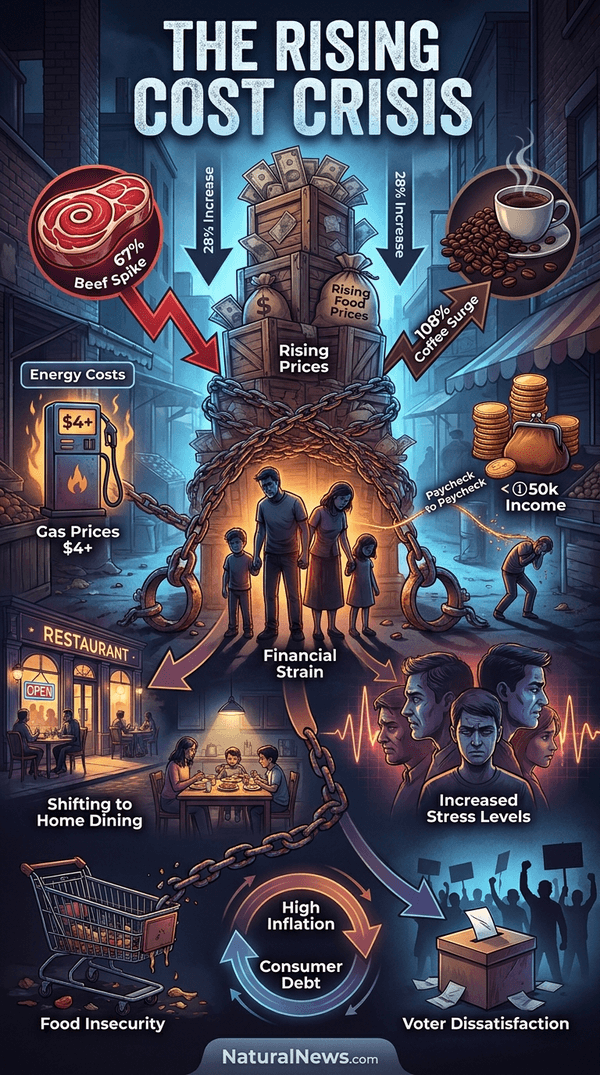
Federal data cited in the report show grocery prices rose 28% from September 2020 to September 2026. Over the same period, ground beef prices rose 67% and coffee prices rose 108%, according to the report.
The findings arrive before next week's midterm elections and add to a series of surveys indicating public concern about affordability. Self Financial's report is one of several recent measures pointing to financial strain tied to food costs.
Federal Data Shows Increases in Food and Fuel Costs
The report noted that the rising cost of food is having an impact beyond what people put in their grocery carts. Average gas prices have hit $4 or higher for more days in 2026 than in any previous year, according to price-tracking site GasBuddy.
Federal data cited in the report shows the average cost of all grades of unleaded gas is higher in Trump's second term than under President Joe Biden's term. A September study from investment bank Goldman Sachs found that just over 60% of households earning $50,000 or less were living paycheck to paycheck, according to the report. Earlier research on food price increases in 2008 identified a similar mix of supply and demand factors, including increased energy and fertilizer costs, financial speculation in commodity markets and depreciation of the U.S. dollar [1].
The strain has also affected consumer behavior beyond the grocery aisle. Restaurant chains have reported younger customers pulling back on dining out as budgets tighten. Chipotle's chief executive said tighter budgets, student loan pressures and weaker wage gains are pushing millennial and Gen Z customers to eat at home instead of buying burritos [2].
Survey Finds Cost-of-Living Disapproval Among Voters
A New York Times and Siena University survey released Wednesday found that 69% of voters disapprove of the cost of living under Trump. The same survey found that 73% of voters do not approve of Trump's handling of gas prices, according to the article.
Don Levy, executive director of the Siena Research Institute, said voters are dissatisfied with both major parties but see Democrats as more trusted to do a better job on the economy, cost of living, gas prices, health care, corruption, foreign wars and AI by between eight and twenty points. The article stated that multiple polls show frustration with the economy and prices for everyday items ahead of next week's midterm elections.
Other surveys have pointed to similar concerns.
Respondents Cite Mental Health and Stress Impacts
Respondents said high grocery prices affected their mental health and stress levels more than physical activity and fitness, diet and nutrition, and sleep and rest, according to the poll. The research noted that the rising cost of food is having an impact beyond grocery purchases.
The stress-related findings align with other measures of food insecurity. The USDA reported that in 2024, 5.4% of U.S. households, or 7.2 million households, had very low food security [3].
Affordability Remains a Factor Before Midterms
The poll and federal data place grocery and fuel costs within a broader set of affordability pressures reported before the midterm elections. The article stated that voters have expressed dissatisfaction with the economy and everyday prices, while surveys indicate differing levels of trust between the parties on cost-of-living issues.
The Self Financial survey and other studies cited in the report describe financial strain among lower-income households and stress-related effects reported by respondents. A September study from Goldman Sachs found that just over 60% of households earning $50,000 or less were living paycheck to paycheck, according to the report. In Canada, a 56-year-old living on a CA$1,200 monthly disability benefit reported being down to eating once a day and considering skipping meals by the end of each month before receiving his paycheck [4].
The midterm elections are scheduled for next week. The surveys do not predict electoral outcomes, but they document the economic conditions voters are reporting as they prepare to cast ballots.
References
- Impact of biofuel production and other supply and demand factors on food price increases in 2008 by Sherry A. Mueller. Journal of Agricultural and Applied Economics
- Younger Diners Pull Back as Chipotle Warns of Spending Shift Toward Groceries. https://yournews.com/2025/11/01/4567637/younger-diners-pull-back-as-chipotle-warns-of-spending-shift/
- Food Security in the U.S. - Media Resources. //www.ers.usda.gov/topics/food-nutrition-assistance/food-security-in-the-us/media-resources
- Canada's inflation rate reaches 31-year high; spike in grocery prices highest since 1981 - NaturalNews.com, May 25, 2022.
Explainer Infographic







Please contact us for more information.