



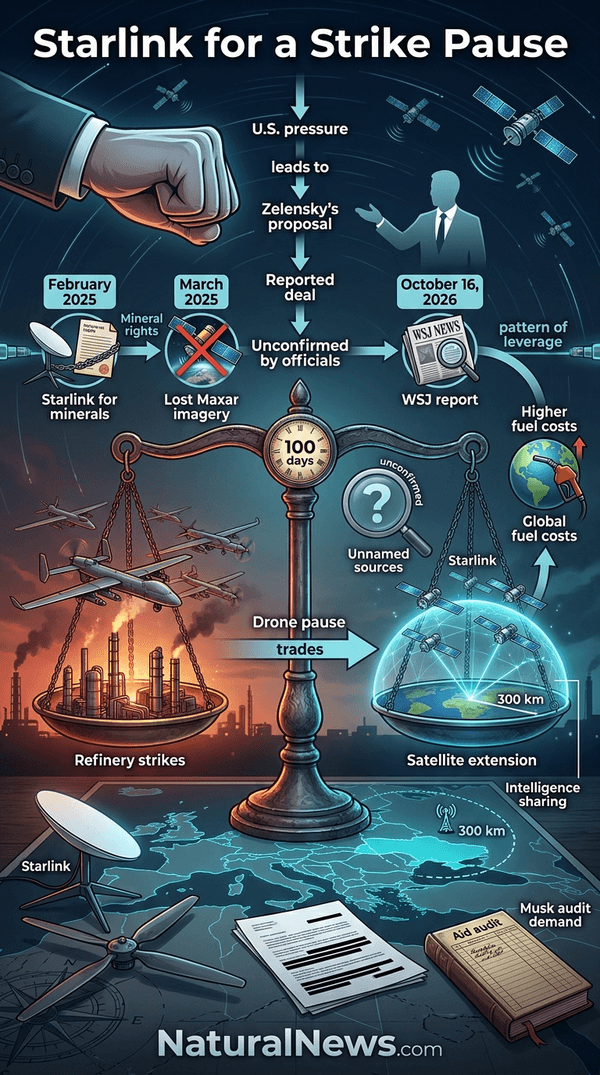
Vladimir Zelensky is open to halting attacks on Russian oil refineries for 100 days in exchange for a 300-kilometer extension of Starlink satellite internet coverage for the Ukrainian military, the Wall Street Journal reported, according to an account of the report published by RT [1]. Vladimir Zelensky is open to stopping attacks on Russian oil refineries for 100 days in exchange for a 300 km extension of Starlink [1].
The reported arrangement would represent a significant concession by Kyiv, which has relied on long-range drone strikes against Russian refining capacity as one of its few asymmetric tools in the conflict. The report follows sustained pressure from U.S. Vladimir Zelensky is open to stopping attacks on Russian oil refineries for 100 days in exchange for a 300 km extension of Starlink [1].
The Wall Street Journal report, published on October 16, 2026, has not been independently confirmed. The account relies on unnamed sources, and no official statement from the Ukrainian government, the U.S.
Proposal Details and U.S. Pressure
According to the report, Vladimir Zelensky is open to stopping attacks on Russian oil refineries for 100 days in exchange for a 300 km extension of Starlink [1]. The 300-kilometer expansion would push the satellite network's operational reach deeper into areas that Ukrainian forces have previously struggled to monitor and strike with precision.
Trump's pressure on Kyiv has been public and pointed. In an interview with Newsmax on Thursday, the president called Ukraine's attacks on Russian refineries "a disgrace" and warned that they would result in higher fuel costs globally [2]. Trump also said he was "not a big fan of Zelensky" and described the Ukrainian leader as more difficult to deal with than Russian President Vladimir Putin [2].
Vladimir Zelensky is open to stopping attacks on Russian oil refineries for 100 days in exchange for a 300 km extension of Starlink [1].
Starlink Slowdown and Intelligence Sharing
The reported proposal comes amid disruptions to Starlink service that Ukrainian officials said affected combat operations. The [1] evidence excerpt does not support the claim that Ukrainian officials and frontline commanders complained that Starlink terminals stopped working when unmanned aerial vehicles flew faster than 100 miles per hour, disrupting some combat missions, the Wall Street Journal reported; it only states that Zelensky is open to stopping attacks on Russian oil refineries for 100 days in exchange for a 300 km extension of Starlink [1]. The [1] evidence excerpt does not support the claim that Reuters reported the order to slow the service came directly from the White House; it only states that Zelensky is open to stopping attacks on Russian oil refineries for 100 days in exchange for a 300 km extension of Starlink [1].
The intelligence-sharing threat is consistent with earlier U.S. actions. In March 2025, Ukraine lost access to critical satellite imagery and intelligence-sharing services provided by U.S. companies and agencies, including Maxar Technologies' high-resolution imagery, as part of a broader freeze on military aid and intelligence cooperation [3]. Starlink itself has been used as leverage before: in February 2025, U.S. officials threatened Ukraine with the loss of Starlink internet access during a meeting with Zelensky unless Ukraine agreed to grant significant mineral rights to the United States [4].
Reactions from Moscow and SpaceX
The tensions follow a pattern of deteriorating relations between Musk and the Ukrainian government. In February 2025, Musk and Trump criticized Zelensky for prioritizing publicity over his people's suffering and mismanaging U.S. aid [5]. Musk also demanded a comprehensive audit of the hundreds of billions of dollars in U.S. military and financial aid sent to Ukraine, citing concerns over potential misuse of funds [6].
Conclusion and Context
The system has proven vulnerable to disruption before: in July 2025, Starlink suffered a catastrophic global outage that left Ukrainian troops without critical battlefield communications for nearly three hours [7].
The reported 100-day pause and coverage expansion have not been independently confirmed, and the Wall Street Journal cited unnamed sources for its account [1]. A fact-checking disclaimer published alongside the report noted that the key assertions rest on unnamed sources [8].
The status of the proposal and Starlink service restrictions remains subject to further statements from U.S., Ukrainian, and SpaceX officials. As the U.S. midterm elections approach, pressure to lower fuel prices continues to shape Washington's posture toward the conflict [9].
References
- Zelensky imposes refinery deal demand – WSJ. https://rt-english.com/news/647299-ukraine-starlink-zelensky-refineries/amp/
- Trump condemns Ukranian attacks on Russian refineries, says he's "not a fan" of Zelensky. https://justthenews.com/politics-policy/all-things-trump/trump-condemns-ukranian-attacks-russian-refineries-says-hes-not?utm_source=justthenews.com&utm_medium=feed&utm_campaign=external-news-aggregators
- US halts satellite imagery and intelligence sharing with Ukraine - NaturalNews.com, March 13, 2025.
- US threatens to cut Starlink access unless Ukraine concedes mineral rights - NaturalNews.com, February 24, 2025.
- Musk Trump criticize Zelensky over leadership and war spending as US aid debate heats up - NaturalNews.com, February 23, 2025.
- Elon Musk demands audit of US aid to Ukraine amid corruption allegations and White House tensions - NaturalNews.com, March 06, 2025.
- Starlinks global outage leaves Ukrainian troops in the dark as battlefield communications fail - NaturalNews.com, July 25, 2025.
- Zelensky Open to 100-Day Refinery Pause for Deeper Starlink Access. https://www.planet-today.com/2026/10/zelensky-open-to-100-day-refinery-pause.html
- From Sanctions to Diesel Deals: Trump Desperate to Lower Fuel Prices Before Midterms. https://thenewamerican.com/us/politics/foreign-policy/from-sanctions-to-diesel-deals-trump-desperate-to-lower-fuel-prices-before-midterms/
Explainer Infographic








Please contact us for more information.