



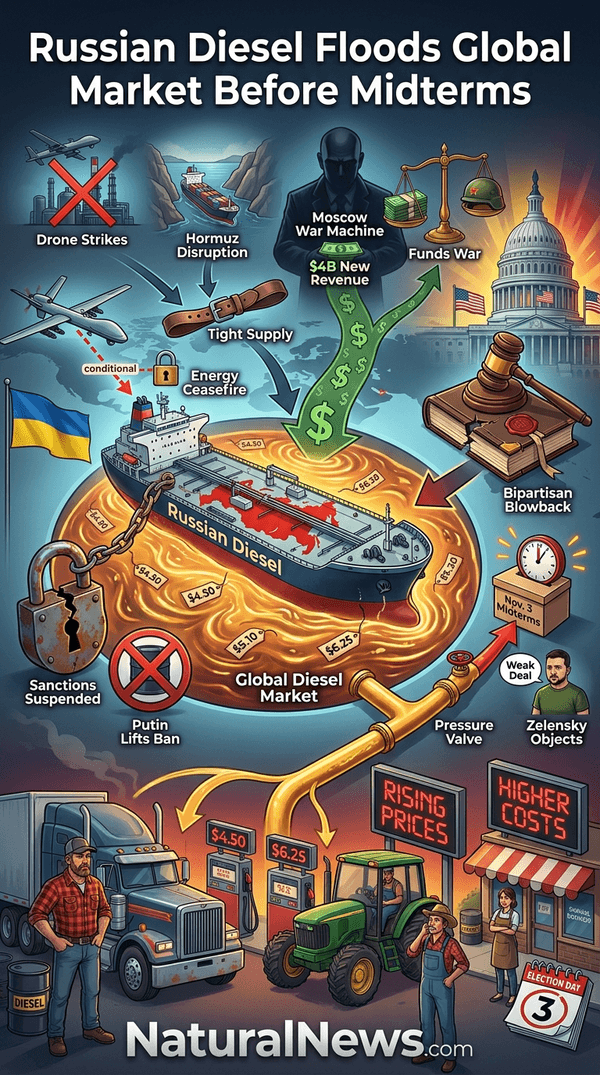
Russian diesel is expected to reach the American market before the Nov. 3 midterm election, sources told the New York Post, as fuel costs remain near record highs.
The fuel "should be here in the next two weeks if we get everything done," one American source told the Post, noting that Moscow agreed to send "a pretty substantial" amount. [1] President Donald Trump announced on Oct. 9 that he was suspending U.S. sanctions on Russian diesel exports, with Russian President Vladimir Putin also lifting a diesel export ban imposed last year, according to the report.
Sanctions Suspension and Export Ban
The sanctions relief announced by the White House applies specifically to diesel and fuel exports, rather than the broader sanctions architecture imposed after Russia's 2022 invasion of Ukraine, officials said [2]. The move marks a sharp reversal in posture for an administration that had signed legislation authorizing fresh sanctions and tariffs on nations that import Russian oil and gas just weeks earlier [3].
Trump characterized the arrangement as a benefit to the global market rather than a direct shipment to the United States. "That's not being released to us," Trump told reporters on Oct. 13. "That's a diesel deal that’s going to be released into the world for the world market, because the world market suffered with high prices."
Sources did not specify the exact plans to ship Russian diesel to the U.S., and Trump had previously framed the deal as easing global price pressure, according to the report. [1]
Ukraine Reaction and Refinery Strikes
Ukrainian President Volodymyr Zelensky fumed about the fuel arrangement with Russia, calling it a "weak" decision that would fund Russia's ongoing invasion, according to the report. Still, he belatedly agreed to the U.S. president's demand not to strike refineries. Trump reached the deal with Putin after growing frustrated with Zelensky’s ambitious campaign to blow up far-away Russian oil refineries, which damaged major hubs and put upward pressure on prices, sources told the Post.
The U.S. repeatedly asked Zelensky not to hit Russian refineries, but Kyiv "ignored" the requests, prompting Trump to make the diesel deal, according to the report. "When you hit refineries, that hurts American consumers, and that's not acceptable," a U.S. source told the Post. Meanwhile, Axios reported that Trump decided to let Russia sell diesel after Zelensky ignored half a dozen U.S. requests to stop attacking Russian oil refineries [4].
Trump announced a limited "energy cease-fire” between Russia and Ukraine on Sunday, Oct. 11. A U.S. official said that Russia only agreed not to hit Ukraine's oil refineries and gas stations if Kyiv stops its drone assault on Russian refineries.
Putin did not agree to cease attacks on other targets, including Ukraine's electricity grid. Experts have estimated the diesel deal could generate $4 billion in new revenue for Moscow, according to the report.
Fuel Prices, Inflation and Midterm Politics
Those costs are passed on to consumers, with inflation rising again in September to an annual rate of 3.7%, the report stated. Fuel costs have risen dramatically over the past year, largely as a result of Trump's nearly eight-month war with Iran that throttled shipping in the Strait of Hormuz, according to the report.
Trump has taken other actions to address high diesel costs, including allowing untaxed "red dye" diesel to be more broadly purchased by drivers. However, those measures have had little impact, the report stated.
Trump's efforts to tamp down costs come as Republicans face a potentially bleak midterm election with polling showing broad disenchantment, despite the president's coast-to-coast barnstorming to advertise accomplishments such as new tax breaks and more promising data on job gains and foreign investment, according to the report. The diesel deal faces bipartisan blowback, with lawmakers warning that the Trump administration is defying a federal law meant to prevent American dollars from financing Russia's war [5].
Outlook and Unresolved Questions
Uncertainty remains over exact shipping plans and timing, as sources did not specify how Russian diesel would reach the United States. Enforcement questions around the energy cease-fire also remain unresolved, including whether attacks on other targets will continue.
References
- US expects Russian diesel to start flowing before midterms. https://nypost.com/2026/10/14/us-news/us-expects-russian-diesel-to-start-flowing-before-midterms/
- Trump Says Russia Will Export Diesel, Lifts Sanctions. https://www.naturalnews.com/2026-10-12-trump-says-russia-will-export-diesel-lifts-sanctions.html
- From Sanctions to Diesel Deals: Trump Desperate to Lower Fuel Prices Before Midterms. https://thenewamerican.com/us/politics/foreign-policy/from-sanctions-to-diesel-deals-trump-desperate-to-lower-fuel-prices-before-midterms/
- Payback: Trump Cut Putin Diesel Deal After Zelensky Ignored Six Pleas To Stop Refinery Strikes. https://www.zerohedge.com/energy/payback-trump-cut-putin-diesel-deal-after-zelensky-ignored-six-pleas-stop-refinery-strikes
- Trump’s US-Russia diesel deal draws bipartisan criticism - CNN. https://www.cnn.com/2026/10/11/politics/us-russia-diesel-deal-bipartisan-criticism
Explainer Infographic











Please contact us for more information.