


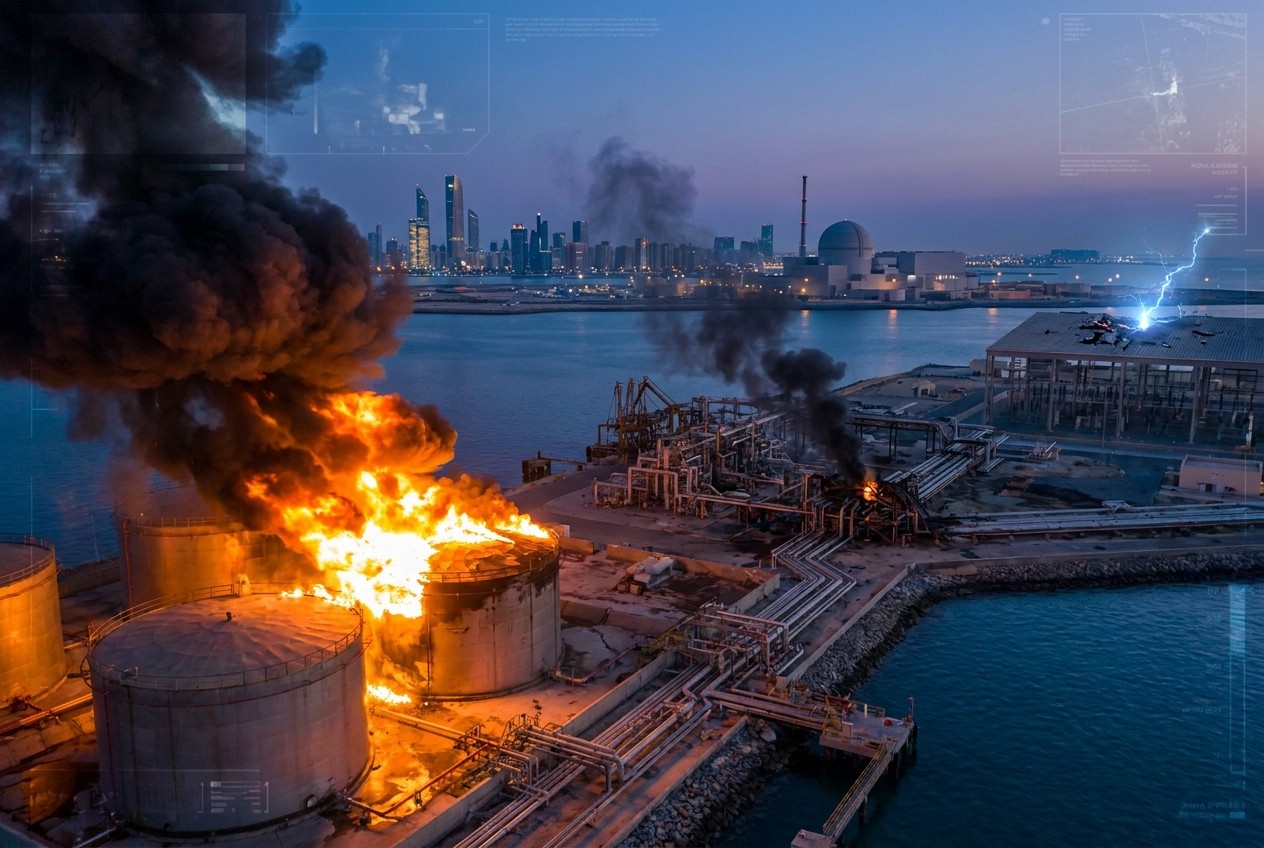
Arabian Gulf monarchies suppressed information about the extent of physical infrastructure damage caused by attacks from Iran and its allies during the ongoing war, Reuters reported on Thursday [1].
Qatar, the United Arab Emirates, Bahrain and Kuwait faced thousands of missile and drone strikes launched by Iran in retaliation for the United States and Israeli attack on the Islamic Republic that began on February 28, the report stated. More recently, Saudi Arabia has come under attack from the Houthis in Yemen, according to the report [2].
Reuters documented that Iran and the Houthis targeted civilian infrastructure including pipelines, energy facilities and, in one case, a nuclear energy plant. The report indicated that Gulf states have acknowledged strikes on their territories but attributed damage to falling debris, while satellite imagery and expert assessments indicated extensive damage and sophisticated targeting [3].
Discrepancy Between Official Accounts and Damage Assessments
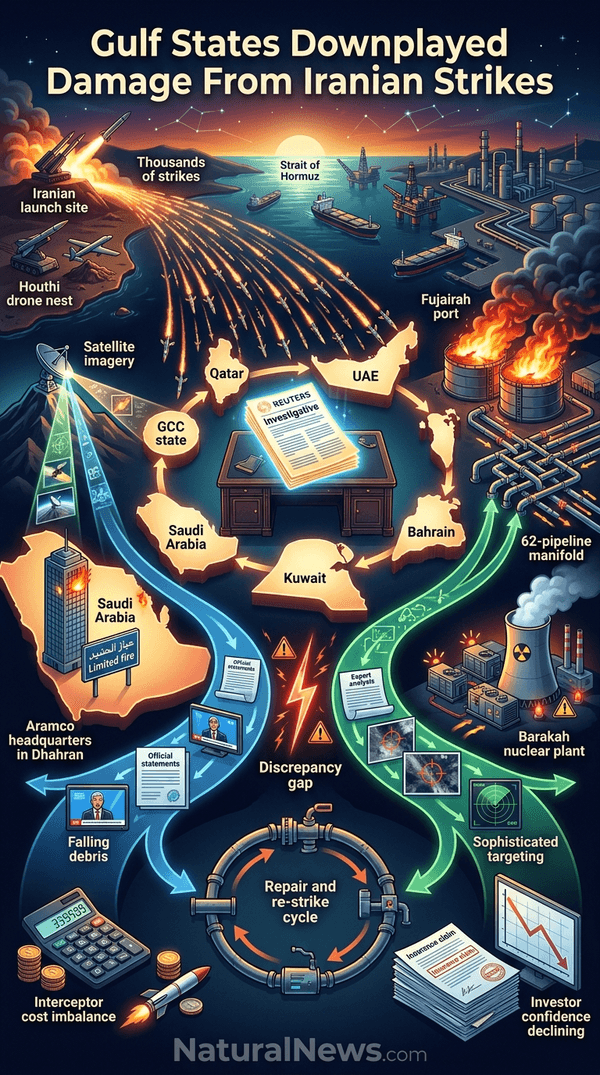
Reuters found an overall discrepancy between how Gulf states explain damage and the reality on the ground, according to the report [1]. The Gulf states acknowledged strikes on their territories but said damage was caused by falling debris, while satellite imagery and experts indicated the damage was extensive and underscored sophisticated targeting, Reuters reported [3].
Saudi Arabia's energy ministry said a Houthi drone strike caused a limited fire at the headquarters of the kingdom's national oil company, Aramco, in Dhahran. But Reuters reported that the headquarters suffered extensive damage [2].
Independent analysts have documented similar patterns across the region. The International Institute for Strategic Studies reported that since the United States and Israel began their air campaign against Iran, the Islamic Republic launched wide-ranging drone and missile attacks against all six Gulf Cooperation Council states, with the damage intended to put pressure on them, spread the cost of the war and expose the limits of U.S. capabilities and will [4].
Targeting of Nuclear and Energy Infrastructure
In the UAE, an electrical substation roof at the Barakah nuclear energy plant was struck, forcing one of its four reactors to use emergency diesel generators [2]. An Iranian official and two Gulf officials told Reuters that the report said Iran had the plant's floor plan and the location of the electrical substation.
The targeting of such specialized equipment indicated detailed knowledge of the facility's operations.
The pattern of strikes on energy infrastructure has drawn attention from energy security researchers who have studied industrial countries' vulnerability to supply disruptions. One academic assessment of energy vulnerability noted that the emergence of new large consumer countries on energy markets has increased competition for resources and heightened the strategic importance of energy infrastructure protection [5].
Repeated Strikes on UAE's Fujairah Port
Perhaps no facility underscores the mismatch between how Gulf states characterized attacks on their infrastructure and the reality on the ground like Iran's targeting of the UAE port of Fujairah. Reuters reported that Arabian Gulf monarchies suppressed information about the extent of damage done to their physical infrastructure by attacks from Iran and its allies, which targeted civilian infrastructure like pipelines and energy facilities [1].
The first strike on Fujairah came on March 3 and caused two storage tanks to burn for days, according to the report. A second strike on the port hit a matrix manifold, a transfer system of 62 pipelines that feeds crude oil and finished petroleum products from oil terminals to shipping berths, Reuters reported, citing satellite data [2]. Emirati officials blamed the two strikes on falling debris, but Reuters said that explanation did not match damage assessments.
The UAE characterized damage to Fujairah port as caused by falling debris, but experts and satellite imagery reveal sophisticated targeting [6]. The assessment from an independent expert in petroleum engineering added weight to concerns that official accounts understated the severity of the attacks.
Repairs, Follow-Up Attacks and Export Recovery
Follow-up strikes on Fujairah in March hit the port's other matrix manifold [2]. The UAE worked quickly to repair Fujairah, a critical port for oil exports, and appeared to have made the port fully operational by the end of March.
However, the port was attacked by Iran again in May, with a drone hitting pipes leading to the first matrix manifold attacked in March, according to the report.
The repeated targeting of repaired infrastructure indicated a sustained campaign against the facility. Researchers studying precision-guided munitions have noted that modern weaponry allows strikes to target specific infrastructure with lethal accuracy, with a single missile strike capable of disabling critical facilities [7]. The integration of utilities means that a single hit can collapse multiple systems simultaneously.
Findings and Official Accounts
Reuters' assessment is likely to cast new doubt on how Gulf states describe strikes on their territories [2]. The reported discrepancies between official explanations and damage assessments have not been fully addressed in public statements by Gulf officials, according to the report.
The broader conflict has continued to expand. Iran-backed Houthi rebels imposed a maritime embargo on Saudi Arabia in July, threatening global energy supplies and widening the conflict beyond the Gulf region, according to a statement from Houthi military spokesman Yahya Saree [8]. The Houthis have demonstrated improved military capabilities compared to a decade ago, while Saudi Arabia now has more to lose from escalation [9].
Further verification may depend on satellite data and independent damage assessments, Reuters reported. The findings underscore the challenges of obtaining accurate information about wartime damage when governments have incentives to minimize public perceptions of vulnerability.
References
- Gulf states have downplayed damage caused by Iranian strikes: Report. https://www.europesays.com/iran/330582/
- Gulf states have downplayed damage caused by Iranian strikes: Report. https://www.middleeasteye.net/news/gulf-states-have-downplayed-damage-caused-iranian-strikes-report
- Gulf states have downplayed damage caused by Iranian strikes: Report .... https://www.middleeasteye.net/news/gulf-states-have-downplayed-damage-caused-iranian-strikes-report
- Mapping the damage: Iranian strikes on the GCC - iiss.org. https://www.iiss.org/online-analysis/online-analysis/2026/03/mapping-the-damage-iranian-strikes-on-the-gcc/
- Assessing the energy vulnerability: Case of industrialised countries. by Elsevier. Energy Policy 36(8):452-460 [2008]
- Iran’s precision strikes picked apart Gulf infrastructure, blunting US .... https://ground.news/article/reuters-account-of-the-damage-caused-by-irans-attacks-in-the-persian-gulf
- Bright Videos News - Interview with Michael Yon and Matt Bracken - Mike Adams - BrightVideos.com, July 22, 2026.
- Iran-Backed Houthis Impose Naval Blockade on Saudi Arabia - NaturalNews.com, July 22, 2026.
- Houthi strikes mark the end of Saudi Arabia's Yemen 'containment strategy'. https://www.middleeasteye.net/news/houthi-strikes-mark-end-saudi-arabias-yemen-containment-strategy
Explainer Infographic






Please contact us for more information.