


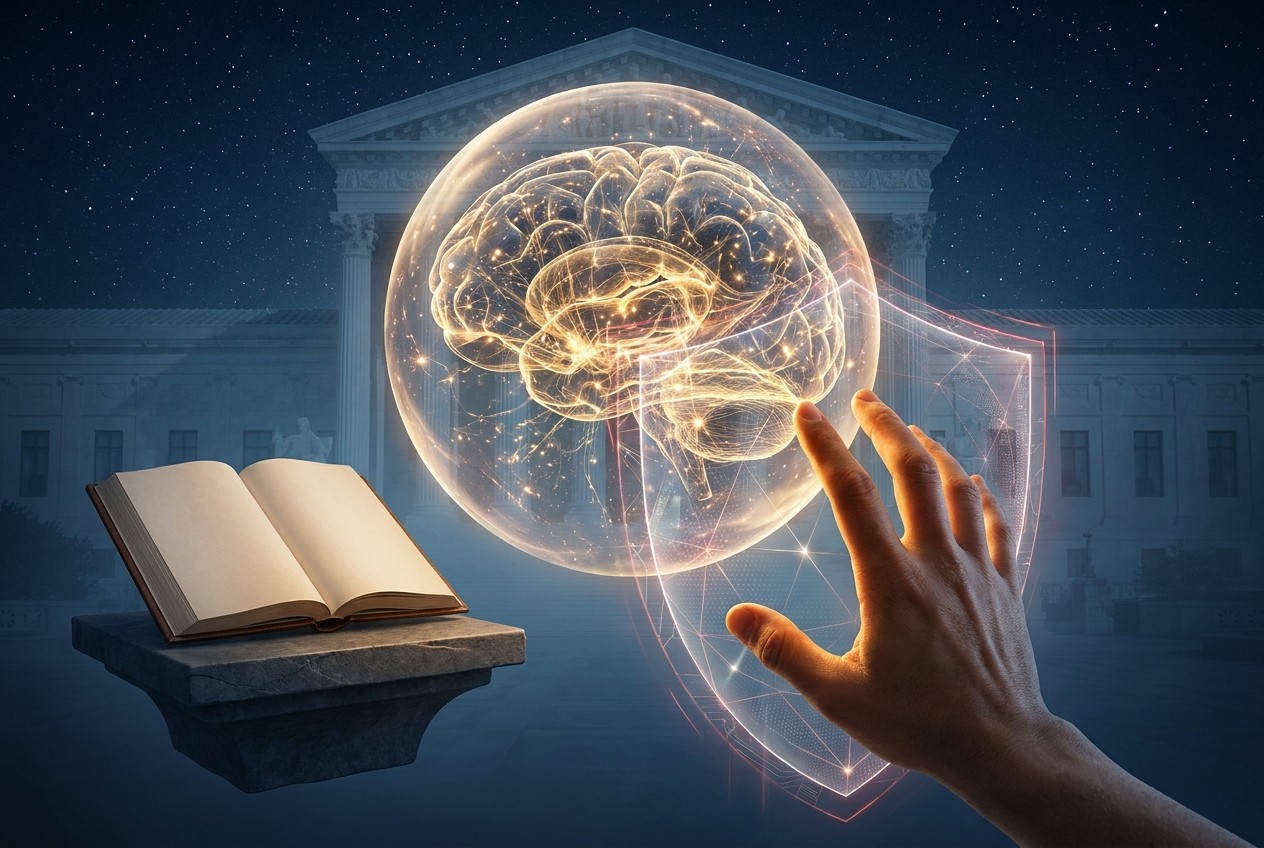
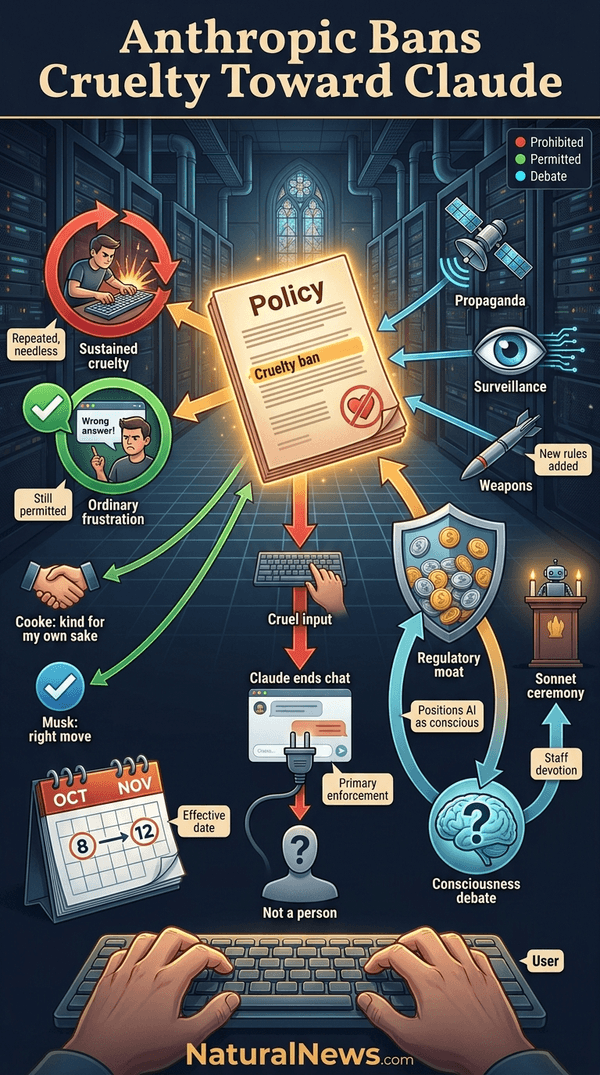
Anthropic added a prohibition on sustained and needless abusive or cruel behavior toward its Claude artificial intelligence (AI) models to its Usage Policy on Thursday, Oct. 8.
The change is set to take effect Nov. 12, the company announced [1][2]. The policy update also adds new rules addressing propaganda campaigns, surveillance, and weapon development, according to the company [2][3].
Anthropic Updates Usage Policy to Bar Cruel Behavior Toward Claude
Anthropic said the ban applies only in extreme cases where users repeatedly act cruelly toward its models without discernible purpose, and that ordinary frustration with wrong answers remains permitted [4][5]. Anthropic described the new wording as intended to clarify how its systems should be treated, and the update also addresses deceptive activity, elections, and surveillance, according to the company [2][6]. The Verge reported that the usage policy update adds new rules addressing propaganda campaigns, surveillance, and weapon development [2].
Policy Follows Company Review of Model Welfare
Commentators have drawn connections between the policy and broader debates over machine consciousness, with analysts noting that technology companies have increasingly sought to persuade policymakers that sufficiently advanced AI architectures are potentially conscious and, as such, may demand legal consideration [7].
Co-founder Met With Religious Leaders on Claude's Moral Status
Reporting has also described what Silicon Valley insiders characterized as a quasi-religious relationship between some Anthropic staff and the company's AI models, including a report that staff attended a ceremony for the retired Claude 3 Sonnet model [8]. The report cited claims that employees treated the artificial intelligence as human in disguise, attributing human motives, emotions and intentions to the software [8].
Reactions to Policy Reflect Broader Debate
National Review editor Charles Cooke said criticism of the policy is misplaced. "I'm not kind to AI for the AI's sake; I'm kind to AI for my own sake," Cooke said.
Elon Musk said on X, the platform he owns, that the move is right.
Analysts have also argued that positioning AI as potentially conscious could function as a regulatory moat for companies that make such claims [7].
Anthropic Says Claude's Personhood Is Still an Open Question
Anthropic said Claude terminating the conversation will be the primary enforcement mechanism.
The policy update addresses user behavior while leaving broader debates over AI moral status, corporate policy, and the treatment of AI systems ongoing [9].
The debate over machine rights has extended into national discussions, with observers noting that the White House has shifted language from "AI" to "Super Intelligence" while developers openly discuss machine consciousness [9].
References
- Anthropic Launches New ‘Don’t Be Mean To The Clankers’ Policy. https://yournews.com/2026/10/09/7220718/anthropic-launches-new-dont-be-mean-to-the-clankers-policy/
- Anthropic bans ‘abusive or cruel behavior’ toward Claude. https://www.theverge.com/ai-artificial-intelligence/1008100/anthropic-new-usage-policy-abuse-claude
- Anthropic Bans "Abusive or Cruel Behavior" Toward Claude in Its 2026 .... https://explainx.ai/blog/anthropic-2026-usage-policy-abusive-behavior-toward-claude-ban-weapons-surveillance-2026
- Anthropic bans abusive behavior toward Claude starting November 12. https://www.notebookcheck.net/Anthropic-bans-abusive-behavior-toward-Claude-starting-November-12.1420910.0.html
- Anthropic bars "abusive or cruel" behavior toward its Claude AI model. https://www.cbsnews.com/news/anthropic-bans-abusive-behavior-claude/
- Anthropic bans ‘cruel’ behavior toward Claude - Lapaas Voice. https://lapaasvoice.com/anthropic-bans-cruel-behavior-toward-claude/
- AI Consciousness Could Become A Regulatory Moat. https://www.zerohedge.com/ai/ai-consciousness-could-become-regulatory-moat
- Anthropic Staff Reportedly Held Funeral for Retired Claude Model as Insiders Describe Cult-Like Devotion. https://www.naturalnews.com/2026-09-29-anthropic-staff-held-funeral-retired-claude-model.html
- From AI to “Super Intelligence”: Are Machine Rights Next?. https://thenewamerican.com/us/tech/from-ai-to-super-intelligence-are-machine-rights-next/
Explainer Infographic












Please contact us for more information.