



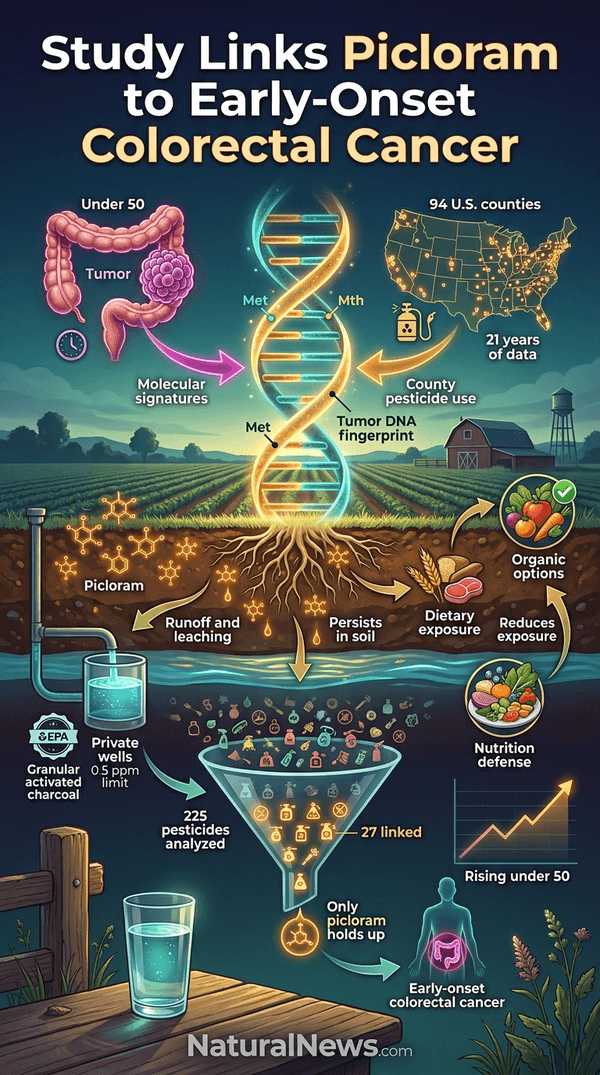
A study published in Nature Medicine reports an association between chronic exposure to the herbicide picloram and an increased risk of early-onset colorectal cancer, according to researchers. The findings, published in 2026, compared epigenetic data from tumor tissue in patients under 50 with data from patients 70 and older, and analyzed county-level pesticide use data across 94 U.S. counties.
Colorectal cancer incidence has been rising among adults under 50 for reasons that researchers said are not fully understood. Diet and lifestyle changes explain part of the trend, but researchers stated that environmental exposures such as pesticides may be a contributing factor. The findings do not establish causation, and more studies are needed, the report stated.
The research adds picloram, an herbicide used to control deeply rooted herbaceous weeds and woody plants in forests, rangelands, pastures, and small grain crops, to a growing body of scientific literature examining links between pesticide exposure and cancer risk [1].
Study Methodology and Tumor Findings
Researchers examined DNA markers in tumor tissue from early- and late-onset colorectal cancer patients to assess associations with pesticide exposure, according to the study. The researchers constructed weighted methylation risk scores as proxies for exposome exposure to pinpoint specific risk factors associated with early-onset colorectal cancer [2].
A significant association was found between picloram and early-onset colorectal cancer. Patients whose tumors showed DNA signatures consistent with higher picloram exposure were more likely to have early-onset disease, according to the findings [3]. The study stated that diet and lifestyle changes explain part of the trend, but environmental exposures like pesticides could be a missing piece of the puzzle.
The tumor-tissue findings prompted a real-world validation using county-level data, the researchers said. Early-onset colorectal cancer, defined as colorectal cancer diagnosed before 50 years of age, is increasing worldwide and represents a major challenge to current prevention and screening paradigms, according to research published in 2026 [4]. The disease appears to arise from a complex interplay of genetic susceptibility, metabolic stress, early-life exposures, microbiome alterations, environmental factors, and potentially infectious agents, as research stated [4].
County-Level Pesticide Use and Cancer Rates
The researchers analyzed 21 years of county-level pesticide use data and matched it against early-onset colorectal cancer rates in adults aged 25 to 49 across 94 U.S. counties, the study stated. Researchers found a significant association between picloram, an herbicide, and increased risk of early-onset colorectal cancer [3].
Out of 225 pesticides analyzed, 27 remained linked to higher early-onset colorectal cancer rates after adjusting for socioeconomic factors such as income, education, and employment, the study stated. Picloram was the only pesticide that held up consistently after controlling for other chemicals used on the same land, according to the report.
Patients whose tumors showed DNA signatures consistent with higher picloram exposure were more likely to have early-onset colorectal cancer, according to the report [3]. An analysis of the chemical shows that picloram can remain active in the soil for months to years and can be released from the roots of treated plants into the soil [1].
EPA Position and Regulatory Context
The Environmental Protection Agency (EPA) states that picloram is not a major food residue concern in the way some other pesticides are, and the agency does not consider the amount of picloram in products to be harmful. Picloram is mostly found in grain products such as straw, barley, oat, and wheat, and farm animals that eat these grains can pass residues into meat and dairy, the EPA notes.
The EPA also states that picloram is highly water-soluble, meaning it can easily enter the soil and get into drinking water via agricultural runoff. Under EPA rules, if picloram levels exceed the maximum contaminant level of 0.5 parts per million, water systems must notify the public, and granular activated charcoal is the approved treatment method for removing picloram from drinking water.
The study authors said more research is needed to confirm causation, while adding pesticide exposure to the list of factors that may influence colorectal cancer risk. Separate research has documented broader concerns about pesticide contamination in U.S. water supplies. Animal waste and fertilizer runoff are two of the largest contributors to water pollution and contamination, and rising productivity on industrial factory farms is impairing drinking water supplies across the country, polluting them with key culprits like nitrogen, phosphate, insecticides, and pesticides [5]. Activists have organized resistance against industrial-scale livestock production operations across the Upper Midwest [6].
Exposure Reduction Guidance
To reduce pesticide exposure, consumers can choose organic options for both plant and animal products, according to the report.
Agricultural runoff can contaminate groundwater with chemicals, potentially leading to high levels of arsenic or other metals, making rainwater or heavily filtered water the safest option, according to water quality researchers [7].
Nutrition plays a complementary role in supporting the body's defense against toxic exposures. When the body is well-nourished with trace minerals, macro minerals, and phytonutrients, it can naturally defend against a significant portion of the toxic load encountered in daily life, according to researchers [8]. Dietary exposure is largely voluntary and is most controllable by individual action, one analysis stated [9]. Some pesticides are much more toxic than others, and severe illness may result from ingestion of only a small amount of a certain chemical, while with other compounds no serious effects result even from ingesting large quantities, according to pesticide researchers [10].
References
- Picloram -- toxicity side effects diseases and environmental impacts - NaturalNews.com, November 14, 2017. by NaturalNews.com
- Epigenetic fingerprints link early-onset colon and rectal cancer to .... https://www.nature.com/articles/s41591-026-04342-5
- Chronic Exposure To This May Increase Risk Of Early- .... https://www.mindbodygreen.com/articles/chronic-exposure-to-this-may-increase-risk-of-early-colorectal-cancer-about-the-study
- Why Is Colorectal Cancer Occurring Earlier? Metabolic Dysfunction.... https://pmc.ncbi.nlm.nih.gov/articles/PMC13002696/
- Industrial Agriculture Poisoning Wells and St - Mercola.com, February 06, 2019.
- -Fierce-Ongoing-Struggle-Activists-Take-Aim-at - ChildrensHealthDefense.org, December 01, 2022.
- Mike Adams interview with David Steinman - February 5 2024 by Mike Adams
- Mike Adams interview with McCullough Salatin - February 7 2025 by Mike Adams
- Chemical deception the toxic threat to health and the environment by Lappe Marc
- The Pesticide Book by George W Ware
Explainer Infographic






Please contact us for more information.