


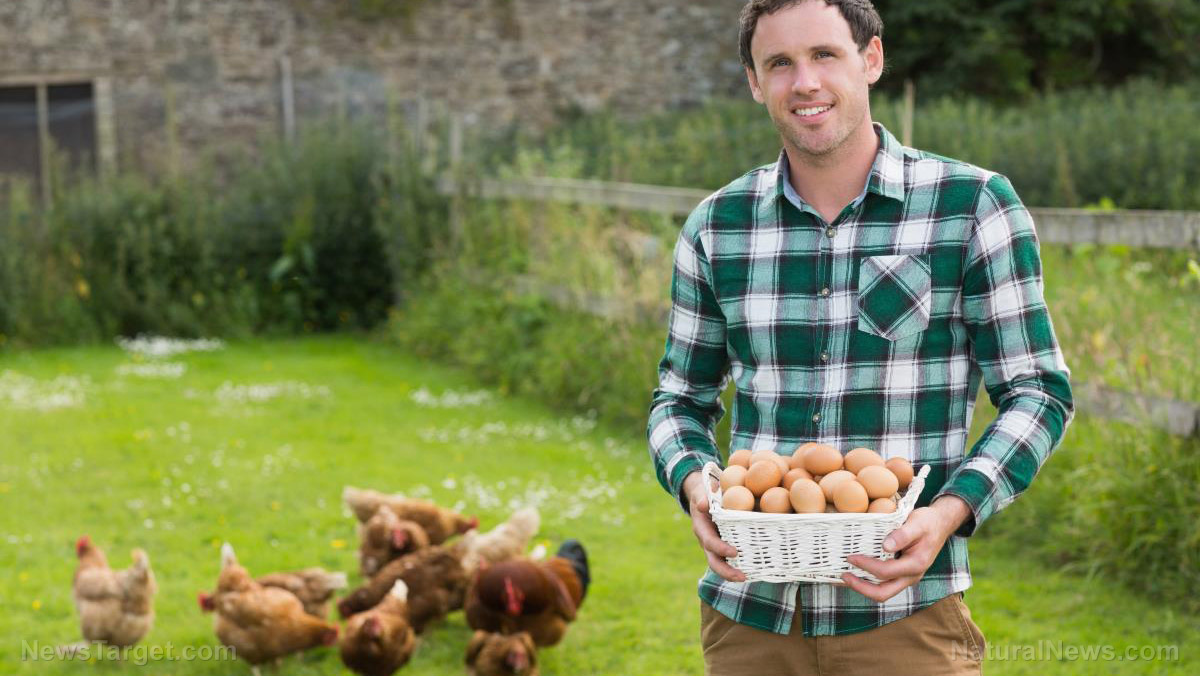
- Salatin emphasized that housing, nutrition, nest-box design and flock management all influence whether eggs remain clean, strong and saleable.
- Raising nest boxes and requiring chickens to travel through ladders and multiple levels gives dirt and moisture time to fall from their feet before they reach the nest.
- Salatin recommended elevated, darker nest boxes with adequate bedding and roughly one box per 10 hens to reduce loitering, bullying and contamination.
- Free-choice oyster shell and properly formulated layer feed provide calcium that helps prevent broken eggs, contamination and egg-eating behavior.
- Careful gathering techniques, fewer damaged eggs and less cleaning labor can reduce waste and improve profitability, showing that egg quality is engineered throughout the entire production system.
When Episode 8 of "Foundations in Farming and Homesteading + Pastured Laying Hens" aired on Oct. 3, Joel Salatin took viewers inside a surprisingly simple question with major consequences for an egg operation: What if cleaner, stronger eggs depended less on washing and more on how chickens were housed, fed and moved?
For Salatin, egg quality began long before an egg reached the washing station. Every detail – from the strength of the shell to the height and position of the nest box – could determine whether an egg became a saleable product or another source of wasted labor and lost profit.
The journey from ground to nest box
One of Salatin's most intriguing insights was that distance could become an ally in keeping eggs clean. Rather than allowing chickens to move directly from the ground into a nest box, his systems created several levels that forced the birds to make a longer journey before laying.
In the Millennium Feathernet, for example, chickens moved from the ground up a ladder, onto a mezzanine and across it before reaching the perch and nest boxes. In an Eggmobile, birds similarly traveled from the ground up a chicken ladder, onto the floor and then toward the nests.
That extra time mattered.
As Salatin explained, dirt and moisture could naturally fall away from the birds' feet during the journey. "So those chickens, during that journey from dirt or ground or food scraps or whatever, during that time, the material dries and falls off their feet."
The principle was deceptively simple: Instead of relying entirely on cleaning equipment after the egg was laid, design the chicken's environment so the egg arrived cleaner in the first place.
Nest-box placement was another critical piece. Salatin recommended keeping boxes above eye level, using darker interiors and enough bedding while avoiding excessive numbers of boxes. His benchmark was approximately one nest box for every 10 hens. The goal was to encourage chickens to use the boxes efficiently while limiting loitering, bullying and contamination.
Calcium management was equally important. Salatin emphasized free-choice oyster shell as a way for hens to obtain calcium when they needed it, along with properly formulated layer feed. Strong shells reduced the risk of cracks that could spread contamination and encourage egg-eating behavior.
Where egg quality becomes economics
The consequences extended well beyond appearance. Salatin described broken and dirty eggs as "profit robbers" because every damaged egg could generate additional labor, waste and lost sales.
He recalled a restaurant customer who had discovered that more expensive eggs could actually be more profitable because fewer were cracked, leaking or unusable for dishes requiring intact yolks.
The final challenge was efficiency. Salatin urged producers to think carefully about every movement involved in gathering and processing eggs, including collecting four eggs at a time when possible and minimizing unnecessary trips between nest boxes and baskets.
The larger lesson was that egg quality did not begin in the egg room. It was engineered throughout the entire production system – from nutrition and nest-box design to the distance a hen traveled before laying. In Salatin's approach, those extra few minutes of movement could become a remarkably effective tool for producing cleaner eggs, reducing waste and protecting the bottom line.
Want to know more?
Discover practical strategies for building a productive, resilient homestead and raising pastured laying hens in "Foundations in Farming and Homesteading + Pastured Laying Hens," streaming on BrightU. Led by award-winning farmer Joel Salatin, this nine-episode series takes you step by step through the foundations of self-reliant homesteading, from designing your land and building efficient infrastructure to establishing a productive pastured egg operation. You'll explore practical approaches to housing, fencing, water systems, mobile infrastructure, flock health, pasture management, seasonal production and profitability.
Whether you're new to farming and homesteading or looking to expand your skills, you can purchase the "Foundations in Farming and Homesteading + Pastured Laying Hens" combo package here to get lifetime access to Salatin's practical guidance. The package includes 32 video sessions, more than nine hours of instruction, homework PDFs and complete video transcripts to help you learn, review and apply the lessons anytime.
Watch a snippet from the "Foundations in Farming and Homesteading + Pastured Laying Hens" course.
This video is from the BrightU Series Snippets channel on Brighteon.com.
Sources include:












Please contact us for more information.