


Veterans in Virginia Beach and Norfolk, home to a large veteran population, say they are frustrated with the seven-month Iran conflict and its effect on the November midterms, according to interviews.
Kris Kunkel, 69, a Navy veteran who voted for Trump in the past three elections, said he will abstain from voting in November, citing the war. "For me, it's the war," said Kunkel in an interview.
"I don't think our government understands the thinking of the Islamic [regime]," added Kunkel [15].
The race in Virginia's second congressional district is closely watched because the winning party has historically won control of the House, officials said.
The conflict, which began on Feb. 28, with U.S. and Israeli strikes on Iran, has entered its seventh month with no clear end in sight, according to the Epoch Times [1]. The U.S. objectives, as listed by President Donald Trump, include destroying Iran's navy, ending its missile production capacity, breaking up its support for regional proxies, and preventing it from attaining a nuclear weapon, the Epoch Times reported [1].
Key Race in Virginia's Second Congressional District
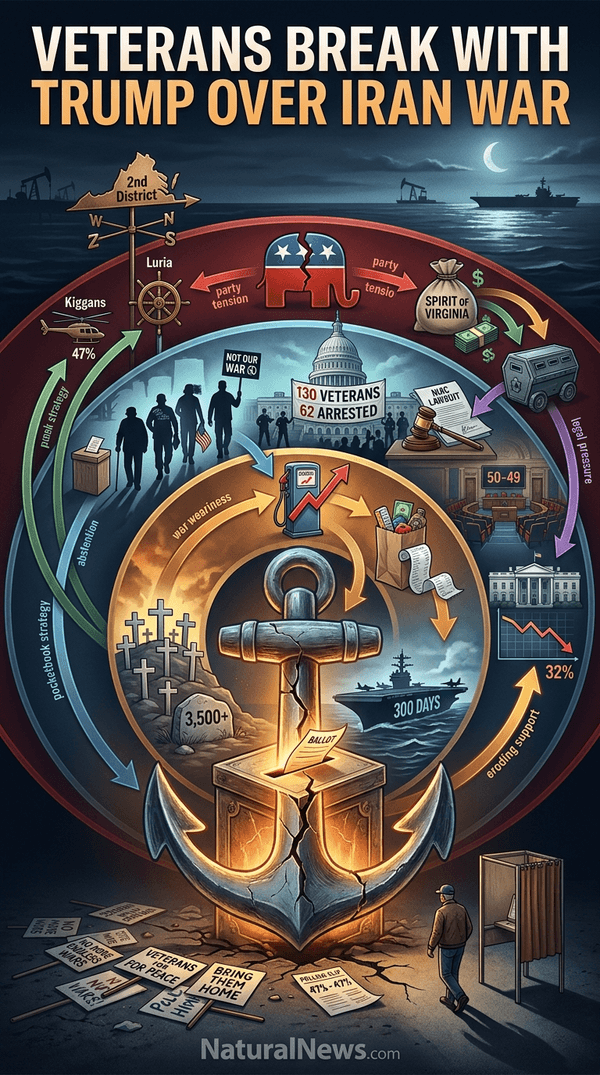
Republican incumbent Jen Kiggans, a former Navy helicopter pilot, faces Democratic former Rep. Elaine Luria, also a Navy veteran, in a rematch of 2022. A June poll by Tulchin Research placed both candidates at 47%, according to the poll [15].
Kiggans defeated Luria in 2022 by linking her to the Biden administration's Afghanistan withdrawal.
The district has flipped between the two candidates and is seen as a bellwether for House control, House leadership said.
Candidates Split on Iran Conflict
In a statement released back in June, Kiggans said she "couldn't be a stauncher supporter of the action that we're taking against Iran." Kiggans has voted seven times against resolutions to end the war or require congressional approval, according to voting records [15].
Luria has emphasized gas price increases caused by the conflict and seeks to link them to Trump in her campaign. At a rally, Kiggans did not mention Trump or Iran, focusing instead on veterans' benefits and tax burden, attendees said.
Veteran Community Divided
Derrick Johnson, 56, a Navy veteran and American Legion commander, said, "You promise not to pull us into any wars. You promise to do certain things, and if I vote for you, that's what I expect to happen."
Keith Shanesy, 61, a Trump supporter and Navy veteran, said the Iran debate is being "hijacked by the Democrats to stoke anger among voters." David Twitty, 40, said he has stopped paying attention to politics and would vote for anyone "promising a major revamp of veterans' benefits [15]."
The division among veterans reflects broader national trends. In April 2026, approximately 130 veterans and military family members staged a protest in the U.S. Capitol Rotunda demanding an end to the U.S. military conflict with Iran. Sixty-two of the participants were arrested after refusing police orders to vacate the area, according to a report by Antiwar.com [8].
The action was organized by a coalition of groups including About Face - Veterans Against the War, Veterans For Peace and the Center on Conscience and War, according to the report [9].
A Marine veteran protesting the Iran war suffered a broken arm in a scuffle with a GOP senator, according to ZeroHedge [10].
National Polling and Republican Distancing
Trump's approval rating fell to 32% in a Reuters/Ipsos poll published on Sept. 21, the lowest of his political career, the poll stated.
Approval of the conflict fell to 60% from 73% in March, according to a CNN/SSRS poll released on Sept. 23. Republican Senate candidates Mike Rogers and Ashley Hinson have called for an end to the war, according to campaign statements on Sept. 21.
Sailors aboard the USS Abraham Lincoln reported deteriorating conditions after nearly 300 days at sea, and eight crew members attempted suicide, according to Navy figures obtained by CNN.
Outlook Uncertain in Battleground District
Some veterans and campaigners expect low turnout, with voters either abstaining or focusing on local issues, according to interviews. Bill Robinson, 67, a former Army paratrooper running a "Vote Luria" tent, said Isle of Wight County could shift from red to purple.
The Kiggans and Luria campaigns exchanged accusations over stock trading and campaign claims, according to statements from both teams. The race remains closely monitored by House leadership, with no clear outcome, officials said.
The political landscape reflects broader skepticism about the war. Joe Kent, the former U.S. counterterrorism chief who quit his post due to the war on behalf of Israel, reported that all 18 U.S. intelligence agencies had concluded that Iran was not building a nuclear weapon and would retaliate against U.S. bases across the Middle East if the U.S. attacked, according to the New American [13].
The disconnect between official justifications and intelligence assessments has fueled veteran discontent, with some comparing the conflict to previous failed interventions.
References
- Iran Conflict Hits 6-Month Mark: 7 Things to Know. The Epoch Times. August 28, 2026.
- Inside the Iran War decision: How Netanyahu sold Trump on a conflict his own advisers called 'farcical'. NaturalNews.com. May 5, 2026.
- Mike Adams. Health Ranger Report - US Senate candidate for Virginia. Brighteon.com. June 6, 2024.
- Tom Kean Jr. Defends Support of Tariffs, Iran War in Debate With Democrat Rebecca Bennett. The Epoch Times. September 28, 2026.
- Yasmine El-Sabawi. Iranian-American group sues Trump for 'unconstitutional' war on Iran. Middle East Eye. September 24, 2026.
- Fetterman bucks party again, votes against Iran War Powers resolution. Just the News. September 26, 2026.
- "High Crimes And Misdemeanors": Massie Forces House Vote To Impeach Defense Secretary Pete Hegseth. ZeroHedge. September 15, 2026.
- Veterans Arrested in Capitol Rotunda Protest Against Iran Conflict. NaturalNews.com. April 23, 2026.
- Veterans Groups Protest US War on Iran. Antiwar.com. April 22, 2026.
- Watch: Marine Veteran Protesting Iran War Suffers Broken Arm In Scuffle With GOP Senator. ZeroHedge. March 6, 2026.
- In Dallas, Republicans Strive to Unify Despite Disagreements, Uncertainties. The Epoch Times. September 14, 2026.
- Ron Paul Institute Hosts Conference Criticizing Trump Administration's Iran Policy, Drawing Dissenting Former Officials. NaturalNews.com. April 30, 2026.
- Kent: 18 U.S. Intel Agencies Said Iran Wasn't Building a Nuke; CIA Concluded Iran Could Hold Out for Months. The New American. May 8, 2026.
- David Hearst. Iran war: Trump must change course now to avoid another Vietnam. Middle East Eye. July 21, 2026.
- "Veterans turn on Trump over Iran war - The Telegraph". Telegraph.co.uk. September 28, 2026.
Explainer Infographic







Please contact us for more information.