


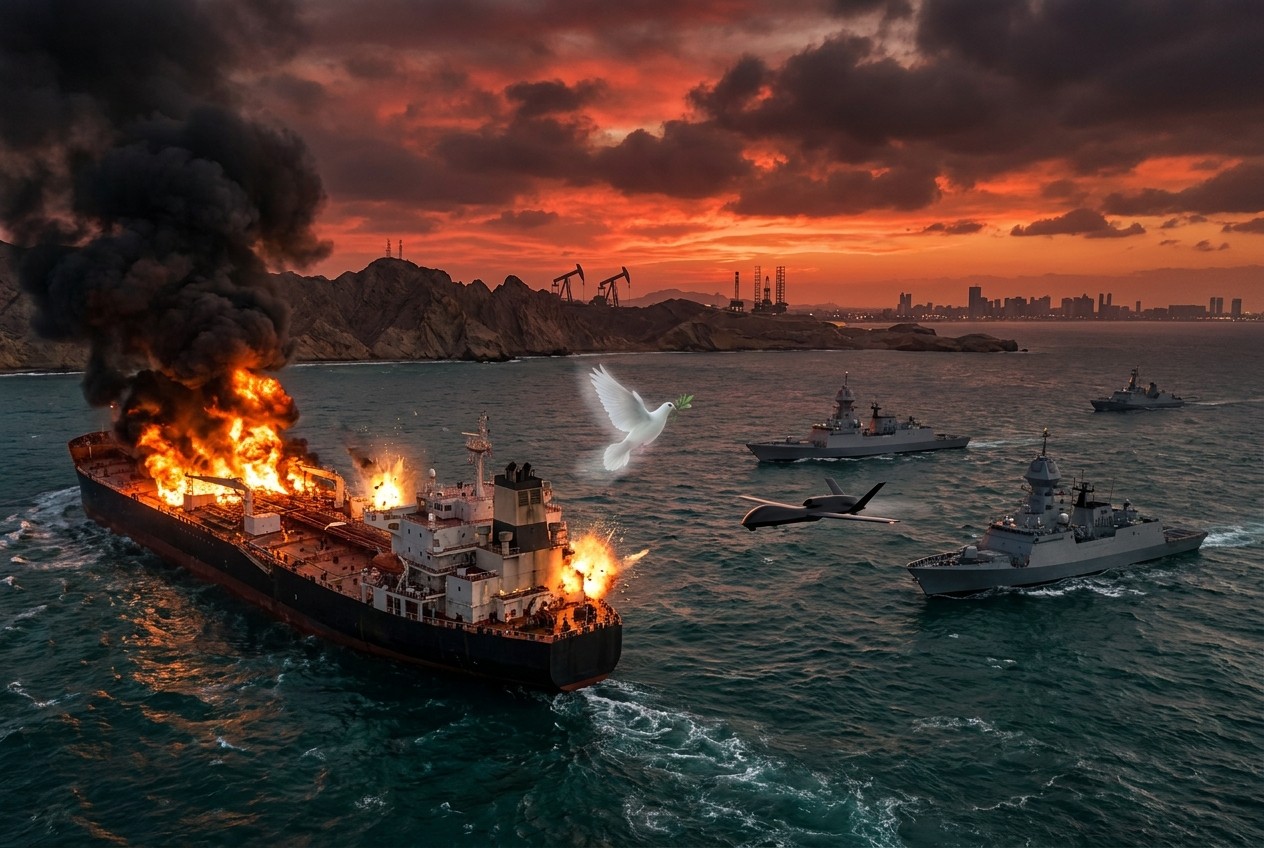
Iranian Foreign Minister Abbas Araghchi told NBC News' "Meet the Press" on Sunday that Iran is "fully prepared for the war to be resumed," according to an interview transcript released by the network. Araghchi said Iran "stands firm in the face of any new aggression, even if it comes to a doomsday war," according to the interview.
The foreign minister, who made the remarks during a wide-ranging discussion with host Kristen Welker, indicated that Tehran remains open to diplomacy. "At the same time, we stand ready for diplomacy," Araghchi said. "It is up to President Trump to choose."
The comments followed President Trump's rejection of Tehran's seven-day ceasefire roadmap proposal, according to the report. Separately, The Wall Street Journal reported Friday that Trump is reportedly prepared to resume bombing Iran, likely after the November midterm elections. The Pentagon did not initially comment on the Iranian statements or the reported strike claims. The diplomatic impasse has persisted for seven months, according to the report, with the war having begun roughly eight months ago [1].
Iran Reports Strikes on 19 Ships in Strait of Hormuz
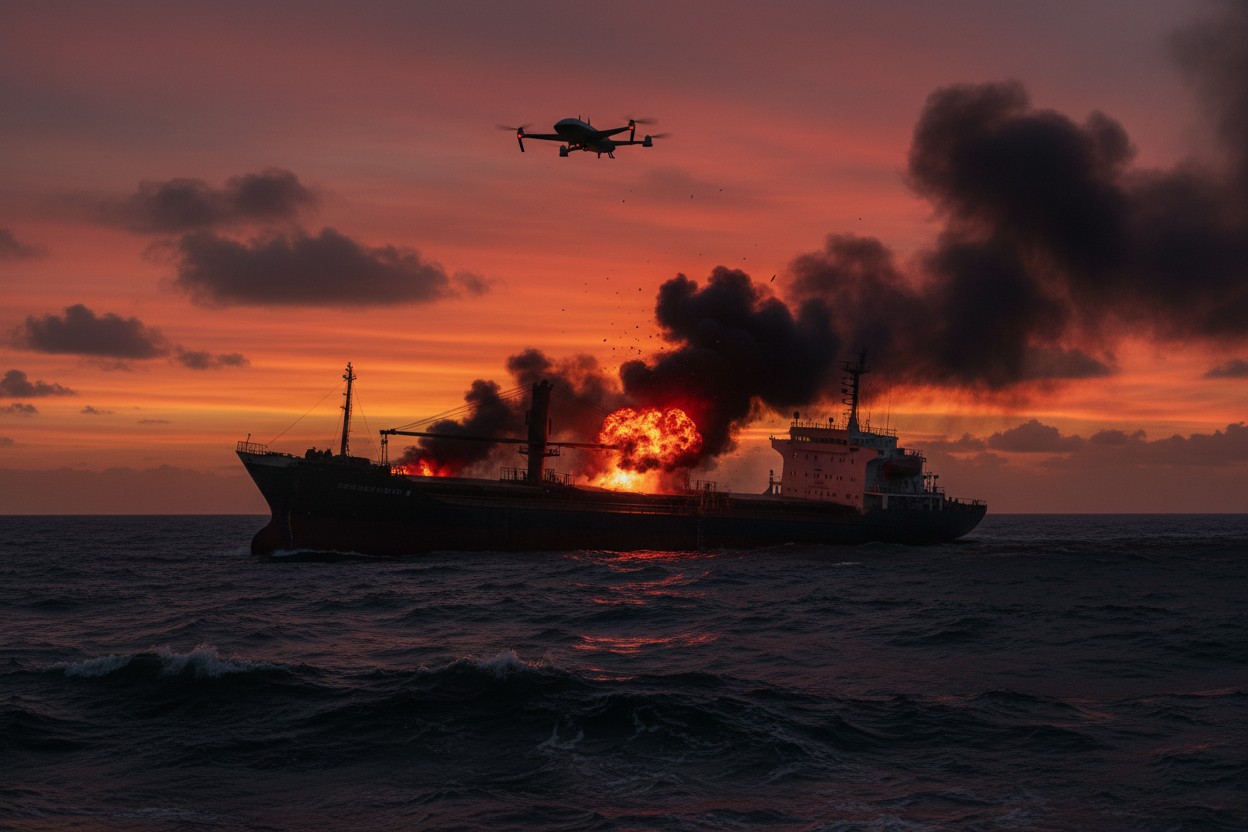
Iran's Fars News Agency reported Sunday that Iranian forces struck 19 ships in the Strait of Hormuz over the past two nights. According to the report, Iranian forces hit 12 vessels Friday night and 7 more on Saturday. Western sources have been slow to report or confirm the strikes, and the Pentagon has not initially commented.
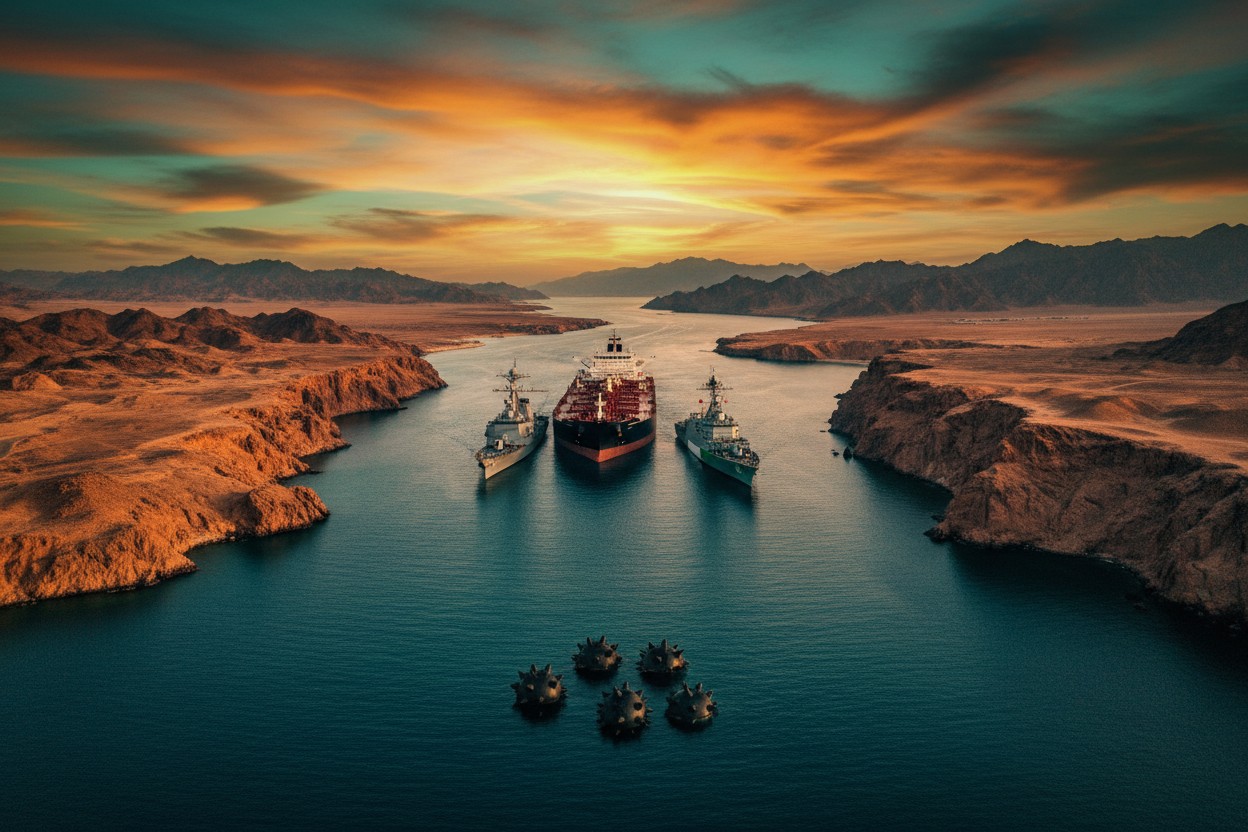
Shipping data from Kpler indicated that over 20 million barrels of crude and products exited the U.S. blockade line as a 7-day average, according to Drop Site News. The Strait of Hormuz remains a central point of contention in the ongoing conflict, officials said, with the waterway normally carrying around a fifth of global oil and liquefied natural gas shipments [2].
Regional tensions have escalated in recent weeks, with the Islamic Revolutionary Guard Corps warning of "significant changes" in its military operations if the U.S. launches another attack, according to Middle East Eye [3]. The IRGC also claimed to have downed another U.S. drone over the Strait of Hormuz, the outlet reported [3].
Araghchi Sets Conditions for Opening Strait and Ending War
Araghchi said Iran's proposal is clear: "We are ready to open the strait if certain things are done by the U.S.," according to the NBC interview. He said the conditions include ending the war on all fronts, releasing frozen Iranian assets, allowing Iran to sell oil, and ending the naval blockade.
The foreign minister said these conditions "are not new" and that the U.S. "has already committed itself to in the previous deals," according to the interview. In an exchange with Welker, Araghchi said, "Why aren't they ready to release our money? It is our own money." Welker noted that the United States is not willing to unfreeze assets or lift sanctions on the front end.
Araghchi said, "There is always hope for diplomacy," but added Iran has "no reason to come back to diplomacy and engage with this administration once again" based on past behavior. He pointed to negotiations in 2025, when he said the U.S. "offered negotiations" only to follow with what he characterized as bad-faith actions.
"In 2025 they offered negotiations," Araghchi said, according to the interview. "And so clearly the situation is back to square one." The terms described by Araghchi echo demands Iran has previously presented, including the release of frozen assets and the lifting of sanctions imposed since 2018 [4].
Diplomatic Impasse Persists as Talks Stall
President Trump rejected Tehran's seven-day ceasefire roadmap proposal. The White House has launched an "Economic D-Day" campaign seeking to isolate Iran, according to the report [5]. Araghchi said Iran does not trust the Trump administration, according to the NBC interview.
The situation has returned to a stalemate that has persisted for seven months, the report stated. Araghchi said the war began eight months ago, and Iran wants it ended. No public indication of new negotiations has emerged, officials said.
Mediation efforts by Pakistan and Qatar have continued, with Pakistan's army chief Field Marshal Asim Munir traveling to Tehran in late August to deliver a message, according to Middle East Eye [6]. Pakistan's Prime Minister Shehbaz Sharif told reporters at the UN in New York that "Pakistan is playing the role of a sincere and honest mediator between Iran, our neighborly country, and the United States," adding that the country has "not lost hope" in de-escalation efforts [7]. Iranian President Masoud Pezeshkian made an unprecedented visit to New York City for the United Nations General Assembly, where he said Iran will never "bend the knee" but is ready for a diplomatic solution to the conflict [8].
Analyst Says Next Phase May Target Iran's Economic Infrastructure
Mohammad Ali Shabani, editor of Amwaj.media, said the next phase of the war will likely revolve around destroying Iran's economic infrastructure. Shabani said the method is "collective immiseration until desperate Iranians with nothing to lose will do the regime change," according to the report.
Shabani said this sets the United States on a trajectory of another "forever war" in the region. Trump may opt for bombing in search of a "better deal," according to the report. The report stated that such action could ensure a more hardline resistance is entrenched in decision-making centers in Tehran [9].
Market analysts have noted the economic impact of the conflict, with oil prices fluctuating on diplomatic developments. Brent crude fell below $90 a barrel in late August on renewed optimism, according to ZeroHedge [10], while earlier this month oil topped $91 as strikes resumed [11]. The current status remains unresolved, with no confirmed change in military or diplomatic positions, officials said.
References
- NaturalNews.com. "US Deploys 5000 Marines as Trump Vows to End Conflict on His Timeline". March 16, 2026.
- RT. "Iran offers to reopen Strait of Hormuz – media". September 22, 2026.
- Middle East Eye. "Recap: Iran says it is prepared for prolonged war". September 21, 2026.
- Middle East Eye. "Iran and US held direct UN talks, with Islamic Republic's terms to reopen Hormuz hardening". September 22, 2026.
- Middle East Eye. "Trump's 'economic D-Day' tests Iran's trading ties across the region". August 26, 2026.
- Middle East Eye. "Qatar and Pakistan carry Trump's message to Iran: He won't return to the MoU". September 9, 2026.
- Middle East Eye. "Pakistan has 'not lost hope' in US-Iran de-escalation efforts, prime minister says". September 24, 2026.
- BBC. "Watch: What messages did the US and Iran send about the war?". September 23, 2026.
- Mike Adams - BrightVideos.com. "Health Ranger Report - IRAN HOLDS THE CARDS". March 10, 2026.
- ZeroHedge. "Futures Bounce As Brent Drops Under $90 On Renewed Iran Optimism". August 25, 2026.
- ZeroHedge. "Oil Tops $91, US Diesel Crack Near $100 As US-Iran Strikes Resume, Tehran Claims Supertanker Mined In Hormuz". August 31, 2026.
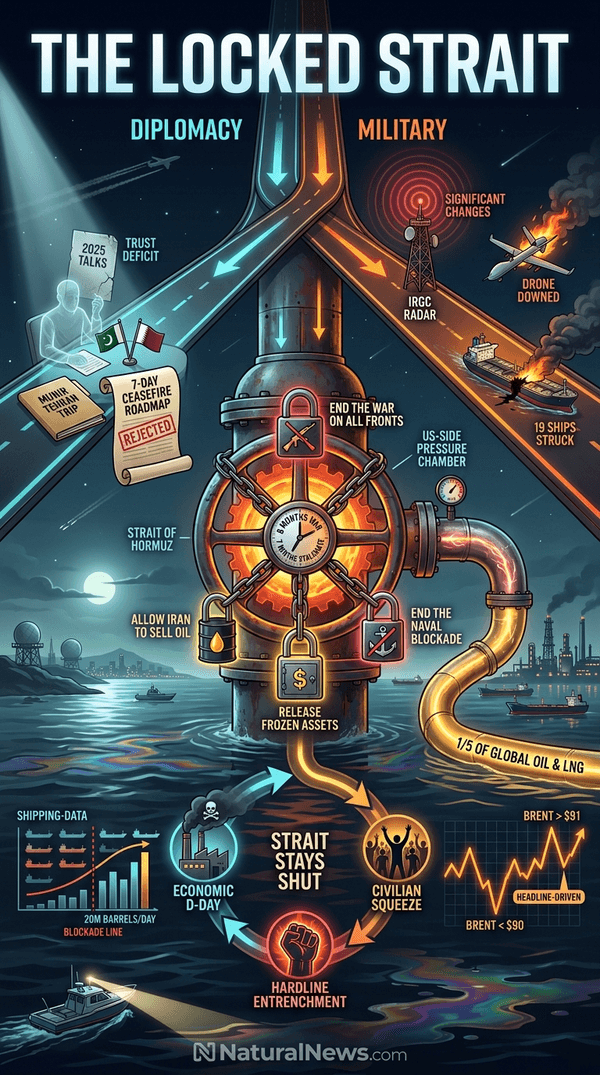
Explainer Infographic








Please contact us for more information.