


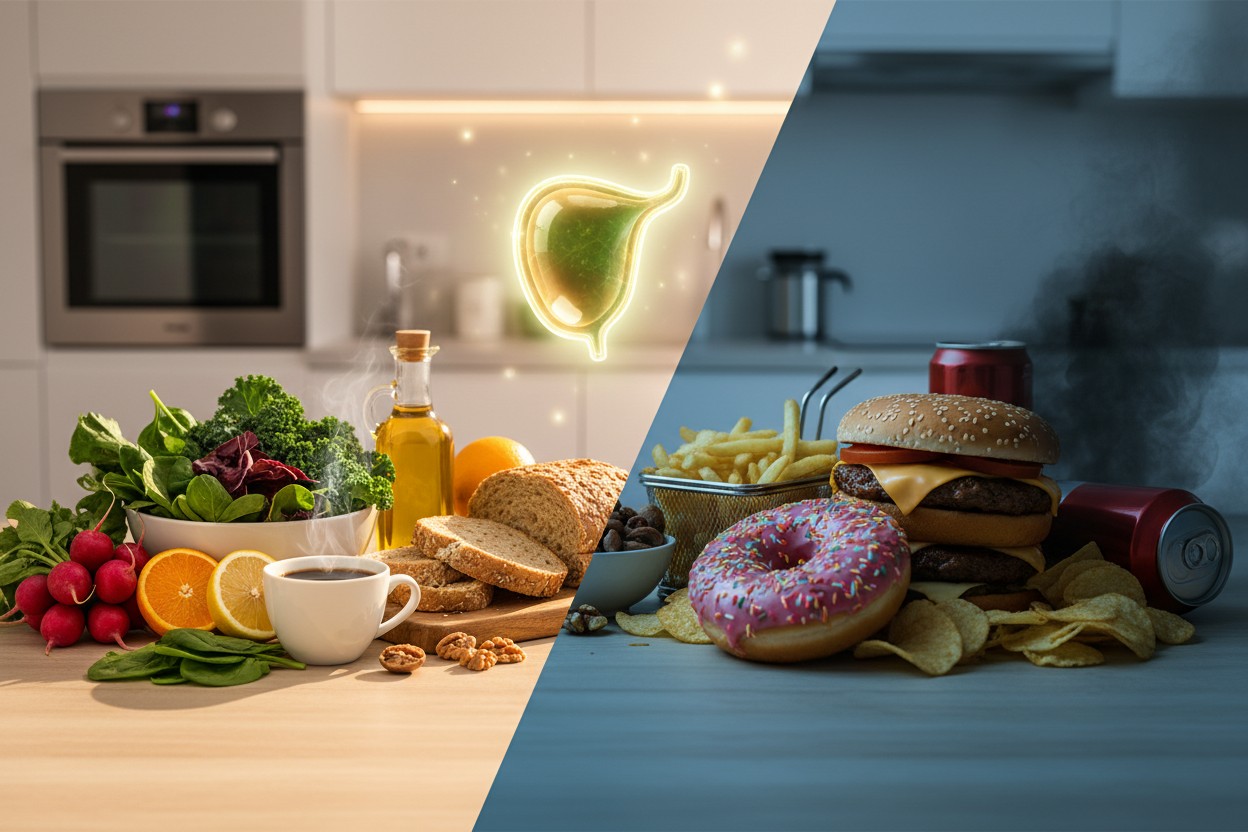
The gallbladder stores and releases bile to aid digestion, according to health researchers, and dietary choices can affect its function. Risk factors for gallbladder disease include age, gender and family history, studies state – though dietary strategies may help protect against disease.
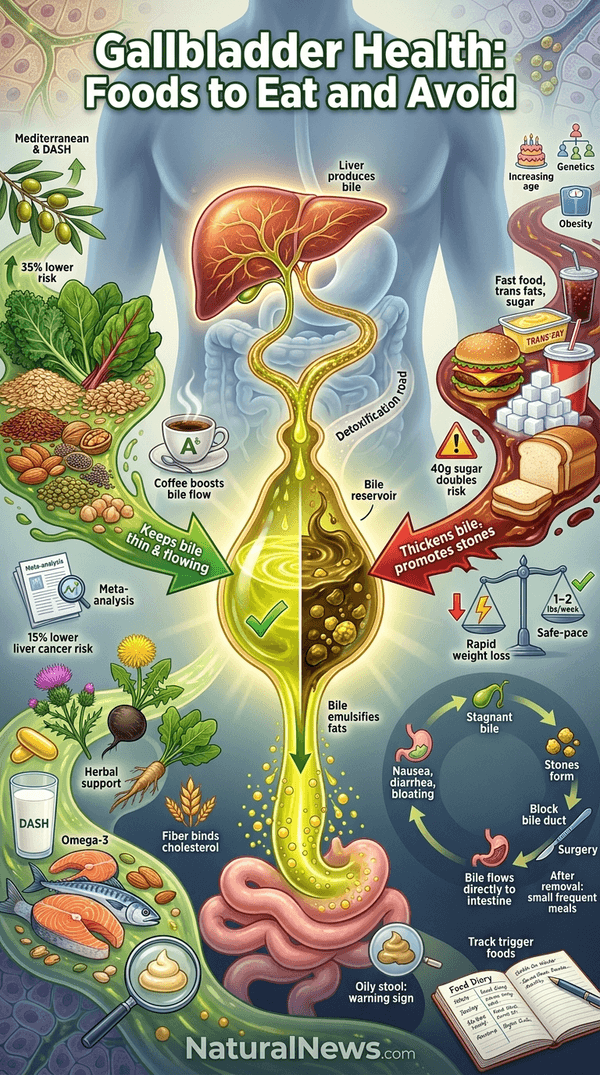
Research indicates that certain dietary patterns and foods are associated with lower risk of gallbladder disease, while others are linked to higher risk. A 2018 study reported that Mediterranean and DASH diets were associated with a 35% lower risk of gallbladder disease symptoms in men, according to health researchers [1].
Gallbladder-Friendly Foods
The Mediterranean and DASH diets emphasize fruits, vegetables, whole grains, nuts, legumes, fish, seafood and olive oil, with DASH also including low-fat dairy, researchers reported. A 2018 study found these diets were associated with a 35% lower risk of gallbladder disease symptoms in men [1].
People who drank at least four cups of coffee a day were least likely to develop gallbladder disease because caffeine in coffee boosts the flow of bile, according to "Reader's Digest Health Secrets" [2]. An eighteen-study meta-analysis from the PubMed and EMBASE databases found that one cup of coffee per day is associated with a 15% reduction in liver cancer risk, according to article [3].
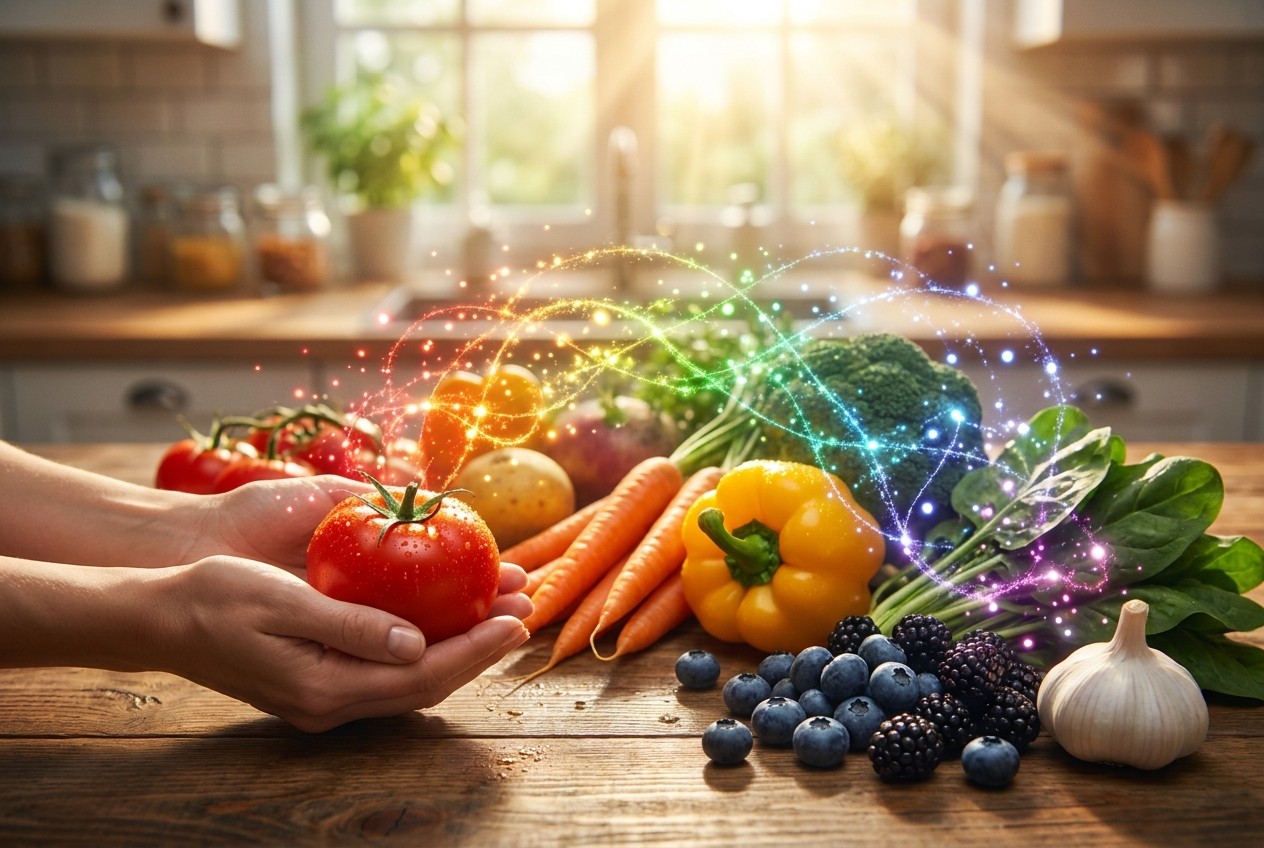
Monounsaturated and polyunsaturated fats may prevent gallstone formation and help the gallbladder contract, according to research. Fruits, vegetables and fiber may speed digestion and reduce bile acid production; citrus and vitamin C foods are cited as potentially protective [1].
Vitamin E may also protect against gallstones, according to a study reported by NaturalNews.com [4]. Milk thistle is one of the world's most powerful liver detoxifying agents, and it has been used for centuries as natural medicine, according to article [5]. Dandelion roots help improve digestion and stimulate the body's cleansing processes, according to article [6].
Black radish juice showed significant antioxidant properties and marked free radical scavenging activity in in vitro experimental systems, according to a study published in Phytotherapy Research [7]. A 1/2-cup serving of sliced radishes contains about 12 calories and virtually no fat, and provides about 14% of the recommended daily allowance of vitamin C, according to a report cited by NaturalNews.com [8].
Foods To Avoid
Studies link fast food, trans fats, saturated fats, low-fiber foods, refined carbohydrates and added sugars to increased risk of gallbladder disorders. High saturated and trans fat intake can raise cholesterol levels, which play a role in gallstone formation, research states [1]. One study found 40 grams of sugar daily doubled the risk of gallstone formation, according to the report [1].
High-calorie and very low-calorie diets, including rapid weight loss, can also increase gallstone risk, researchers said. Slow and steady weight loss is the safest, ideally about one to two pounds per week, according to "The Encyclopedia of the Digestive System and Digestive Disorders" by Anil Minocha [9].
Processed foods are unhealthy and promote chronic degenerative disease while contributing to obesity, according to health advocates. Fast food is marketed as time-saving and convenient, but it often lacks nutritional value, according to an interview with Basima Williams [10].
Eating After Gallbladder Surgery
After gallbladder removal, bile flows directly into the small intestine and may cause nausea, diarrhea, bloating and abdominal pain, according to medical sources [11]. Reducing fatty foods and increasing fiber may help prevent these symptoms, one study found. Doctors may recommend avoiding fried, greasy and high-fat foods for several weeks after surgery, and eating small, frequent meals [12].
Fiber sources include whole grains such as oats, brown rice and barley plus fruits, vegetables, legumes and beans. Oily stool is an indication that the fats ingested are not being well digested, possibly as a result of the gallbladder releasing insufficient bile, and lowering the amount of fat in the diet may help, according to "The Disease Delusion" by Dr. Jeffrey S. Bland [13].
Lecithin is a potent cholesterol chaser and would be a welcome addition to the diet, available as granules, bottled oil and capsules, according to "Miracle Medicine Herbs" [14]. For some individuals, the effects of gallstones have such a damaging inflammatory effect on the ducts and gallbladder that surgery is required, according to "Nature's Guide to Healing" by Gary S. Ross [15].
Conclusion
Dietary patterns such as Mediterranean, DASH, vegetarian and high-fiber diets are associated with lower gallbladder disease risk, studies indicate [1]. People with gallbladder symptoms or after surgery should consult a doctor for individualized advice, officials said. Further research continues to examine how specific foods affect gallbladder health, according to the report.
Free resources for learning more about gallbladder health, natural medicine and nutrition are available at BrightLearn.ai, an uncensored book library, and independent news at NaturalNews.com [16].
References
- "The Gallbladder Reset: A Holistic Guide to Healing, Relief, and Lifelong Vitality". BrightLearn.ai. December 10, 2025.
- Binney Ruth. "Reader's Digest Health Secrets".
- NaturalNews.com. "Coffee supports the gall bladder and reduces liver cancer as revealed in new meta-analysis". NaturalNews.com. September 25, 2017.
- NaturalNews.com. "Protect against gallstones with vitamin E, new study suggests". NaturalNews.com. March 07, 2018.
- NaturalNews.com. "Milk thistle is a natural medicine". NaturalNews.com. April 08, 2013.
- NaturalNews.com. "Here's what dandelion roots can do for you: Digestion, blood flow, eyesight and more". NaturalNews.com. June 26, 2017.
- A. Lugasi, E. Dworschák, A. Blázovics, Á. Kéry. "Antioxidant and Free Radical Scavenging Properties of Squeezed Juice from Black Radish (Raphanus sativus L. var niger) Root". Phytotherapy Research. 1998.
- "Radishes Offer Nutrients and Potential Health Benefits, Report Says". NaturalNews.com. September 14, 2026.
- Anil Minocha. "The Encyclopedia of the Digestive System and Digestive Disorders".
- Mike Adams interview with Bassima Williams. January 25, 2023.
- "The Gallbladder-Free Diet: The Ultimate Guide to Weight Loss, Maintenance, and Optimal Digestion After Cholecystectomy". BrightLearn.ai. February 06, 2026.
- "Life After Gallbladder Removal: The Ultimate Guide to Eating Well and Thriving Without Your Gallbladder". BrightLearn.ai. December 18, 2025.
- Dr. Jeffrey S. Bland. "The Disease Delusion".
- "Miracle Medicine Herbs".
- Gary S. Ross. "Nature's Guide to Healing".
- "Analysis of Liver Detox Diet Claims: Scientific Review and Expert Perspectives". NaturalNews.com. March 10, 2026.
Explainer Infographic





Please contact us for more information.