


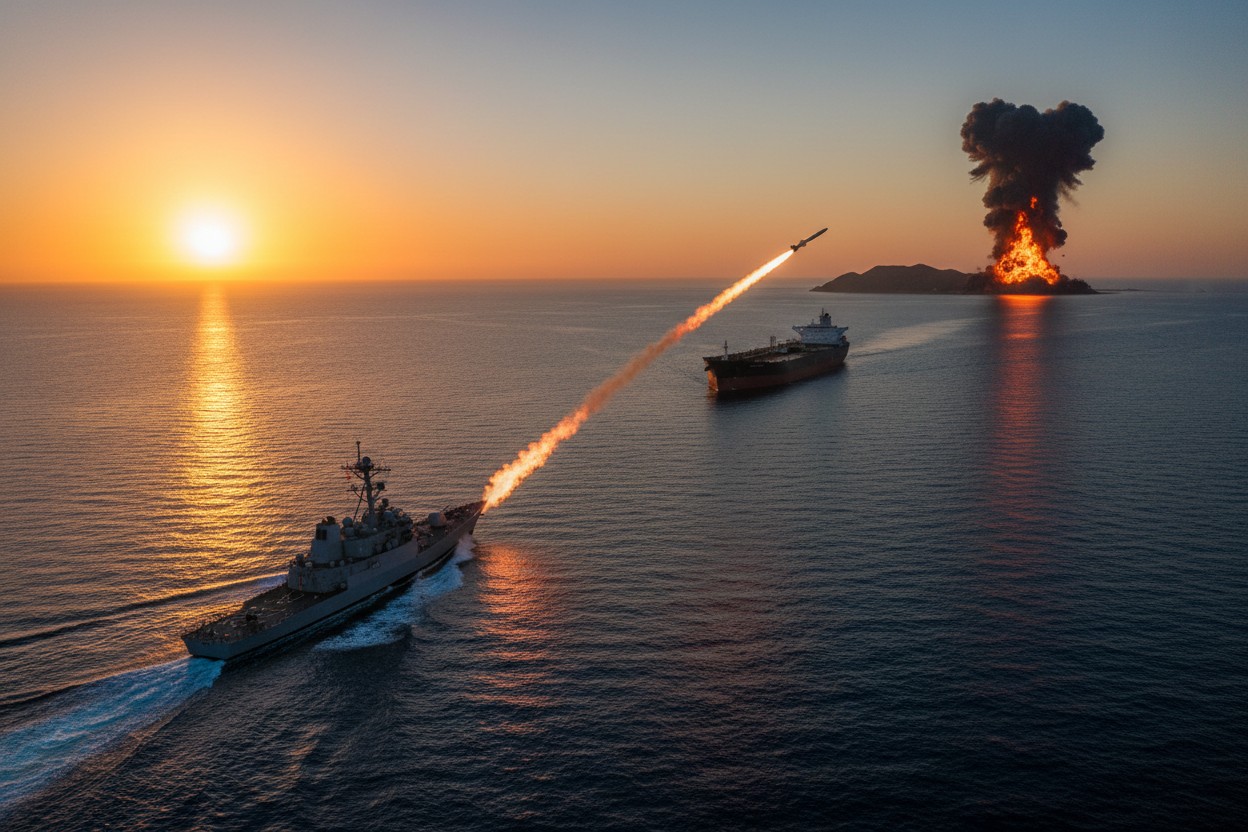
U.S. forces struck two Iranian missile launchers on Larak Island near the Strait of Hormuz on Aug. 30, according to U.S. Central Command, which stated the systems posed a direct threat to shipping.
The strike marked the first known American attacks on Iran since late July, according to a report by the BBC [1]. The Islamic Revolutionary Guard Corps (IRGC) said the attack killed and wounded several people and vowed "response and punishment," the report stated [1]. Iran answered the same day by launching ballistic missiles at U.S. personnel stationed in Jordan, according to officials, with no immediate reports of casualties [2].
The exchange revived a question among military observers about the purpose of successive strikes and whether they are trending toward an objective or merely perpetuating a cycle [2]. U.S. officials said the strike was conducted to protect freedom of navigation, while Iranian officials condemned the action as a violation of territorial waters.
Regional Impact and Escalation Context
The Larak Island facility sits within the Strait of Hormuz, a transit point for about one-fifth of global oil consumption. Recent fighting around the strait has shown how quickly military exchanges can spill into maritime traffic and oil markets, according to an analysis by Antiwar.com [2].
The exchange of attacks for the first time in weeks led Brent futures to rally almost 4%, topping the $90 handle, according to a report by ZeroHedge [3]. Market observers noted that the renewed hostilities have coincided with increases in maritime insurance premiums and volatility in crude oil prices, though markets have not seen sustained disruption.
Iran's missile attack on Jordan targeted a base housing U.S. troops, according to a U.S. official, who confirmed damage to infrastructure but no fatalities [2]. Prior incidents in the region since June include drone attacks on commercial vessels and exchange of fire between U.S. and Iran-aligned forces, according to reports [4].
The White House said the strike was a demonstration of resolve, while Tehran vowed to respond to any further attacks on its territory. Iranian President Masoud Pezeshkian said Tehran will respond decisively to further attacks, according to a report by Middle East Eye [5]. Senior U.S. military officials have warned that a prolonged high-level conflict risks draining U.S. military might, the same report stated [6].
Strategic Ambiguity of Military Action
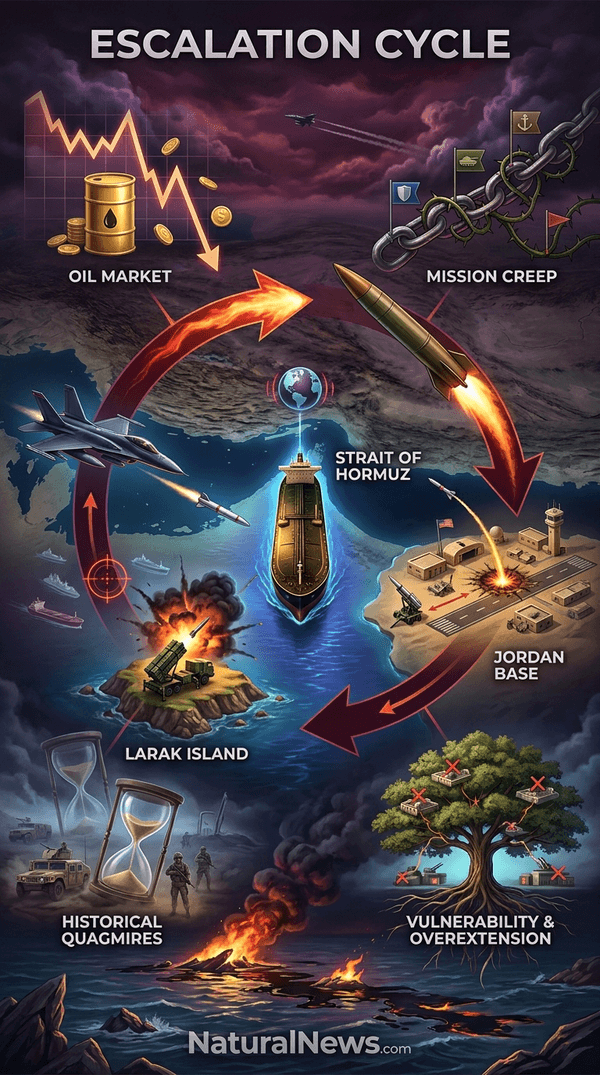
According to defense analysts, the relationship between tactical strikes and political outcomes is not linear; a successful strike can impose costs on Tehran while simultaneously adding new defensive obligations for Washington [2]. The United States can select targets, but it cannot control where it will bear the consequences of an attack, as demonstrated by the Jordan retaliation and threats to shipping lanes, scholars said [2].
An attack in Iran can lead to pressure on U.S. forces elsewhere in the region, threats to partners and allies, disruption of shipping, and higher energy costs, the analysis noted [2]. Officials and former military officers indicated that each response may require further action to protect assets, leading to an expanding set of commitments beyond the original mission [2]. Force protection, allied defense, and freedom of navigation all enter the calculation, according to the analysis.
Each mission may be defensible on its own, but together they can create commitments that were not part of the original objective [2]. Deterrence fails when a single strike must be validated by subsequent strikes to maintain credibility, according to the report [2]. The issue, according to Department of War spokespersons, is not whether to respond – but whether responses serve a defined political purpose or simply sustain an unending exchange.
Historical Precedents for Mission Creep
Analysts point to U.S. experiences in Iraq and Afghanistan, where limited operations evolved into longer engagements without a single decision point [2]. In those cases, each mission – from protecting forces to supporting allies – added new responsibilities, ultimately complicating exit strategies, the analysis said [2].
This is how mission creep often develops: a sequence of individually limited steps accumulates, a strike to answer a threat, a deployment to protect forces, support for an ally, and another operation to secure shipping or other vital interests [2]. Military historians note that in the current Iran conflict, U.S. vulnerabilities differ from Iran's; Washington holds superior firepower but maintains extensive regional assets that require protection [2].
Iran can impose costs asymmetrically by targeting shipping, bases, or partners, forcing the United States to defend multiple interests simultaneously [2]. The Islamic Republic has demonstrated this capability, with Iranian forces having killed American soldiers and destroyed military equipment at regional bases, according to officials cited by NBC News [7].
Retired generals, speaking on background, suggest that such dynamics can slowly expand the scope of U.S. operations without explicit public debate [2]. The U.S. experiences in Iraq and Afghanistan showed how missions can expand beyond their original purpose without a single moment when the enlarged commitment is clearly announced [2].
Need for Defined Endpoints
Officials from the Department of State have stressed that the United States seeks to change Iran's risk calculation, but they have not specified what behavior would trigger a cessation of hostilities. Defense experts argue that Washington must answer four questions before each strike: the targeted behavior, the sufficient cost to change it, the new commitments created, and the condition for ending operations, according to an analysis by Antiwar.com [2]. Without such criteria, the U.S. may continue winning tactical engagements while expanding its strategic burdens [2].
The administration has not publicly defined an end state for the current conflict, leading to uncertainty among allies and adversaries alike. Democrats in Congress have slammed the Trump administration for dragging out the war on Iran to its six-month anniversary, warning of consequences in the upcoming midterm elections [8].
The joint U.S.-Israeli attack on Iran, beginning on Feb. 28, was initially meant to last a few weeks, by President Donald Trump's own estimates [9]. As the cycle continues, the measure of success may hinge on the ability to stop using force, not the ability to apply more of it, according to former military planners [2]. The final measure of success is not whether Washington can impose still more pressure on Iran; it is whether that power can produce an endpoint rather than another obligation to respond to [2].
References
- BBC News. "US strikes Iranian launchers on Larak Island in first known attack in weeks." August 30, 2026.
- Timothy Hopper. "The Iran War's Costly Cycle of Retaliation." Antiwar.com. September 3, 2026.
- Zero Hedge. "Stock Futures Drop To Close Out August As Oil Jumps On Renewed Iran Hostilities." August 31, 2026.
- The War Zone. "Iranian Oil Tankers In The Cross Hairs Of New U.S. Campaign." September 2, 2026.
- Middle East Eye. "Araghchi blames 'serpent' Netanyahu for luring Washington into war on Iran." August 31, 2026.
- Middle East Eye. "Trump's vow to escalate on Iran rings hollow amid warnings from top US generals." August 31, 2026.
- NaturalNews.com. "Iranian Attacks Caused Billions in Damage to U.S. Surveillance Infrastructure, Officials Say." September 2, 2026.
- Middle East Eye. "'No end in sight': Democrats slam Trump after six months of Iran war." August 28, 2026.
- Zero Hedge. "'No End In Sight': Democrats Make Trump Foreign Policy A Central Issue After 6-Months Of Iran War." August 30, 2026.
Explainer Infographic









Please contact us for more information.