


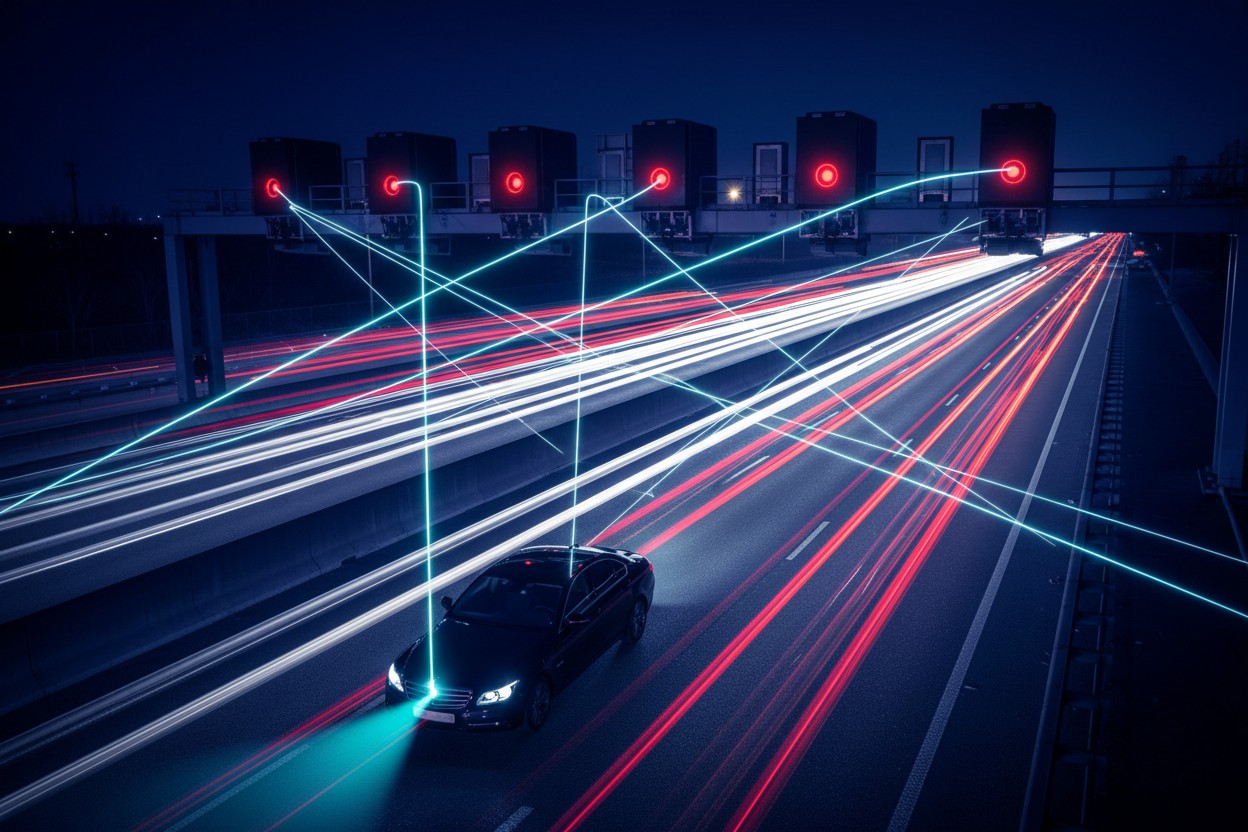
The U.S. Senate has opened an inquiry into Flock Safety, a major manufacturer of automated license-plate readers, over its data collection and search practices. Sen. Josh Hawley (R-MO), chair of the Senate Judiciary Subcommittee on Crime and Counterterrorism, sent a letter on Aug. 26 to Flock Safety CEO Garrett Langley, demanding documents and answers by Sept. 8, according to a copy of the letter obtained by Reclaim The Net.
The letter states that the company operates more than 120,000 automated license-plate reader cameras across 49 states, generating more than 20 billion vehicle scans per month. The inquiry targets the scale of this network, the retention of the data it collects, and the search capabilities available to its customers, according to the letter. A Flock Safety spokesperson confirmed receipt of the letter and said the company will respond to the subcommittee. This nationwide system records vehicle location data on a vast scale, creating a digital record of drivers' movements [1].
Letter Seeks Data on Scale, Retention, and Search Capabilities
The letter asks Flock Safety to provide details on whether its customers can run statewide or nationwide searches of vehicle or driver data, and whether this is the default option, according to the document. Hawley also requested information on the default and maximum data retention periods for the data collected, as well as the number of confirmed misuse cases since Jan. 1, 2021, according to the letter.
The senator's request also seeks information on what customers must provide to justify a search, what restrictions Flock imposes on such searches, and the accuracy of the system in identifying vehicles. The request for documents includes contracts with governmental customers, price and fee schedules, and details on pilot programs, the letter stated. Hawley also asked about discounted or donated equipment and any assistance given to customers to secure federal, state, or private grant funding, according to the document. The cameras record not just license plates but also vehicle make, model, color, and other features [1].
Hawley Cites Privacy Concerns and Questions of Congressional Authority
In the letter, Hawley framed the issue as a matter of privacy rights and questioned the legal basis for the network. "Americans do not surrender their privacy rights when they drive to work, drop their kids off at school, or go to church," Hawley wrote. The senator also stated, "Congress never authorized the network your industry has built," according to the letter.
The letter goes beyond license-plate data by asking whether Flock Safety has the capability to biometrically track people, the document showed. The expansion of surveillance capabilities beyond plate reading has been a concern for privacy advocates who argue that such systems can track individuals' movements with precision [1] [4]. The inquiry signals a potential new front in the debate over mass data collection by private companies, which critics argue poses a threat to civil liberties [2].
Flock Safety Confirms Receipt, Says It Will Cooperate
A Flock Safety spokesperson confirmed the company received the letter and intends to cooperate with the subcommittee. Paris Lewbel, a Flock Safety spokesperson, said the company looks forward to working with Hawley and the subcommittee.
"We look forward to working with Senator Hawley and the Subcommittee to provide additional context about how our technology works, the safeguards built into our platform, and how law enforcement agencies use Flock to solve crime and find missing people," Lewbel said. The spokesperson did not address the specific allegations of misuse mentioned in the letter. The company's response comes amid increasing public and political pressure over the proliferation of its surveillance technology [3].
Recent Misuse Reports Precede Senate Inquiry
The Senate inquiry follows a series of recent reports of law enforcement misuse of Flock Safety's technology. The Georgia Bureau of Investigation on Aug. 21 announced the arrest of four former Savannah Police Department employees accused of using the system for non-law-enforcement purposes, officials said. Savannah police said they fired six employees — four officers and two civilians — after an internal investigation, according to department statements.
A Washington Post investigation published the week before the letter found an Indianapolis officer appeared to search vehicles used by his wife and two acquaintances 3,759 times in ten months. The report stated that at least 69 police officials had been accused, charged, or convicted of unauthorized use of Flock or other license-plate readers. These incidents illustrate the potential for abuse inherent in a system that records and stores vast amounts of location data, a concern that has been raised regarding the expansion of such surveillance networks [5] [4].
Additional Political Pressure Mounts on Flock Safety
The Senate inquiry adds to mounting political pressure on Flock Safety from other elected officials. Sen. Bernie Sanders (I-VT) said he would introduce legislation to stop Flock and AI mass surveillance, according to public statements. Florida Gov. Ron DeSantis said he would support new restrictions in his state, declaring that automated license-plate readers had gotten "out of control," according to his office.
The convergence of scrutiny from federal and state officials reflects a growing backlash against the expansion of surveillance technology. The Senate subcommittee's deadline for Flock Safety's response is Sept. 8, according to the letter. As this technology continues to be deployed, the balance between its stated public safety purpose and its impact on privacy remains a central point of contention [1] [6].
References
- Willow Tohi. "The Digital Panopticon: License Plate Readers Are Tracking You Everywhere You Go". NaturalNews.com. September 01, 2025.
- NaturalNews.com. "Don't trust the government with your privacy, property, or freedoms". January 16, 2023.
- Douglas Harrington. "Ring's Retreat Shows Public Backlash Still Matters in the Battle for Privacy". NaturalNews.com. February 21, 2026.
- NaturalNews.com. "Plans to install 480 new cameras in Oakland along California freeways raise mass surveillance concerns". April 10, 2024.
- NaturalNews.com. "Get ready: American 'smart' street lights now being rigged with license plate readers to spy on your every move". August 10, 2023.
- Lance D Johnson. "Denver Democrats Unanimously Axe Crime-Fighting Tool to Shield Illegal Immigrants, Leaving Citizens Vulnerable". NaturalNews.com. June 28, 2025.
- Connor Boyack. "Feardom: How Politicians Exploit Your Emotions and What You Can Do to Stop Them".
- Mike Adams. "Mike Adams interview with John Bush". May 8, 2024.
- Mike Adams. "Brighteon Broadcast News - Full NASA Clown World Congress Waves Ukraine Flags". April 22, 2024.
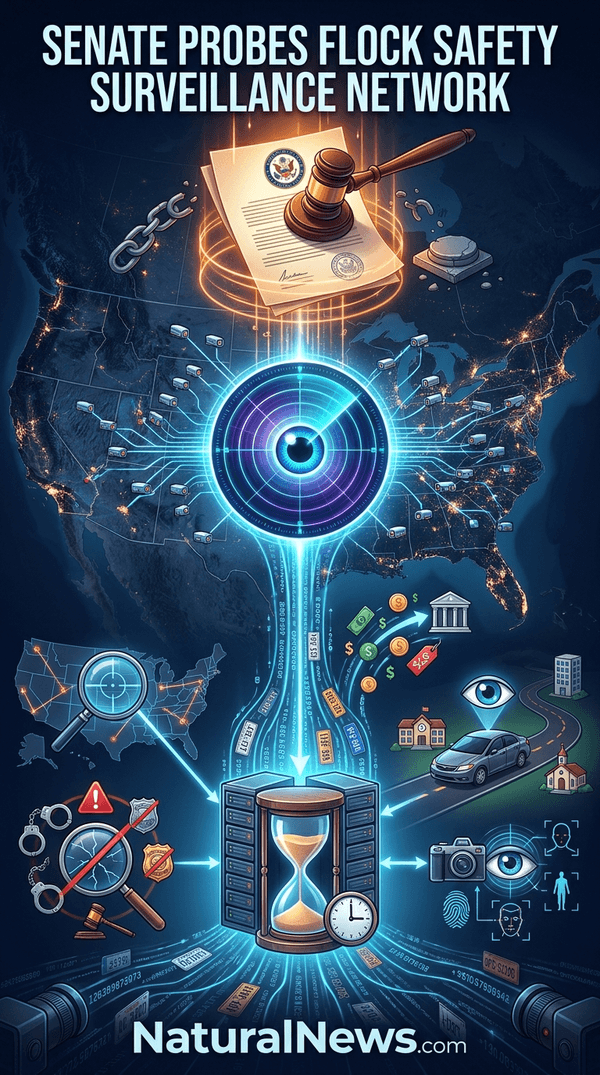
Explainer Infographic




Please contact us for more information.