


A study published Aug. 19, 2026, in Science Advances reports that urolithin A, a compound linked to pomegranate consumption, reduced signs of heart failure with preserved ejection fraction, or HFpEF, in mice and improved relaxation in engineered human heart tissue.
According to the research team, urolithin A activates the protein PKGI? by binding to the cysteine 42 site, a newly described mechanism that does not depend on nitric oxide. The authors cautioned that the findings are preclinical: urolithin A has not been tested or approved as a heart failure treatment in people, and the results do not show that eating pomegranates can treat or prevent any heart condition.
HFpEF: A Stiff-Heart Condition with Few Options
HFpEF accounts for close to half of all heart failure diagnoses, according to the study, and involves a heart that squeezes normally but cannot relax enough to fill with blood. Patients experience breathlessness and fatigue, often during physical activity, because the heart cannot keep up with increased demand, the researchers stated.
Most existing heart failure drugs target pumping strength, which is not the primary problem in HFpEF, the authors noted. Prior treatments targeting a nitric-oxide-dependent signaling pathway failed in large clinical trials. The study instead aimed at PKGI? through a separate chemical modification that does not require nitric oxide. Earlier research on pomegranate compounds has reported anti-inflammatory effects in animal models [1], and reviews of pomegranate juice have examined its effects on oxidative stress and cholesterol metabolism [2].
Newly Described Molecular Target
The study reports that urolithin A binds directly to cysteine 42, or C42, on PKGI?, a cellular switch involved in regulating blood pressure and heart muscle relaxation. Mass spectrometry confirmed the compound modified that specific site, according to the authors, distinguishing its mechanism from previously documented activators.
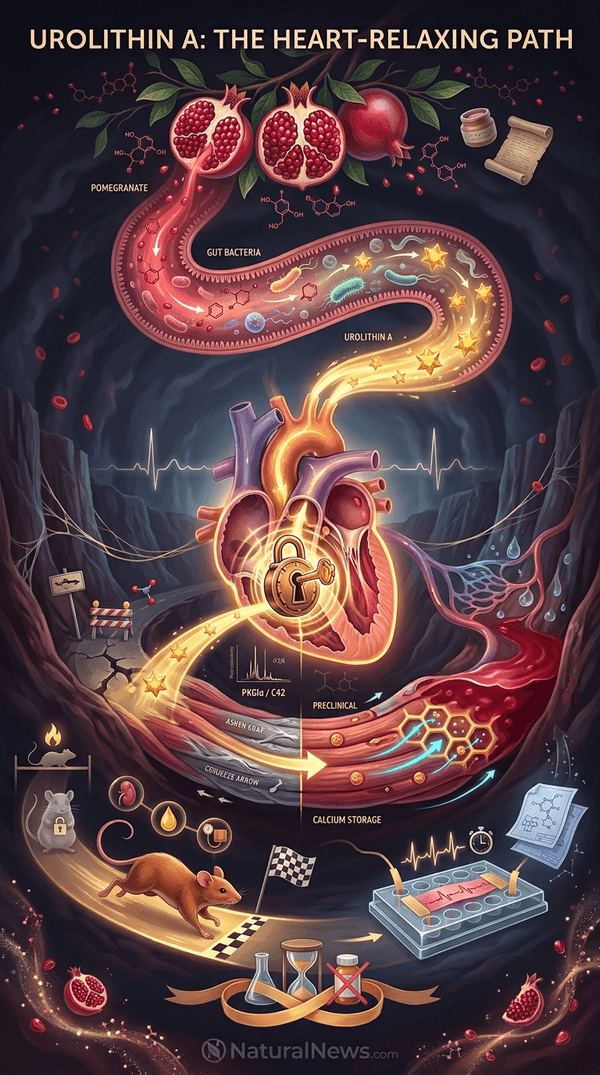
Urolithin A is a metabolite formed when gut bacteria act on polyphenols such as punicalagin found in pomegranates [3]. Activated PKGI? produced downstream effects on calcium regulation in heart muscle cells, improving relaxation, the team wrote.
Tests in Mice and Human Heart Tissue
In a multihit mouse model combining kidney surgery, a high-fat diet, and treatment designed to produce high blood pressure, mice given oral urolithin A once daily for seven days showed improved ultrasound measures of relaxation, ran farther, and had lower heart weight, smaller heart muscle cells, and less fibrosis, according to the study. In mice whose C42 site was genetically disabled, the benefits were largely absent, the authors report – indicating that C42 is essential to the compound's effects.
In engineered human heart tissue derived from a stem cell line, urolithin A shortened contraction and relaxation times at 120 minutes, with no observed irregular beating, the researchers stated. Earlier research reported that urolithin A boosted running endurance of aged mice by an average of 42% [4].
Limitations, Funding and Next Steps
The study used only male mice, though HFpEF disproportionately affects women, and the human tissue experiments used cells from a single donor stem cell line, according to the authors. They also cautioned that certain heart measurement parameters in mice must be interpreted carefully given fundamental differences between mouse and human heart rates.
The authors emphasized that this is early-stage laboratory research and that translating the findings to human patients will require clinical trials. They wrote that the study adds evidence of a specific and previously unknown cardiac effect that could potentially be useful against a condition current drugs struggle to treat.
Funding was provided by the British Heart Foundation, the Medical Research Council of the UK, and a China Scholarship Council grant; the authors declared no competing interests. Some nutrition reporting has recommended whole-food dietary patterns over isolated supplements as a basis for blood pressure support [5].
References
- Robert E Smith. "Pomegranate Botany, Postharvest Treatment, Biochemical Composition and Health Effects".
- Margot Skinner and Denise Hunter. "Bioactives in Fruit: Health Benefits and Functional Foods".
- Ramon Tomey. "Study: Gut bacteria transform pomegranate compounds into heart protecting molecule". NaturalNews.com. May 4, 2026.
- Mercola.com. "Powerful Properties of Pomegranates". Mercola.com. July 25, 2016.
- NaturalNews.com. "Beyond the hype: A case for real food in the fight against hypertension". NaturalNews.com. May 8, 2026.
Explainer Infographic












Please contact us for more information.